
 E-Paper



Kerala to be best spot for knowledge-based industries: P Rajeev
Within 10 to 15 years, Kerala will be the best destination for environmental social governance (ESG) investments and high-tech manufacturing

 Prefer HTon Google


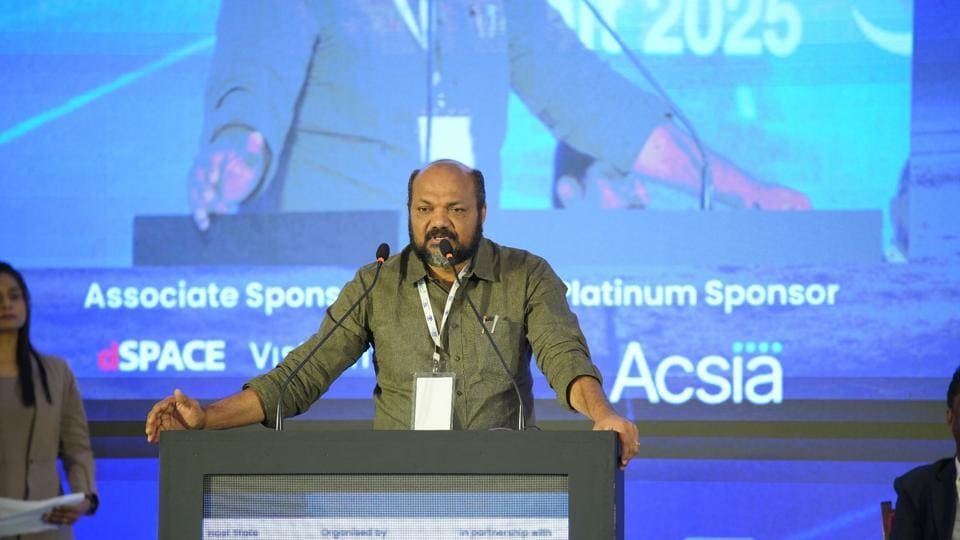
Ahead of the “Invest Kerala Global Summit (IGIS),” state industries minister P Rajeev spoke to Vishnu Varma about the nature of investments the state is expecting, the change in policies with regard to industrialisation, the benefits of the Vizhinjam transshipment port project and much more.
What are the expectations from this year’s global summit and how will it be different from past years?
IGIS is a culmination of about 50 preparatory events. In 2021 just after we assumed office, we decided to organise this event in 2025. In the run up to the summit, we took several steps. In the first phase, we travelled to all districts to hold discussions with the investor community. We asked them what they expected from the government. On the basis of the discussions, we took several legislative steps and amendments to the existing rules. We changed the land allotment policy and used our incentives for lease premium on the land.
We constituted a grievance address mechanism and a centralized inspection system. We again met the investors sector-wise. Then we prepared an industry policy draft and discussed it with all stakeholders. We took the inputs from their side. Thereafter, the draft was published in the public domain. Following suggestions from the general public, we finalised the industry policy 2023. The motto is nature, people, industry. We are focusing on responsible investment and on 22 priority sectors.
We have taken steps to organise sector-wise programmes like the first Gen AI conference with IBM, followed by conclaves on robotics, smart farming, Ayurveda, tourism, maritime, logistics, air tech manufacturing, automotive technology. We held conclaves exclusively for Vizhinjam and for the Malabar region. We organised roadshows in Mumbai, Bengaluru, Chennai, Delhi, Dubai and also Davos. We held a diplomatic conclave in Delhi. We are holding IGIS after these preparatory programmes.
This is an opportunity to showcase the potential of Kerala. Now Kerala is visible. Earlier, a deep-rooted presumption was there. Our first responsibility was to change the presumption that Kerala is not good for business, that it was only good for tourism and other social sectors. Earlier, we were in the 28th position in the ease of doing business rankings and today we are number 1 and the top achiever. This will be a game-changer summit. After each and every conclave and round-table roadshows, we fixed a realistic target. Compared to previous summits, this time, we are focusing on realistic investment proposals. I read somewhere that at an investment summit of a state, the proposals on investment is double the state’s GDP.
We are not looking to propagate such bubbles. We are focusing on realistic investment. The conversion rate should be more than 75% at least.
You earlier said that you were committed to ensuring that the MoUs or ideas are converted into real projects. Can you share some data on what percentage of MoUs or proposals at the last summit got converted into actual deals?
At the three earlier summits, the conversion rate was not that good. In the past year, we analysed the previous events, how it was organised, the type of MoUs, the content etc. On the basis of that analysis, we have taken the earlier mentioned steps. We are not thinking about the past anymore. We did them as part of the learning process. Now we are focusing on the future. This time, we will have more realistic declarations. And we have a mechanism to work on them.
There is a lot of talk about potential for blue economy projects and the maritime sector in the backdrop of operationalisation of the transshipment port in Vizhinjam. Do you expect investments around Vizhinjam?
Yes, Vizhinjam port is one of the best transshipment ports in the country. It is a game changer.
It is very close to the international maritime route, just 10 nautical miles away. The natural depth is 20 to 25 metres. There is no need for dredging. It has high potential and that’s why we organised a conclave in Vizhinjam. The participation was beyond our expectations. All big shipping and logistics companies like Maersk and Sharaf Group were there. There’s high potential. The second major project is the proposed Palakkad industrial smart city. It is a part of the Kochi - Bengaluru industry corridor. We have already acquired 1710 acres of land and it is a 50-50 SPV with the union government. A third is Kochi, the focus area of IT companies. We have the shipyard and refinery here. So we are looking at these projects and their catchment areas as potential for investments and growth corridors.
Has there been a change in the Left government’s approach towards industrialisation, large investments and considering your visit to Davos for the WEF?
Recognising the changes in the prevailing situation, we have changed. We are not against large investments. Pollution-inducing big manufacturing require more land and create less employment. We are not in favour of that. But we welcome large investments in technology based sectors, high-tech manufacturing or medical device, maritime, food processing and electronics. We went to Davos not just to participate in the economic forum. We participated in one or two sessions. The potential of Davos is that you can meet the investors at a single point. All of them are there. The Kerala Green Hydrogen Valley was highlighted there. We had 70 meetings in three and a half days there. Most of them were one-to-one. We had a good, constructive, fruitful programme.
The Opposition UDF has said it will attend the investor summit despite the political controversy over Congress MP Shashi Tharoor’s article and the debate over the state’s industrial sector. But do you think the variance in thinking between opposition and government in the state will affect flow of investments?
It is a welcome move (on the Opposition) to attend the summit. All of us are working together for these investments. They (UDF) have their own perspective. But we are propagating on the basis of the facts. Their propaganda is far away from the facts. Kerala is changing. It is transforming into the best destination for knowledge-based industries and high-tech manufacturing. Within 10 to 15 years, Kerala will be the best destination for environmental social governance (ESG) investments and high-tech manufacturing. A reverse migration is happening now. People are coming back to the state. There are some geopolitical issues like economic stagnation globally and crisis in some European countries. It is our responsibility to provide avenues for those returning to the state including the students. We are establishing campus industry parks where they will get wages and additional credit. It is highly paid employment. Kerala is changing and we are trying to change the nature of business here.


