E-Paper



New in NE | Beef over beef? Two orders with repercussions across communities
A new order in Arunachal Pradesh, meant to maintain “the spirit of secularism” and another before Bakrid, caused tension in various regions, with one having greater ramifications than the other.


Tamo Dada, the extra assistant commissioner of Naharlagun sub-division of Itanagar Capital Complex district in Arunachal Pradesh hit the headlines last week for an order he passed.
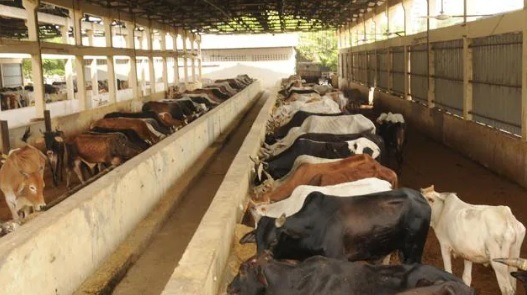
On July 13, Dada issued an order directing hotels and restaurants under his jurisdiction not to mention the word beef on their signboards to maintain the “spirit of secularism”. The official asked all such establishments to remove the word by July 18, failing which a fine of ₹2,000 would be imposed and a process initiated to cancel their trade licenses.
Dada stated that the district administration believes in the secular spirit of the constitution but “open display” of the word beef on signboards may hurt sentiments of some sections of the community and “may create animosity between different groups of community”.
“Therefore, so as to maintain peace in the community and to continue the spirit of secularism and brotherhood within the community I hereby direct all such hotels and restaurants who have written the word BEEF on their signboards to remove such words by July 18,” the order read.
Dada’s directive soon went viral on social media and led to reactions and ridicule from many residents of Arunachal Pradesh, a state with a majority tribal population and where the consumption of beef is common among many communities.
“Is this order targeting the Muslims, Christians or our own tribal people? Whose religious sentiment (the) beef word is hurting in tribal state capital like Itanagar? Too much,” tweeted Amar Sangno, a journalist from the state. His was one of the many such reactions that were expressed showing displeasure at the order. Soon several organisations and groups in the state also voiced opposition to the directive.
On July 15, two days after his first order, Dada issued another one where he informed that the earlier directive was being “kept in abeyance till further orders” after “receiving representation from various quarters”.
He, however, added that the decision to keep the first order in abeyance was also necessitated in view of compliance by several hotels and restaurants and due to requests “for extension of timeline for compliance”.
A day after Dada’s second order, deputy commissioner of Itanagar Capital Region (ICR), Talo Potom, held a meeting with representatives of trade organisations and assured them that the first order will be withdrawn. Adding that it was issued as a preventive measure “with good intention”, Potom requested everyone including the media not to blow the matter “out of proportion”.
The issue over beef seems to have been resolved in Itanagar. But it was not the only instance in recent days when beef had found mention in media reports in the region. Two days ahead of Eid-al-Adha, which was celebrated on July 10, a few news outlets in Assam did stories on the issue based on a letter from the state’s home and political department written to deputy commissioners and superintendents of police of all districts.
The letter written on July 4 by KK Sharma, a joint secretary in the department, was regarding “illegal killing/sacrifice of cows, calves, camels and other animals and action against offenders for violation of transport and animal rules on the occasion of Bakrid (Eid-al-Adha)”.
Citing a letter issued by the Animal Welfare Board of India (AWBI) to all states on June 7, the letter from Sharma sought compliance from the districts and necessary action against those found violating existing provisions.
While the AWBI order was issued to all states and specifically mentioned the illegal sale and transport of a few animals in violation of existing rules, stories on it by news outlets a couple of days ahead of Eid-al-Adha led to confusion among many Muslims in Assam on whether they would be able to offer a sacrifice, which is an important part of Bakrid.
Uncertainty was compounded as the state government passed the Assam Cattle Preservation Bill last year and this was the first Eid-al-Adha after its promulgation. The Bill prevents the slaughter of cows unless a registered veterinary officer issues a written certificate that the animal is “fit for slaughter”. Only cows that are over 14 years or those that have become permanently incapacitated due to work, breeding, accident, or deformity will be certified for slaughter.
Those cattle that have been certified will have to be slaughtered only in licensed and recognised slaughterhouses. The state government may exempt certain places of worship, or certain occasions for the slaughter of cattle other than cow, heifer or calf, for religious purposes.
The Bill also stipulated that no one will be allowed to sell beef or beef products in any form except at places permitted by the government. Beef won’t be allowed to be sold in areas which have a predominant population of Hindus, Sikhs, Jains and other non-beef-eating communities or within a radius of five kilometres of any temple, ‘satra’ (Vaishnavite monastery) “or other religious institutions belonging to Hindu religion or any other institution or area as may be prescribed by the competent authority”.
Following confusion about sacrifice after the home and political department letter, and the news reports on it, chief minister (CM) Himanta Biswa Sarma clarified that while the provisions of the cattle preservation law will be enforced, there won’t be any restriction on the sacrifice of cows and other animals in areas where Muslims have a majority population.
“I have asked police and district authorities not to worry about violations as I have faith in the public and am sure that they won’t violate existing provisions on cattle sacrifice. And in areas where there’s no presence of followers of other religions, in those places Muslims can follow their religious practices (including the slaughter of cattle) as our law doesn’t have any restrictions on that,” Sarma said before Eid-al-Adha in an effort to end the uncertainty.
Following the CM’s statement confusion regarding sacrifice got reduced and Eid-al-Adha was celebrated across the state without any untoward incidents or reports of violations of law.
 ABOUT THE AUTHORUtpal Parashar
A seasoned senior journalist, I have nearly three decades of experience across print, digital, and online platforms, covering political transitions, insurgencies, environmental issues, and development stories in India and Nepal. I am skilled in breaking news, leading editorial teams and launch of newspaper editions. I am adept at leveraging digital trends and social media to expand global reach, with a strong ethical foundation and a reputation for impactful journalism. An alumnus of Asian College of Journalism, I joined Hindustan Times in New Delhi as a trainee reporter in May 1997. Over the years, I have been posted in Dehradun, Kathmandu (Nepal) and Guwahati. Currently, as Senior Assistant Editor at Hindustan Times, I lead a team reporting on India’s northeastern states. My work involves in-depth analysis, and engaging multimedia storytelling across formats, including text, photo, video, and interactive content. I am skilled in producing timely, shareable content, leveraging digital platforms and social media to engage global audiences. Throughout my career with the Hindustan Times, I have led diverse editorial teams, designed capacity-building activities, and supported reporters in developing strong story ideas, ethical reporting practices, digital skills, and fact-checking techniques. As Senior Assistant Editor for Northeast India, I have been responsible for guiding correspondents through complex political, humanitarian, and community-level stories using multimedia formats. Earlier, as Foreign Correspondent in Nepal, I produced extensive reporting during Nepal’s democratic transition and the 2015 earthquake and its aftermath.Read More