
 E-Paper



No space for third party in India-China ties, S Jaishankar tells Wang Yi
Stable border, de-escalation and predictable supply chains will move bilateral ties towards normalcy.

 Prefer HTon Google


External affairs minister S Jaishankar has conveyed to his Chinese counterpart Wang Yi on July 14 that there is no role of a third party (read Pakistan) nor any focus on its (the third party’s) interests in the evolving bilateral relationship between India and China after the PLA’s 2020 transgression across the line of actual control (LAC) in East Ladakh.
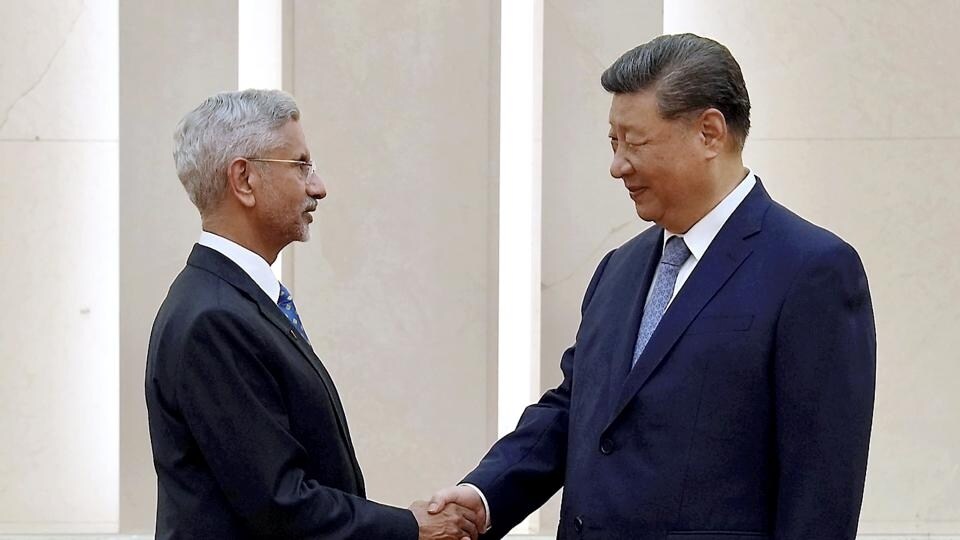
During his meeting earlier this week, Jaishankar conveyed satisfaction over the Indian army resuming patrols in the Depsang Plains and Demchok area after India and China reached an agreement in October 2024. He also conveyed that a “stable border” is the lynchpin of stable bilateral ties between the two countries and recommended that both armies should now focus on de-escalation as five years have passed after the transgression in East Ladakh and the Galwan skirmish between the two armies. Even now both armies have some 50,000 troops along with tanks and heavy weapons deployed on both sides of the 1,597 km Line of Actual Control (LAC) in East Ladakh.
Minister Jaishankar also conveyed to Politburo member Wang that China should ensure predictable supply chains and not impose export constraints towards India. Recently, China imposed export constraints on critical minerals used in manufacturing of magnets used in the auto industry and Potassium-Nitrogen fertilizers .
It is understood that the meeting between the two leaders was cordial with Jaishankar pointing out that third countries should not be allowed to define India-China bilateral ties. The statement assumes significance as China supplies 81% of Pakistan’s military hardware and this equipment including missiles and aircraft was on full display during Operation Sindoor.
If improvement of bilateral ties between India and China was the focus of the Jaishankar-Wang meeting, then terrorism was the key focus of the Indian Minister during the SCO Foreign Minister’s meeting on July 13. While stating that SCO was created to tackle the evils of terrorism, separatism and extremism, he pointed out that the Indian action on terrorist camps in Pakistan was in consonance with the UN Security Council resolution 16050 passed on April 25 after the Pahalgam terror attack. The resolution was unanimously approved by the UN SC including by Pakistan, China and Russia. It empowers countries to hold “perpetrators, organizers, financiers and sponsors of terror” accountable and for them to be brought to justice. The same resolution condemned the Pahalgam terror attack and called terrorism one of the most serious threats to international peace and security.


