E-Paper



Number Theory: Three charts which explain the GDP numbers
The latest GDP growth numbers are significantly higher than what RBI or independent experts thought they would be
Published on: Dec 1, 2023, 07:53:20 IST


Share via


Copy link

The Indian economy grew at 7.6% in the quarter ending September 2023, according to data released by the National Statistical Office (NSO) on November 30. The latest GDP growth numbers are significantly higher than what RBI or independent experts thought they would be. What explains this positive surprise on the GDP front? What are the strengths and weaknesses of the Indian economy at the moment? Here are three charts that try and answer this question.

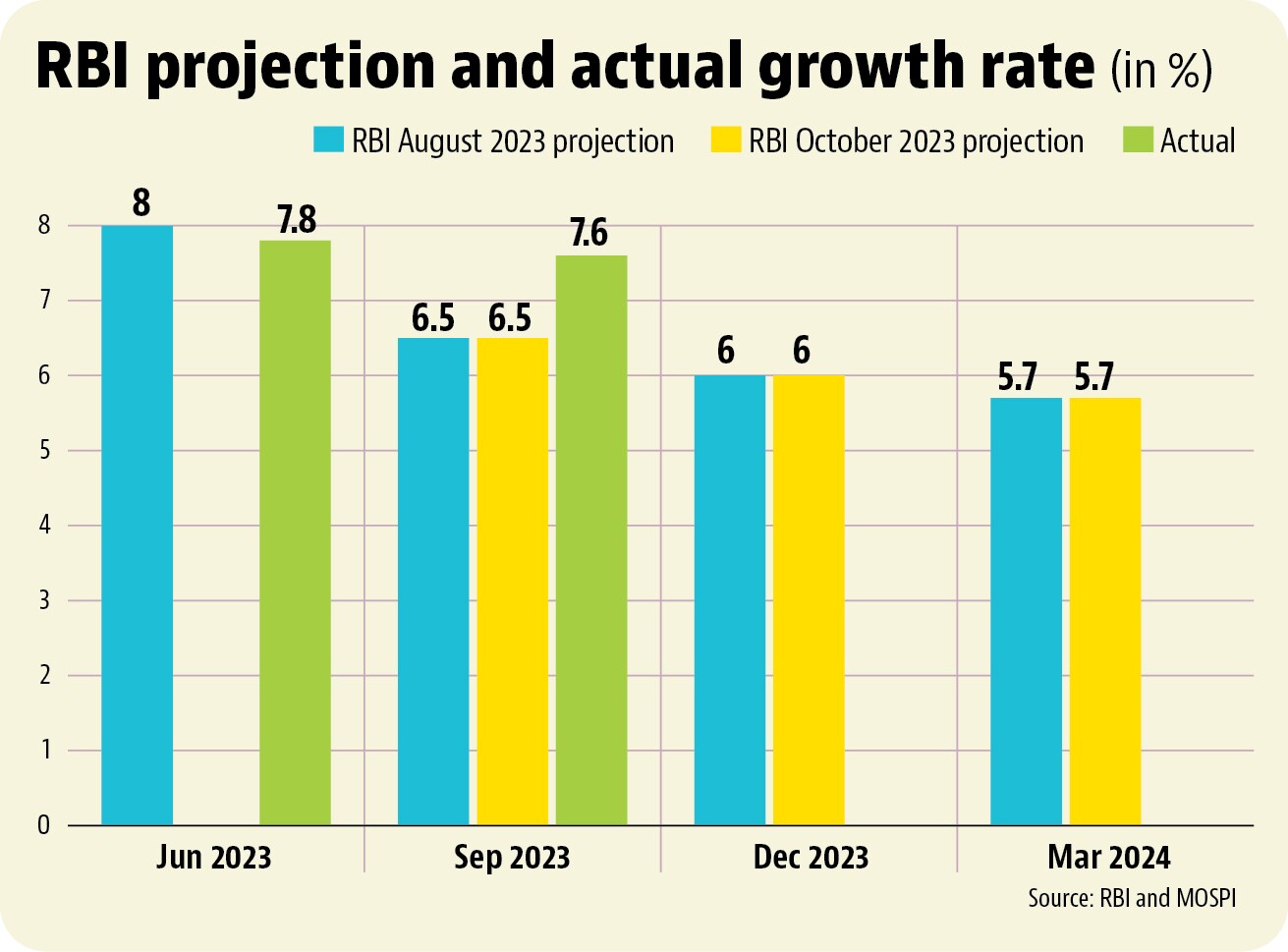
 RBI projections have gone from being overestimates to underestimates in the first two quarters of 2023-24In its August resolution, the Monetary Policy Committee (MPC) of RBI projected an 8% GDP growth for the June quarter. The actual number came slightly lower at 7.8%, which was exactly what was projected by a Bloomberg forecast of economists. While MPC retained its annual and September quarter forecast of 6.5% each between the August and October resolutions, a Bloomberg forecast of economists brought down their September quarter growth projection to 6.8%. The GDP numbers released on Thursday have proved that both RBI’s and Bloomberg’s projections were significant underestimates. RBI’s growth projections, it needs to be underlined, are not just an exercise in prediction, but also a critical input in framing monetary policy. GDP growth numbers significantly exceeding RBI’s expectations means that there will be fewer concerns regarding growth. It also rules out any reduction in interest rates in the near future. See Chart 1 RBI projection and actual growth rate
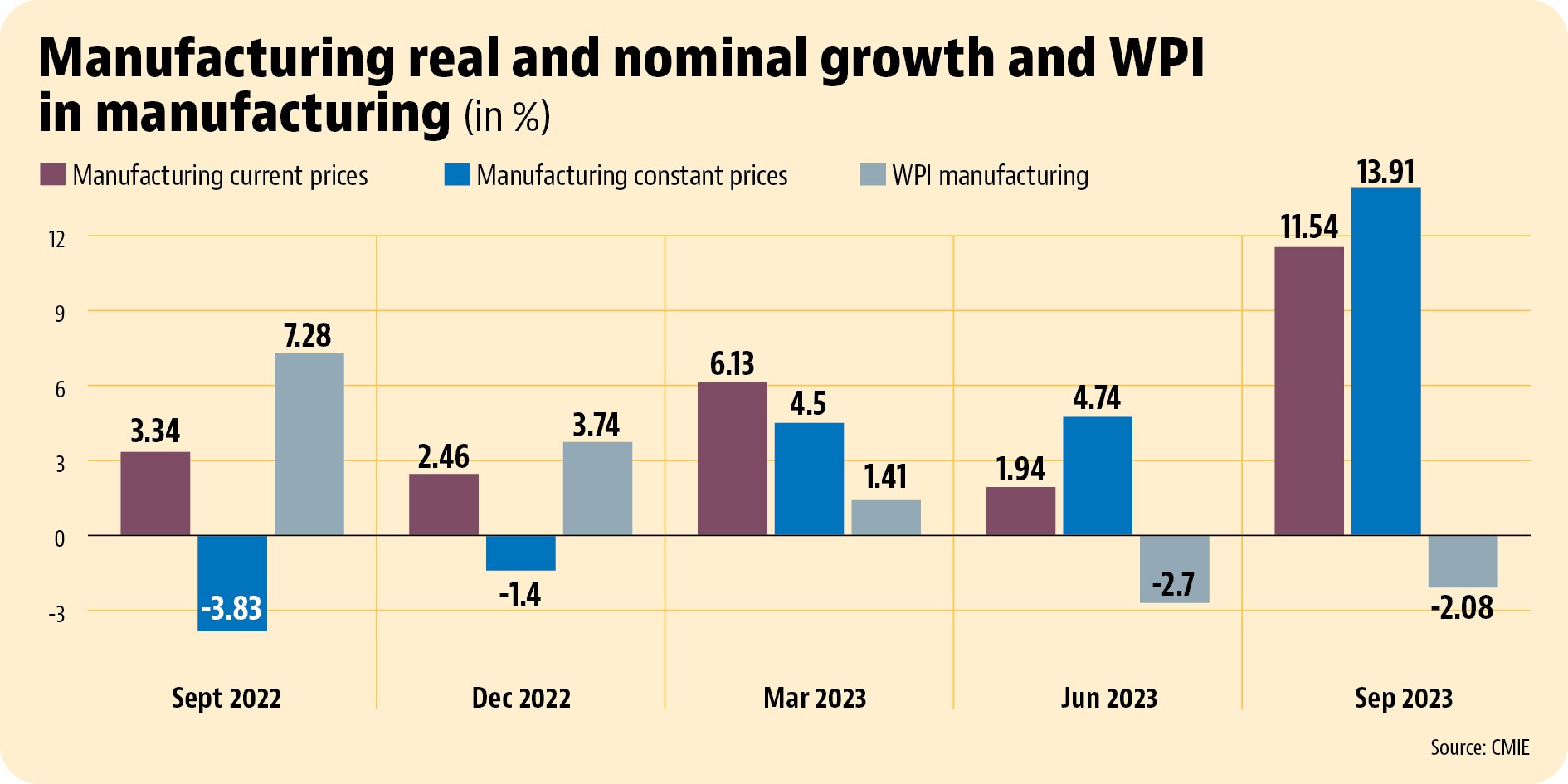
- What explains the surge in manufacturing growth?With a 13.9% year on year growth , manufacturing has played a role in the headline GDP number being much higher than it was expected to be. What explains this positive surprise in manufacturing performance? There is more than one answer to this question. The first is a favourable base effect. Manufacturing output suffered a contraction of 3.8% in the quarter ending September 2022, which gave a statistical boost to this year’s numbers. Manufacturing growth was 6.1% in the June 2022 quarter. The second is the role played by inflation. The real growth numbers for manufacturing for both the June and September quarter this year were higher than the nominal growth numbers. When read with the fact that wholesale prices for manufacturing contracted by 2.7% and 2.1% in the June and September quarters respectively, this suggests that the real numbers have benefitted from a favourable indexation effect. Having said that, it needs to be underlined that both the Index of Industrial Production (IIP) the and Purchasing Managers Index (PMI) for manufacturing did show good economic momentum for manufacturing in the September quarter. See Chart 2 Manufacturing real and nominal growth, and WPI in manufacturing
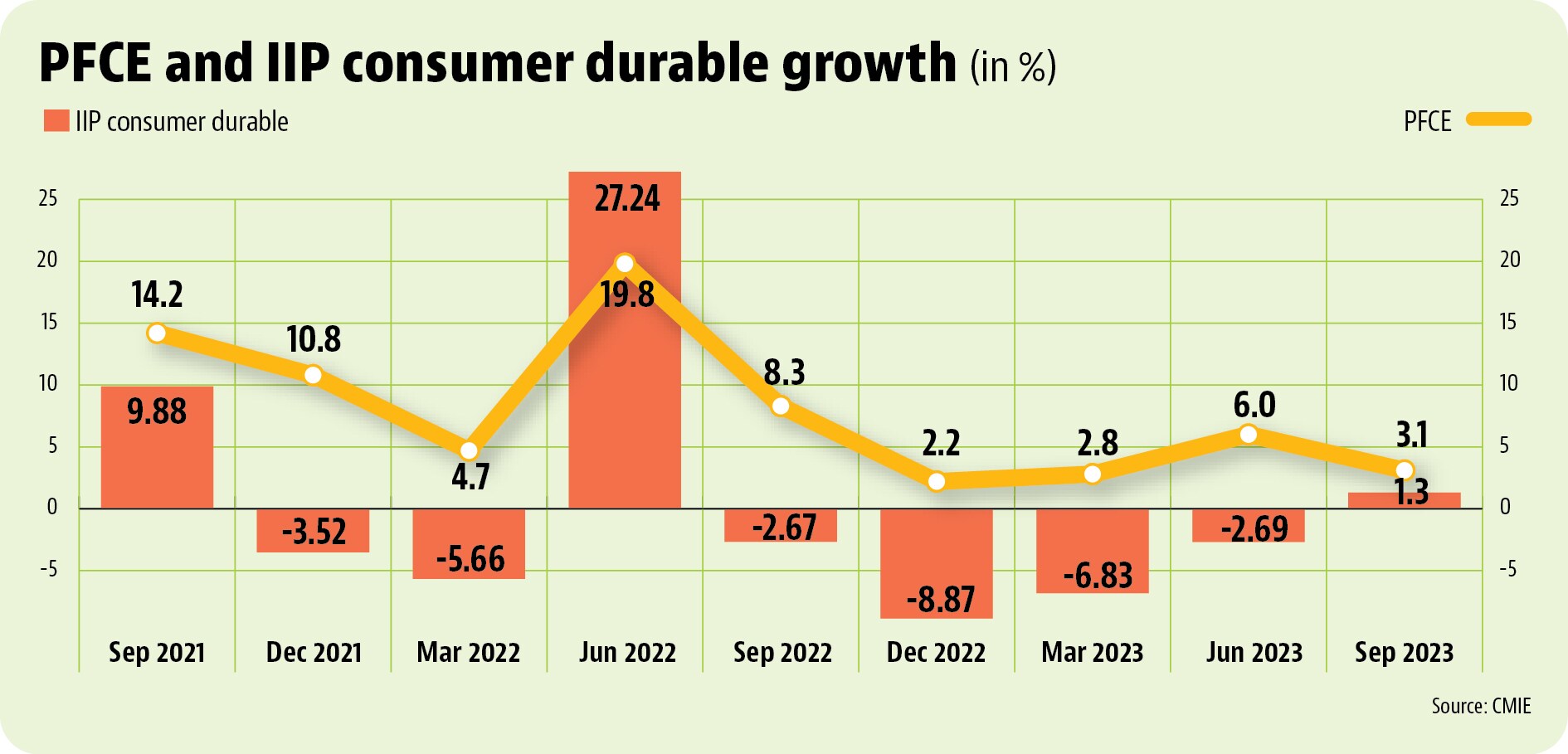
- But PFCE and IIP numbers do highlight an area of concern about the economyThe most important cause of concern, despite the GDP growth numbers being much higher than expected, is the loss of momentum in private final consumption expenditure (PFCE). The September quarter PFCE growth is just 3.1% compared to 6% for the June quarter. The weakness in PFCE growth suggests that a large part of the population might not be a participant in the momentum that seems to be driving the Indian economy. This thesis gains further strength from a look at the consumer durable part of IIP that underperformed the headline growth for the index in both the June and September quarters. The weakness in PFCE numbers is also in keeping with overall consumer sentiment -- RBI’s Consumer Confidence Survey continues to be in the red. Consumer demand is also facing headwinds because of the 2.5 percentage point interest rate hike administered by RBI since May 2022. See Chart 3: PFCE and IIP consumer durable growth
- All said and done, India continues to be a bright spot in the global economyThe most important big picture takeaway from the September quarter GDP numbers is how India continues to be a bright spot. While it remains to be seen whether RBI will do an upward revision to its current forecast of 6.5% GDP growth for 2023-24, independent analysts have already made upward revisions to their GDP projections. Barclays, for instance, raised its 2023-24 GDP growth forecast from 6.3% to 6.7%. Even without these upward revisions, India was the fastest-growing major economy in the IMF’s World Economic Outlook projections released in October with a projected growth rate of 6.3%. Barring a major economic shock, India’s outperformance vis-a-vis other major economies is likely to remain intact or improve further.