E-Paper



Third hike for petrol, diesel in India amid US-Iran war: Check new rates
This is the third increase this month. Prices have risen by almost ₹5 per litre in just over a week.

 Prefer HTon Google


State-run oil marketing companies (OMCs) on Saturday raised petrol and diesel prices by nearly ₹1 per litre each — the third hike in eight days — taking cumulative increases to almost ₹5 per litre, even as international Brent crude fell 5.5% from the level at the time of the first hike on May 15.
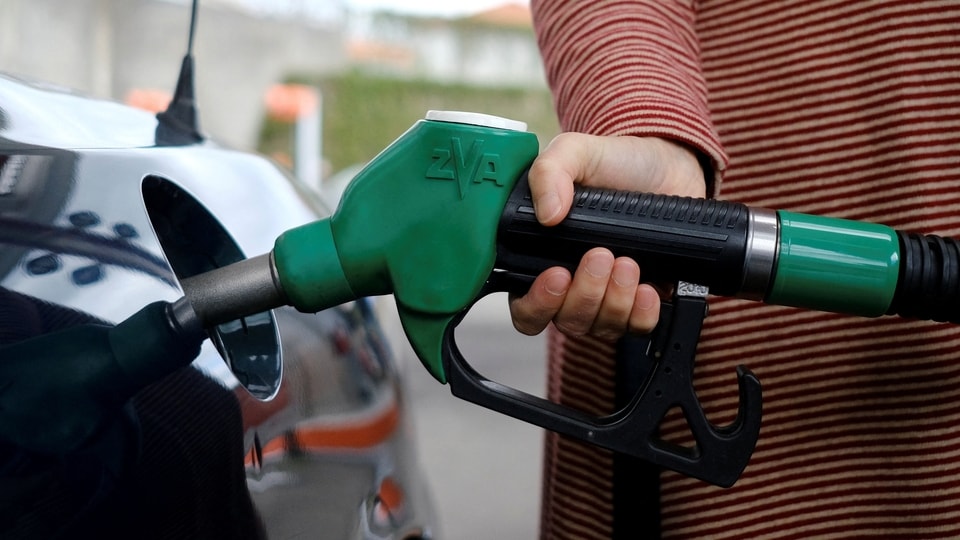
In Delhi, petrol now costs nearly ₹100 per litre ( ₹99.51 per litre, to be precise), up 87 paise, while diesel rose 91 paise to ₹92.49 per litre.
Check city-wise rates:
Retail selling prices of petrol and diesel across the four major metros for May 23:
| Metro | Petrol ( ₹/Litre) | Diesel ( ₹/Litre) |
| Delhi | 99.51 (+0.87) | 92.49 (+0.91) |
| Kolkata | 110.64 (+0.94) | 97.02 (+0.95) |
| Mumbai | 108.49 (+0.90) | 95.02 (+0.94) |
| Chennai | 105.31 (+0.82) | 96.98 (+0.87) |
Price hikes may continue
Sector experts and industry executives said incremental fuel price hikes in small doses may continue till oil marketing companies stop incurring revenue losses, estimated at around ₹8-10 per litre on petrol and diesel, apart from losses on liquefied petroleum gas (LPG or cooking gas).
Check petrol, diesel prices
Variations in local levies mean the increase differs by city: petrol has risen to ₹110.64 in Kolkata (up 94 paise), ₹108.49 in Mumbai (up 90 paise), and ₹105.31 in Chennai (up 82 paise).
The effective increase in pump prices of petrol after the three hikes since May 15 is ₹4.74 per litre in Delhi, while diesel prices have risen by ₹4.82 per litre. Rates, however, differ from city to city.
Diesel is now priced at ₹97.02 in Kolkata, ₹95.02 in Mumbai, and ₹96.98 in Chennai, with increases of 95 paise, 94 paise, and 87 paise respectively from May 23 levels. The three state-run OMCs — Indian Oil Corporation, Bharat Petroleum, and Hindustan Petroleum — together control over 90% of domestic fuel retail and revise prices simultaneously.
International oil prices remain elevated
Industry executives and sector analysts said international crude prices continue to remain elevated above $100 per barrel and highly volatile. As a result, retail fuel prices in India may continue to rise unless crude stabilises below $100, preferably near the comfort level of $70 in a best-case scenario.
After the first ₹3 hike on May 15, government officials had said that daily revenue losses on petrol, diesel, and LPG stood at around ₹1,000 crore across the three OMCs. After the second round of hikes on May 19, their combined losses reportedly fell to ₹750 crore.
Following the third hike on May 23, under-recoveries are estimated to have dropped below ₹500 crore per day, according to the experts cited above.
The increase in retail fuel prices on May 15 was the first since April 2022, when rates were raised in the aftermath of Russia’s war in Ukraine. Between late March and April 6, 2022, pump prices rose by roughly ₹9 per litre, often through daily increases of around 80 paise.
The pressure on OMCs reflects the scale of India’s exposure to the West Asia crisis. India imports over 88% of the crude oil it processes and pays in dollars, making it doubly vulnerable to both oil price spikes and currency depreciation.
Benchmark Brent crude closed at $103.54 a barrel on Friday — up nearly 0.9% from $102.58 the previous day. Since the conflict broke out on February 28, Brent prices have surged by a little over 42%, compared with $72.87 on February 27.
OMC profits rise
Despite the full impact of the West Asia conflict in the last month (March 2026) of 2025-26, the three OMCs registered a combined net profit of ₹19,470 crore in the January-March 2026 quarter, marking a 40.74% increase over the same period last year. While Indian Oil Corporation (IOC) and Hindustan Petroleum Corporation Ltd (HPCL) posted strong profits after tax in the fourth quarter of FY26, Bharat Petroleum Corporation Ltd’s (BPCL) net profit remained flat.
Cumulatively, the three companies recorded a 130% jump in combined net profit in 2025-26 to ₹77,280.65 crore, compared with ₹33,601.57 crore in 2024-25, according to their standalone financial results declared this week. The strong performance was largely driven by stable oil prices for much of the year — until the US-Israel attack on Iran in February roiled the market. With raw material prices relatively low and finished product prices stable, these companies benefited from higher refining and marketing margins.