E-Paper



Russia’s deputy PM Denis Manturov lands tomorrow, to discuss West Asia war, bilateral ties
Following a month-long US sanctions waiver, Russia has again become the largest supplier of crude oil to India in recent weeks.

 Prefer HTon Google


Bilateral relations, especially security and defence ties, and the West Asia conflict are expected to top the agenda for Russian first deputy prime minister Denis Manturov’s visit to India this week.
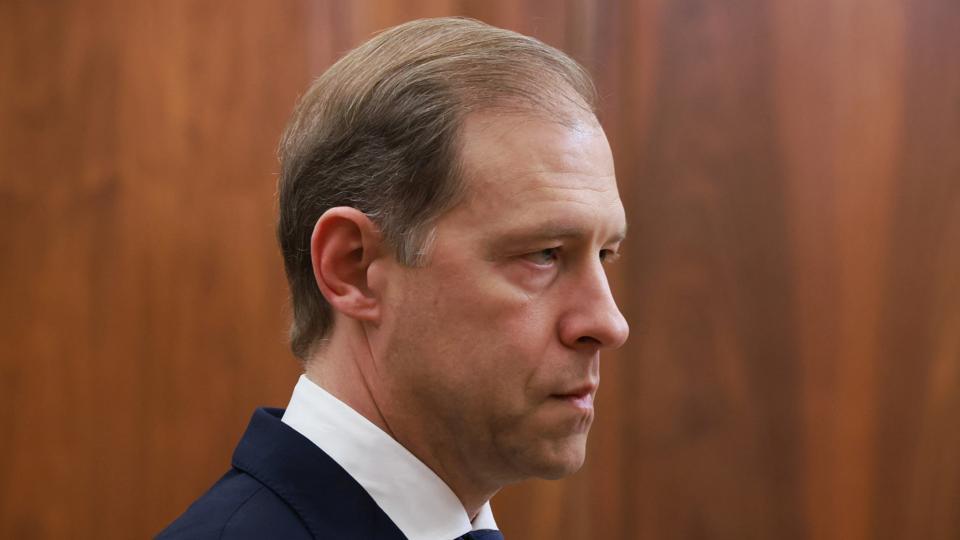
Manturov, who will begin his two-day visit on Thursday, is scheduled to meet National Security Adviser Ajit Doval, external affairs minister S Jaishankar and finance minister Nirmala Sitharaman, according to the external affairs ministry.
Doval and Manturov are expected to discuss cooperation in crucial areas such as defence, security, energy and trade. Following a month-long US sanctions waiver, Russia has again become the largest supplier of crude oil to India in recent weeks.
Ahead of Manturov’s visit, foreign secretary Vikram Misri and Russian deputy foreign minister Andrey Rudenko co-chaired the foreign office consultations in New Delhi on March 30, reviewing bilateral ties and sharing perspectives on regional and global issues.
Both sides also assessed the progress in implementing decisions made at the India-Russia Summit in New Delhi last December, which had focused on economic cooperation.
Manturov’s visit will follow the Indian government’s decision to acquire five more S-400 air defence systems from Russia in the wake of the system’s performance during Operation Sindoor, the four-day conflict with Pakistan last year.
India concluded a $5-billion deal with Russia in October 2018 to buy five S-400 air defence systems despite a warning by the US that the contract could attract sanctions under the Countering America’s Adversaries Through Sanctions Act (CAATSA).
Russia has delivered three of these systems so far, though delivery of the two remaining batteries has been affected by the conflict in Ukraine.
Manturov’s interactions are also expected to focus on the fallout of the West Asia conflict on the global economy, especially disruptions in energy supplies.
During last year’s summit between Prime Minister Narendra Modi and Russian President Vladimir Putin, the two sides unveiled several measures to bolster economic ties, including a five-year roadmap and a target to increase trade to $100 billion by 2030. Russian foreign minister Sergey Lavrov last week lauded India’s “independent foreign policy” and said Moscow is looking forward to Modi’s visit this year.