
 E-Paper



Supreme Court’s constitutional bench begins hearing EWS pleas
The bench, comprising Chief Justice of India Uday Umesh Lalit and justices Dinesh Maheshwari, S Ravindra Bhat, Bela M Trivedi and JB Pardiwala, began hearing the batch of petitioners who have questioned the validity of the 2019 amendment which provided for reservation for EWS in government jobs and educational institutions.

 Prefer HTon Google


A constitution bench in the Supreme Court on Tuesday commenced its hearing on the challenge to the central law for 10% reservation benefits to the economically weaker sections (EWS).
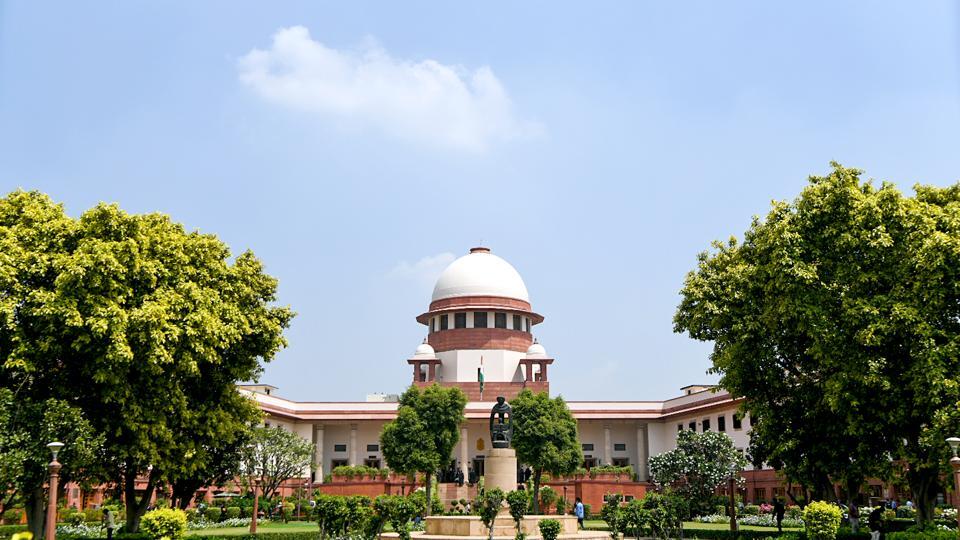
The bench, comprising Chief Justice of India Uday Umesh Lalit and justices Dinesh Maheshwari, S Ravindra Bhat, Bela M Trivedi and JB Pardiwala, began hearing the batch of petitioners who have questioned the validity of the 2019 amendment which provided for reservation for EWS in government jobs and educational institutions.
Advocate and academician Mohan Gopal attacked the law, terming it a tool of “financial upliftment” only for “forward classes”.
“As the EWS quota excludes socially and educationally backward classes and confines the benefits only to forward classes, it results in violation of the principles of equality and social justice and amounts to infringing the basic structure of the Constitution... We must see 103rd amendment as an assault on the constitution,” Gopal argued.
He added that the 103rd amendment is the first and the only caste-based reservation in India, for it specifically excludes those covered under SC/ST and SEBC reservation.
“We are not interested in reservation. We are interested in representation. If someone brings a better way of representation than reservation, we will throw away the reservation in the Arabian sea...Our aim should be not to give reservation unless it’s for representation”, Gopal submitted.
He emphasised that the exclusion of backward classes is illegal. “You tell the poorer person that you are not entitled only because you are from a lower caste. This is happening on the ground. The denial of equal rights and opportunities to backward classes will change the identity of the constitution in the minds of people and it will be seen as an instrument which protects privilege”, Gopal argued.
Following Gopal, senior lawyers Meenakshi Arora and Sanjay Parikh also made submissions on behalf of some of the petitioners, and argued that the very idea of EWS reservation falls foul of the concept of reservation based on marginalisation and stigmatisation.
The five-judge bench will continue hearing the case on Wednesday. Last week, the bench set down three major legal issues to be debated for scrutinising the validity of the 2019 amendment. These included whether the 103rd Constitution Amendment can be said to breach the basic structure of the Constitution by permitting the State to make special provisions, including reservation, based on economic criteria, or by permitting the State to make special provisions in relation to admission to private unaided institutions. “Whether the 103rd Constitution Amendment can be said to breach the basic structure of the Constitution in excluding the SEBCs/OBCs’/SC/STs from the scope of EWS reservation,” stated the third issue.
Backing the EWS quota law, attorney general KK Venugopal, through his written note, told the court last week that the 50% cap on reservation is “not sacrosanct, as the senior counsel defended the 10% EWS quota law. The Union government’s position could change the paradigm that has governed reservations in India, preventing states from enforcing quotas that take the proportion above the 50% mark laid down in 1992 by the apex court in the Indra Sawhney (famously known as Mandal Commission) judgment. He added that the Preamble of the Constitution provides for the upliftment of EWS, which, Venugopal emphasised, could be through reservations in educational institutions, posts in public employment, and a series of welfare measures that the State is bound to hold out for its weaker sections of society.


