
 E-Paper



Hate speech case: Supreme Court stays order asking Azam Khan to send voice sample
The Supreme Court has stayed a trial court order requiring Samajwadi Party leader Azam Khan to provide a voice sample in a 2007 hate speech case.

 Prefer HTon Google


The Supreme Court on Wednesday stayed an Uttar Pradesh trail court order directing senior Samajwadi Party leader Azam Khan to give a voice sample in connection with a 2007 hate speech case.
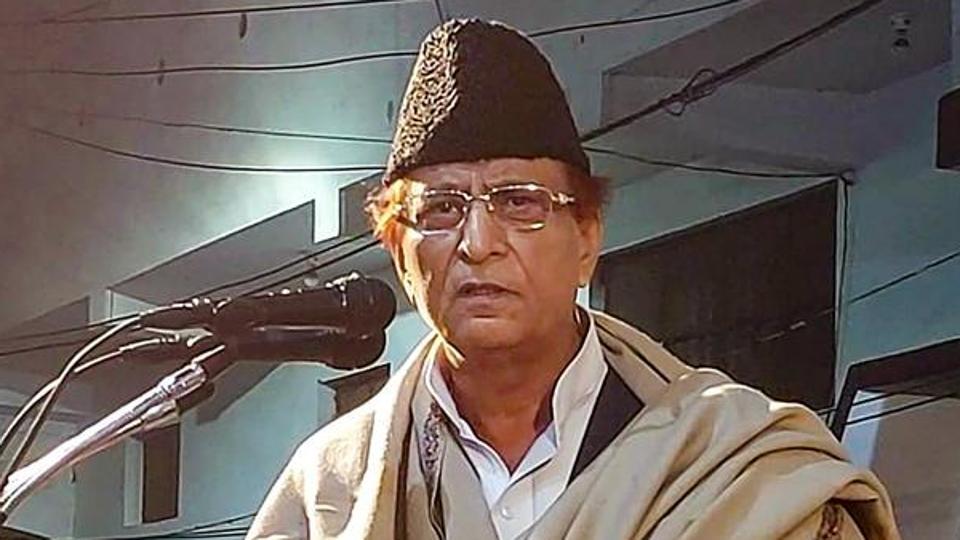
The case pertains to Khan’s speech made during a public meeting in Tanda area of Rampur in August 2007, when he allegedly made derogatory remarks against Bahujan Samaj Party (BSP) chief Mayawati. The voice sample was sought to match it with Khan’s speech which was recorded on a cassette.
“There shall be an interim stay of the direction of the trial court order dated October 29, 2022, and upheld by the Allahabad high court dated July 25, 2023,” a bench of justices AS Bopanna and PK Mishra said.
The bench also issued notice to the Uttar Pradesh government and the complainant in the case.
Khan had approached the top court after the high court last month refused to consider his objections and directed him to submit his voice samples. As the matter was listed on Wednesday before the Rampur court as well, senior advocate Kapil Sibal, appearing for Khan, requested the apex court to pass an urgent order.
The complaint against Khan, then a member of legislative assembly (MLA), was filed by one Dheeraj Kumar Sheel at the Tanda police station under SC/ST (Prevention of Atrocities) Act in 2007, charging him with delivering a hate speech and allegedly using derogatory language against then chief minister Mayawati. The complaint also alleged that Khan’s speech violated the model code of conduct enforced at the time by the Election Commission.
Besides booking Khan under Sections 504 (intentional insult with intent to provoke breach of the peace) and 171-G (false statement in connection with an election) of the Indian Penal Code (IPC), the police also invoked Section 125 of Representation of the People Act and SC/ST Act against the Samajwadi Party leader.
Sibal pointed out that the high court in its order said that the recording of the speech was handed over to the police and was sent for forensic examination. However, the same could not be verified by the forensic lab without proper documentation. As the voice sample in the recording had to be verified, the trial court directed Khan to give his voice sample.
The Uttar Pradesh police filed had a charge sheet in the case in March 2009, but the disputed cassette containing Khan’s speech was not made part of it. Before the high court, Khan argued that any electronic evidence requires a certificate of the competent person for the disputed cassette to be treated as evidence. This is provided under Section 65-B of the Evidence Act. However, the high court said it was a “procedural irregularity” and the requisite certificate can be obtained even at a subsequent stage of trial.


