
 E-Paper



UP Madarsa Education Act: Supreme Court upholds constitutional validity, sets aside Allahabad high court verdict
Supreme Court underlined the UP government's vital role in ensuring that educational standards in madrasas align with modern academic expectations.

 Prefer HTon Google


Validity of UP Madarsa Education Act: The Supreme Court on Tuesday set aside the Allahabad high court's March judgment that declared the 2004 Uttar Pradesh Board of Madarsa Education Act unconstitutional.
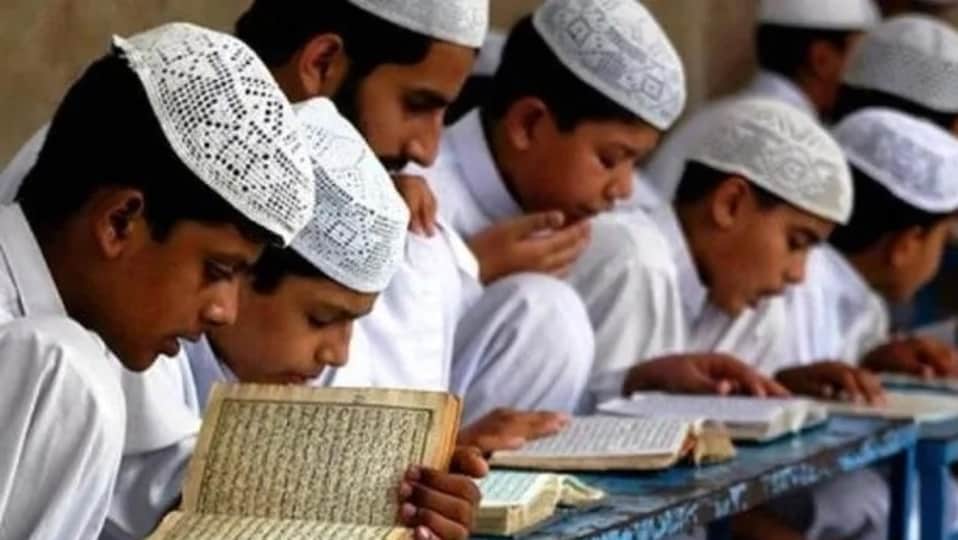
Simultaneously, a bench comprising Chief Justice of India (CJI) DY Chandrachud and Justices JB Pardiwala and Manoj Misra underlined the Uttar Pradesh government's vital role in ensuring that educational standards in madrasas align with modern academic expectations, asking the state to relocate students to other schools.
The Supreme Court also declared that madrasas can't grant degrees of higher education since that's violative of the University Grants Commission Act.
“We have upheld the validity of the UP madrassa law and moreover, a statute can be struck down only if the state lacks the legislative competence,” the CJI said while pronouncing the verdict.
“Legislative scheme of the UP Board of Madarsa Education Act was to standardise the level of education being prescribed in madrasas,” the Supreme Court said.
The bench, on October 22, had reserved the judgment on eight petitions, including the lead one filed by Anjum Kadari, against the high court verdict.
What was Allahabad high court verdict on UP Board of Madarsa Education Act?
On March 22, the Allahabad high court had declared the Act as “unconstitutional” and violative of the principle of secularism, and asked the Uttar Pradesh government to accommodate madrasa students in the formal schooling system.
On April 5, the CJI-led bench had provided a breather to about 17 lakh madrasa students by staying the verdict of the high court scrapping the Uttar Pradesh Board of Madarsa Education Act, 2004.
During the hearing, the CJI had observed that secularism means to "live and let live".
Moreover, regulating madrasas was in the national interest as several hundred years of the nation's composite culture could not be wished away by creating silos for minorities, DY Chandrachud had said.
The Uttar Pradesh government, in response to a query of the bench, said it stood by the Uttar Pradesh Board of Madarsa Education Act, 2004 and was of the view that the Allahabad high court should not have held the entire law as unconstitutional.
Agreeing to the submissions of senior lawyer Mukul Rohatgi, appearing for the litigants opposed to the high court verdict, the CJI said, “Secularism means – live and let live.”
Referring to the composite national culture, the CJI had asked the state government, "Is it not in our national interest that you regulate the madrasas?"
The bench further said, “You cannot wish away several hundred years of history of this nation like this. Suppose, we uphold the high court order and the parents of the children still send them to madrasas then it will just be a silos without any legislative intervention mainstreaming is the answer to ghettoisation.”
It had also asked to preserve India as a melting pot of cultures and religions.
“Ultimately, we have to see it through the broad sweep of the country. Religious instructions are there not just for Muslims. It is there for Hindus, Sikhs, Christians, etc. The country ought to be a melting pot of cultures, civilisations, and religions. Let us preserve it that way. In fact, the answer to ghettoisation is to allow people to come to the mainstream and to allow them to come together. Otherwise, what we essentially would be doing is to keep them in silos,” the CJI had remarked.
The bench had wondered what was wrong with the law recognising madrasas imparting religious instructions, mandating they followed certain basic standards but striking down the entire law meant such institutions remained unregulated.
The bench had said it should not be misunderstood as it was equally concerned about madrasa students getting quality education.
However, quashing the entire law was like throwing out the baby with the bathwater, it had said, adding that religious instructions were never an anathema in the country.
The top court had heard several lawyers on behalf of the eight petitioners apart from additional solicitor general KM Natraj for the Uttar Pradesh government for about two days before reserving the verdict.
Commencing the final arguments on the pleas against the verdict, the bench, had also heard senior lawyers including Abhishek Manu Singhvi, Salman Khurshid and Menaka Guruswamy for the petitioners.
Senior advocates, including Rohatgi, P Chidambaram and Guru Krishna Kumar, had also made submission while representing various litigants.


