E-Paper



Uttarakhand HC seeks action plan from state govt, railway min for return of those stranded in Mumbai
The court, which will hear the case next on Thursday, gave the direction in response to an intervention application in a public interest litigation (PIL) filed by Pritam Singh, seeking to know about the efforts being made to repatriate the stranded people from Mumbai.

 Prefer HTon Google


The Uttarakhand high court (HC) on Monday directed the state government and the Union Ministry of Railways to inform it by Wednesday about their plan of action to ferry around 2,600 people, who are stranded in Mumbai since the nationwide lockdown restrictions were imposed on March 25, back to the hill state.
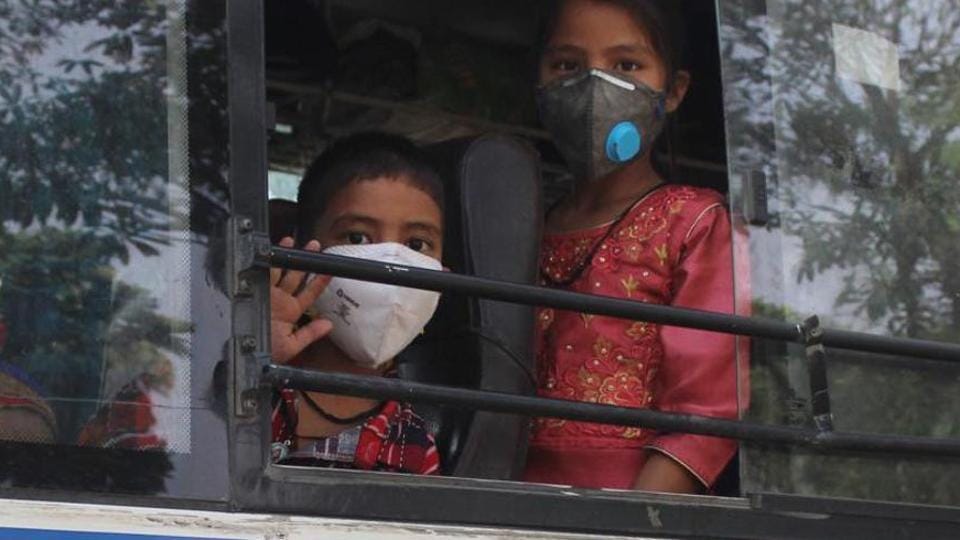
The court, which will hear the case next on Thursday, gave the direction in response to an intervention application in a public interest litigation (PIL) filed by Pritam Singh, seeking to know about the efforts being made to repatriate the stranded people from Mumbai.
Shveta Mashiwal-Sharma, the convenor of Pravasi Sahyogi Team, a group of Mumbai-based non-governmental organisations (NGOs) run by migrants from Uttarakhand, had moved the intervention application through her counsel, Dushyant Mainali.
Mashiwal-Sharma is a native of the hill state’s Kumaon region, but currently lives in Mumbai.
The intervention application alleged that though stranded migrants were brought back to Uttarakhand in three Shramik Special trains from Mumbai in May amid the nationwide easing of lockdown restrictions, which were imposed to contain the spread of the raging coronavirus disease (Covid-19) outbreak, the state government has not decided the fate of around 2,600 people still stuck there.
The application pointed out that Pravasi Sahyogi Team has been supporting the stranded people from Uttarakhand and working as a conduit between them and the state government in a bid to facilitate their return back home.
“Pravasi Sahyogi Team, Mumbai, had prepared a database of 6,000 migrant workers of Uttarakhand, who were stranded in and around Mumbai, and registered them on the state government portal with the help of volunteers. The list was shared with Maharashtra and Uttarakhand governments and also with the railway officials,” the application said.
It cited that the first batch of 1,200 stranded migrants arrived by a Shramik Special train from Mumbai on May 19, followed by another 1,305 three days later. On May 26, 1,375 passengers were the last batch to reach Uttarakhand, it added.
Now, the fate of the rest around 2,600 people hangs in balance, as they couldn’t be accommodated in the first three Shramik Special trains because of strict compliance with social distancing norms, the application stated.
It made a strong case to expedite the 2,600-odd stranded people’s return to Uttarakhand and also blamed the state government’s apathy to come to their rescue in Mumbai, which has been the worst-affected by the pandemic in the country.
Mashiwal-Sharma said they even wrote to Uttarakhand chief minister Trivendra Singh Rawat, but are yet to get any response from him.
She alleged that on June 5, both the chief secretaries of Maharashtra and Uttarakhand were apprised that around 2,600 stranded people were registered for their return journey back home on April 30, but there has been no action since then.
Mashiwal-Sharma urged the Uttarakhand government to ensure that these stranded people could return home at the earliest, as they have lost their livelihoods and are facing a severe cash crunch.
The HC admitted the application and directed the respondents – state government and the Union Ministry of Railways – to make their stand about the next course of action clear by Wednesday.