
 E-Paper



I used to live in a bit of fear:Talking boxing, life,loss with Lovlina Borgohain

 Prefer HTon Google


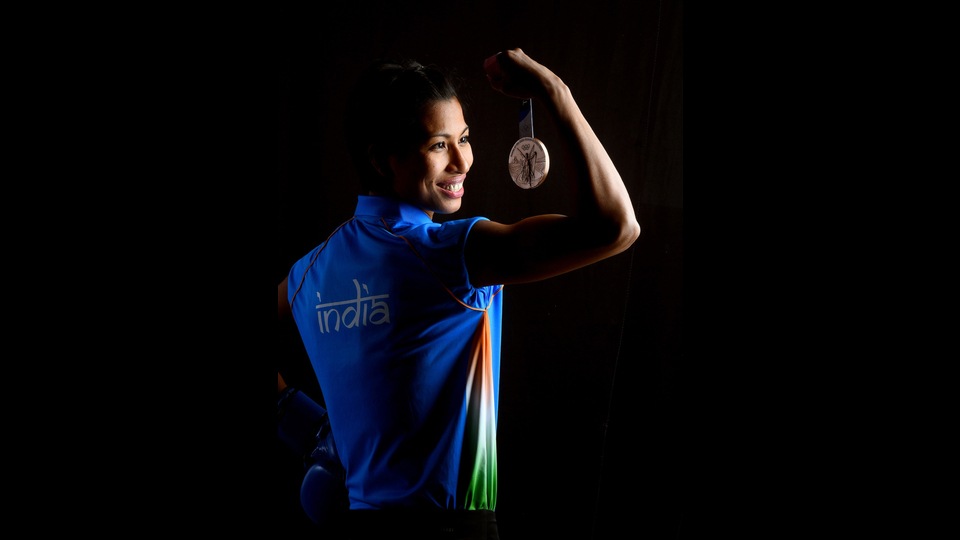
When the 23-year-old won bronze in Tokyo, it felt like failure, she says. She tells Wknd how she balances hope and loss, what goes through her mind during a bout, how she overcame fear, and what it’s like to score a win that feels like it comes with a rider.
It’s not often that a sportsperson wins at the Olympics, their first Olympics, and returns home full of apology. Boxer Lovlina Borgohain, 23, has asked forgiveness for not winning gold, promised she will at the Paris Games. Meanwhile, people in her home state of Assam, and across the country, have been beside themselves in celebration. (Her bronze is the first Olympic medal won by an Assamese person.) What makes for such a contrasting view on the same piece of metal? Excerpts from an interview.
Watching at home, we could see the heartbreak, and then the fresh resolve. How long did it take to move past the disappointment?
I was very disappointed. The bronze didn’t feel like a win at all. I felt like I had failed entirely. When my family told me about the excitement here at home in India, I paid no attention.
I felt like that right until I got the medal in my hands. Once I was holding the medal, I felt happiness. I had looked forward to this moment, the ceremony, the flags, the music. Standing there, I thought of how many times I had pictured this moment, in my head just before I went to sleep. How many sacrifices I had made. How much I had trained. It wasn’t a gold. It was a bronze. But it was a medal.
You and your two sisters took up kickboxing because your mother wanted you all to learn self-defence. Then, at 14, you were spotted by a boxing coach. How did it go from there to world domination?
It was what I was promised, actually. (Laughs) I found it so hard to live away from my family. I told my parents it was too hard. And they said, you do this for two years and then you will win an Olympic medal and then you’ll be done and you can come home.
So I would think of the Olympics every day. I would tell myself, you have to work really hard, and win this Olympics medal, and then you can just go home. And then I found out it wasn’t two years. The Olympics were every four years and the next one was four years away.
At some point it became your dream too?
At the assembly every morning, my prayer would be the same: Let me make it to the Olympics and win the gold and go home. Then I started to realise what it meant, and that I could do it. And it became my life’s goal also. Now the Olympic gold medal has become the thing I want. And I haven’t reached the goal. (Voice breaks)
You’re visibly upset, but this was your first Games. Most young athletes don’t even expect to medal at their first Olympics. Why does gold mean this much to you?
Because I’m always winning bronze. Every time I get left at bronze. I want to prove to myself that I can go beyond the bronze.
A bronze at the Olympics and a bronze everywhere else are slightly different things, though, aren’t they?
But even so, I have not become a champion. Yes, I managed to win a medal (said rather dismissively). But I want the flag to go up for me and the national anthem to play for me. The flag did go up, but our national anthem wasn’t there. That hasn’t happened for me yet. I want to win the gold for the country, and I want to win it to prove that I can.
You’ve spoken about working to defeat fear in your life. Commentators at the Olympics spoke of the smile with which you walk into the ring. How did that change happen?
I used to live in a bit of fear. Yes, I was aiming for gold, but I was living in fear that every little thing I did would affect that dream. If I slept late, ate a pani puri or spent time at the market, I feared that it would affect my game. It was what I was hearing from a lot of people. So for eight years, I didn’t do any of those things. And still I was only winning bronzes. Then the pandemic disrupted training schedules. I lost every bout for a year. When it came to the Olympics, no one expected me to win a medal at all.
Four months before the Olympics, I realised that this is not life. So much restriction, so much stress. How could I play well? I started to live my life. Fully. With an open heart. And I began to play with an open heart too. Without any fear. With a smile.
Someone on my team helped by telling me, you cannot train with a list of don’ts alone. You train when it’s training time; not all the rest of the time too.
Now I do what I enjoy. And it has improved my performance. When I train with joy, instead of stress, I can train for longer. I’m finding that there’s more than one way to do things, boxing too. It’s benefited me a lot.
What goes through your mind during a bout?
Your mind becomes something completely different. For me, there’s the constant thought that I want to win. Sometimes there’s also the thought of, what will happen if I lose. Earlier, I was always thinking about what would happen if I lost. And I would tell myself, it’s okay if I lose and it’s okay if I win.
Now I just think: I have to win; I will win. When you stop thinking about losing, your brain becomes more alert to cues about how you can win.
Boxing is also a game where a single punch can change everything. So you have to be careful about which way your mind is going, because you always know that you can still win. But you have to deal with the knowledge that you could lose at any point too.
Are you as competitive outside the ring?
Outside the ring, I’m more emotional than competitive. I’m a totally different Lovlina. In the ring, I’m thinking I have to win, no matter what. Outside the ring, I just want the other person to be happy.
Is there a non-boxing goal…
To play for the country is a different kind of joy. This medal has brought so many people so much joy. So right now that is my one goal: to win gold in Paris.
I do want to work to promote sports, especially among children in Assam. I would like to start now, because in 10 or 15 years, we could see results. Why wait? I’ll do it, others can do it, we can all move forward together.
There are so many people in our country who could win a medal. We must help them achieve those goals. Our medals tally must rise. From our India, a lot of champions can emerge.
What do you think it will take, to make that happen?
We need more people who are trained and qualified in sports management, sports education, in scientific methods of training.
We also need sports education in schools. And we need to celebrate local victories and grassroots winners. When children grow up seeing only the major winners – like these seven Olympic medallists – it turns sportspeople into celebrities. And every child knows that their chances of becoming a celebrity are slim, so they’d rather pose for a selfie with the person and return to their lives.


