
 E-Paper



Japanese craftsman keeps 172-year-old cast iron tradition alive with hand-made molds

 Prefer HTon Google


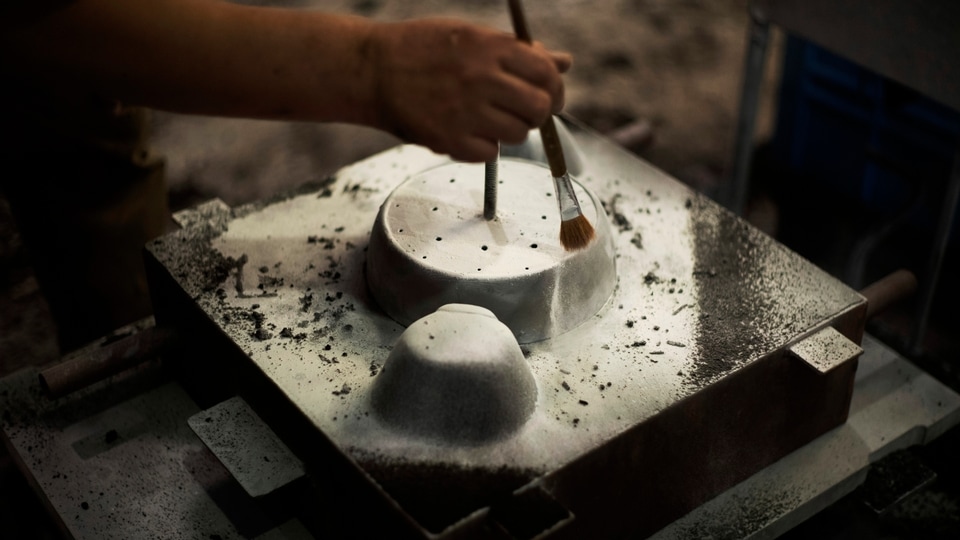
Katsunori Suzuki, one of Japan’s last traditional cast iron craftsmen, keeps an ancient art alive at the historic Oigen foundry.
Katsunori Suzuki is one of a few craftsmen in Japan still producing cast iron cookware by hand using laborious traditional techniques. The president of the 172-year-old foundry where he works says she wants to keep the tradition alive, even if it costs much more to produce. Suzuki uses moist sand and a few other ingredients to make the molds using a method called “tegome,” or “hand stuffing.” He spends hours tamping the sand in an iron frame to compress it just the right amount to create the mold, in which he carves detailed designs for the pot.
When the mold is ready, Suzuki fetches buckets of molten iron and hurriedly carries them back to his workspace so the temperature remains at about 1,450 degrees Celsius (2,462 degrees Fahrenheit) when it’s poured into the mold. After the iron cools and solidifies, the sand mold is broken into pieces with a hammer and the cookware is removed. Any extraneous pieces are cut off.
Suzuki, 59, who has worked in the Oigen cast iron foundry for 40 years, then follows the same process to make a mold for a smaller piece of cookware, such as a lid. Making one pot and a lid takes him an entire day. In the following days, the cookware, still rough, will be sent to other workers who grind off smaller burrs, polish the surface and bake it at a high temperature to make it rust resistant.
In addition to the strength and dexterity needed to make the molds, the traditional method requires experience to condition the sand with just the right amount of moisture to match the weather conditions. At the end of the day, Suzuki waters the sand that was used for the mold to begin reconditioning it to make new molds.
Kuniko Oikawa, Oigen's president, said the traditional tegome method is considered inefficient and costly, and most foundries have abandoned it. Instead, they use molds made from other materials and mechanize the pouring of molten iron for mass production. Like the other foundries, the Oigen factory until recently had only a mechanized production line. Oikawa, however, didn't want the traditional method to die out.
The fifth president of the family-owned company, founded in 1852 in Iwate prefecture near the iron-rich Kitakami Mountains in northeastern Japan, decided to bring back the tegome method after talking to a retired craftsman who still knew how to do it. The area is famous for cast iron products, with its techniques believed to have been introduced over 900 years ago.
Oikawa said she doesn’t know of anyone else currently using the tegome method for cast iron cookware. “There may be retired cast iron craftsmen who know how, but I don’t know anyone who is still working at a foundry that uses tegome,” she said. “It will become only history once it’s gone. Instead of prioritizing economics, we want to respect our predecessors who preserved the cast iron trade. We also think there is something new and creative" about it, she said.
In 2022, Oikawa created a new brand, Mugu, to offer high-end cast iron cooking pots designed by an artist who has been with the Oigen foundry for over 50 years. The name is derived from the local pronunciation of the Japanese word muku, which means pure. Suzuki is training Seksuk Suebsai, a Thai citizen who began learning tegome after moving to the area in 2023. Suzuki, Seksuk and a few others make the sand molds for the Mugu pots.
The Mugu pots cost $337-$374, compared to $224 for Oigen's most expensive machine-made pot. They are available on the Mugu website or at Oigen's factory shop. “They are pure because they are made from the goodness of iron," Oikawa said. “Because they come from Iwate prefecture, I wanted to put Iwate’s wilderness and climate in the iron. That’s why I chose the local pronunciation of mugu instead of muku.”


