
 E-Paper



Not in the mood for more Batman? Meet some of India’s lesser-known superheroes

 Prefer HTon Google


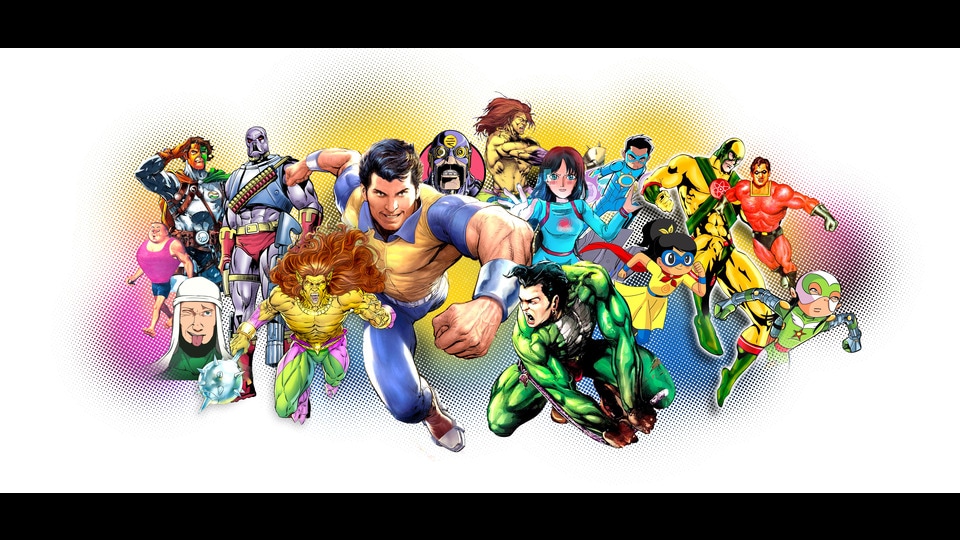
The India squad are an unusual blend of faith and science, myth and conformity. There are cops, schoolgirls, changelings, goddesses, and some snarky rebels too.
Atlas, Prometheus, Hanuman… since the earliest legends, the world has depended on its superheroes. They’ve been called different things: deities, demigods, sorcerers, witches. But their role has always been the same: to use their special powers to rescue humankind from itself; to represent ideals of virtue, perseverance, strength. (Perhaps perseverance above all, because they can never stop fighting.)
The more enduring superheroes are those that also battle internally, with an inbuilt flaw. From Achilles to Marvel’s The Hulk, this has made for some of the most compelling stories. And the more human a superhero, the more potential their tale acquires. As with Iron Man, there is the feeling that this could be any one of us, with the right toolkit. And what would life be like then?
Both within their plots and in the real world, superheroes tend to appear when they are most needed. Superman was born in the US of the Great Depression; Batman began in the same year as World War 2. India’s first comic-book superhero, Bantul the Great, was created amid India’s 1965 war with Pakistan, as a Superman-like patriot assisting Indian soldiers. This continued through the Bangladesh liberation war of 1971, when he lifted enemy tanks over his head and shielded soldiers from Pakistani bullets, which bounced off his giant, convex chest.
From those early days, through the evolution of supercops, man-animal hybrids, and superwomen drawn from epics and the everyday, it is an unusual mix of faith, science and patriotism that has fuelled India’s homegrown comic-book legends.
Where their Western counterparts tend to be defined by humanity and science, and the Japanese ones by humanity and nature, Indian superheroes are defined by humanity and myth, and a balance of science and spirituality, says Sharad Devarajan, co-founder and CEO of digital comics and animation studio Graphic India. “That is a powerful and unique way to acknowledge that while there is a lot we know, there is a lot more we still do not know. Our culture allows and embraces an openness to that spiritual pursuit.”
Look closely and you’ll notice another interesting difference: Most Indian superheroes aren’t masked millionaires in remote mansions; they’re people of the village and town, known, loved and often assisted by their community. This is true all the way from Bantul to the recent cinematic newcomer, Minnal Murali.
So why is it that most Indian fans of the genre can reel off a list of foreign characters but would be hard-pressed to name two Indian ones? “One thing the West got right is the marketing, and not just of the comics, but the shift to movies, the need for animation, more intricate storylines and widened demographics,” says Kuriakose Saju Vaisian, editor-in-chief of Tinkle Comics.
Falah Faisal, creator of the comic series Musalman, believes it’s a good thing that India hasn’t gone the Marvel / DC way. The more independent a superhero is, the more they can say, he argues. Faisal’s superhero is a bowler in the Indian cricket team who also faces hatred and discrimination, can’t find a house to rent, and worries about life in a post-9/11 and post-Godhra world. A superhero who isn’t inextricably tied to revenue streams “can actually talk about the troubles of our times,” Faisal says, and “build alliances and reach solutions in a fictional set-up that might not happen in the real world.”
.
The tricolour club: Powered by patriotism
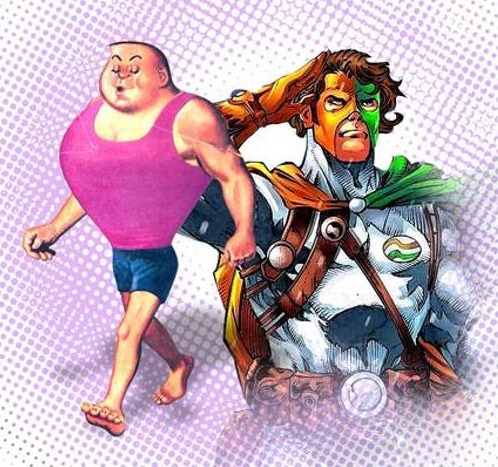
India’s earliest superheroes were created in an India swelling with pride over victories against Pakistan and the creation of a new neighbour, Bangladesh. Comic-book strongmen who had, until then, merely fought dacoits and criminals began to lift enemy tanks over their heads, in defense of their nation.
Bantul the Great*, for instance, was created by Narayan Debnath amid the Indo-Pak war of 1965, as a comic strip for the Bengali children’s magazine Shuktara. He strode about, all bulked up, clad in a bright pink vest, helping Indian soldiers all the way through to the Bangladesh liberation war of 1971. Bullets bounced off his chest. He lifted war tanks over his head and tossed them back at enemy forces.
More Indian superheroes would follow. Indrajal Comics, set up in 1964, specialised in syndication and translation of Western comics such as Mandrake, Phantom and Tarzan. In 1975, they commissioned artist Aabid Surti to create an original series. In 1976, Bahadur was born.
Surti gave Bahadur a distinctly Indian backstory: The son of a dacoit who was killed by a policeman, he yearned for revenge, until the same policeman taught him the error of such ways.
“I wanted to keep him a natural human being, not like Spider-Man who climbed or Superman who could fly,” Surti says. Instead, Bahadur represented a young, progressive India. He wore a kurta and jeans, then the uniform of the liberal urban intellectual. He helped fight crime, aided by his live-in girlfriend Bela, an expert at karate.
Bahadur was a hit through to the ’90s, says Arun Prasad, a Bengaluru-based collector with over 18,000 comics in his collection. With his expert aim and martial arts skills, he sent out the message that anyone in this newly free country could become a superhero.
By 1986, Raj Comics was in the game too, with superheroes such as Nagraj* (who can hypnotise, shed his skin when injured, shapeshift and shoot venom), Tiranga* (who uses a tricolour shield to protect civilians from criminal elements as well as those who would spread hate and violence) and Shakti* (who can travel at the speed of light, and melt metal). These eventually joined the Raj Comics super-team Brahmand Rakshak (Protectors of the Universe).
Tiranga, possibly Raj Comics’s best-known patriotic superhero, was launched in 1995, in the wake of the Babri Masjid demolition, the serial blasts of Mumbai and the communal riots that followed both. “When we were creating our superhero multiverse, we wanted someone who had a national identity,” says Raj Comics co-founder Sanjay Gupta. “There were also riots at the time, and India was divided between Hindus and Muslims. We thought it was time for a character who strives for peace and national unification.”
(* Asterisks indicate comics that are still available in print and / or reprint)
.
Test-tube babies: Powered by extreme science
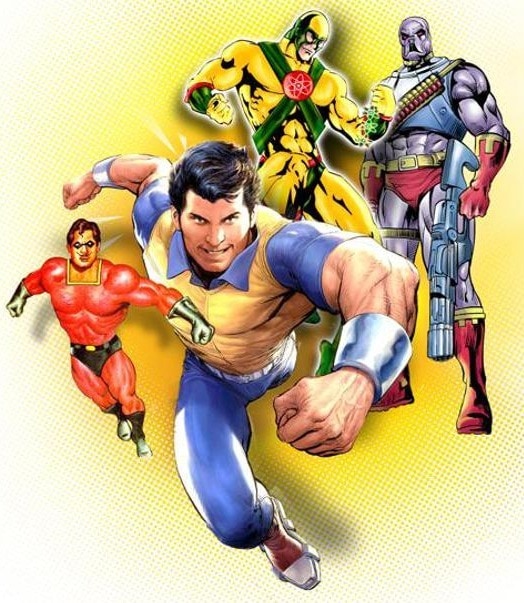
The West had mutants, X-Men and The Hulk; India had its own takes on lab experiments gone wrong, or really right. In a rather desi take on the mutant superhero, these were usually created by the establishment, to help authorities fight crime.
Angara by Tulsi Comics, launched in 1991, was a man with animal body parts: bulletproof skin from a rhino, sharp eyes from an eagle, the quick wits of a fox. He was made in a laboratory, with the mission of protecting animals and bringing those who hurt them to justice.
Parmanu*, launched in 1991, gets his powers from a bright yellow suit made by his uncle, a nuclear scientist. It lets Parmanu split atoms, fly at super-speeds, and expand or shrink at will. He isn’t a vigilante either; he is, in fact, a policeman.
Inspector Steel (inspired by the 1987 film Robocop), launched in 1995, was a policeman so gravely injured in the line of duty that only his brain survived, and was transferred into a shell of steel. With this steel body, he helped the force fight crime.
This sub-genre gave Indian comic-book creators a chance to explore their heroes’ darker sides. There was more blood and gore. Raj Comics’s Doga*, for instance, is an anti-hero, an orphan who grows up able to communicate with canines, wears a canine mask, and sneaks through Mumbai’s sewers at night, to fight crime with brutal mercilessness. The city’s strays are his spies and sidekicks.
And then there is Fauladi Singh*, about 15 years ahead of his time, as Diamond Comics founder Gulshan Rai puts it, laughing. Launched in 1978, the mustachioed Singh and his sidekick Lambu are given supernatural powers by a scientist named Dr John, in a secret lab situated on an island in the Indian Ocean. Singh is then sent out into space, to protect Earth from aliens and assorted otherworldly threats and villains. Tales of his exploits touch upon atomic physics, pulsars and wormholes. Rai, who has a Master’s degree in physics, says he created the duo to try and spread a love of the subject among young readers.
.
Supernatural activity: Powered by myth

As India’s most looming issues morphed from crime to war to internal strife, Indian superheroes changed with them. By the mid-1980s, a rash of mythical beings was brought forth.
Amid the threat of Khalistani separatists and then the assassination of prime minister Indira Gandhi, Raj Comics announced its flagship character, Nagraj*, in 1986. He has venom in his veins, can melt bones, unleash destruction. His mission is to fight all internal threats.
Diamond Comics launched Agniputra-Abhay in 1991, the former an immortal, indestructible God-man, the latter his human sidekick. Raj Comics launched Ashwaraj* in 1992, a shape-shifter with immense strength who rides a five-horse chariot, each horse with its own superpower too. Five years later came Kobi-Bheriya*, an ancient mythical jungle god that splits into two selves, one supernatural and the other a fearsome human warrior with special powers.
The prevalence of myth in modern-day tales is one of the things that sets the West apart from the East, says Kuriakose Saju Vaisian, editor-in-chief of Tinkle Comics. “Hanuman is possibly India’s first superhero. He can scale up or shrink down and can move mountains” and he still populates superhero tales. “We grew up hearing these stories, so it isn’t difficult to adapt to them in comics and other media either,” Vaisian says.
In 2011, East and West met in an unusual venture. Sharad Devarajan’s Graphic India, in collaboration with Marvel’s Stan Lee, created Chakra the Invincible*, a comic book series that tells the story of an Indian boy who creates a high-tech suit that activates the body’s seven chakras, giving the wearer seven superpowers.
“In the West, there’s a hard line between science and spirituality. In India that line is very grey, and this series reflects that difference between the two approaches,” Devarajan says. “The character Chakra bridges science and spirituality.” Chakra lives on as a comic-book series, animation, and a live action project in development.
.
Rude awakenings: Superheroes powered by satire
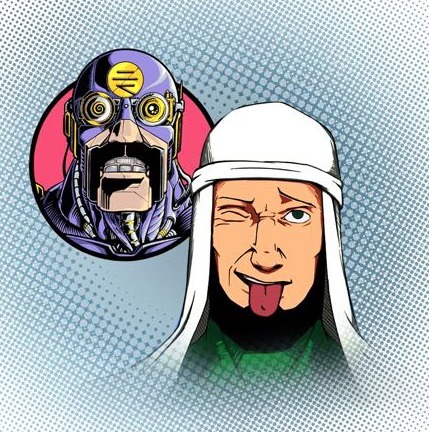
“Superheroes are often born of oppression,” says Falah Faisal, creator of Musalman* (2017).
“Superman was created by Jewish immigrants in the US who didn’t feel like they fit in. Captain America fought Hitler in the very first issue. At the heart of it, I feel a superhero comes from a sensitive soul reacting to the troubles of his time. To say what can’t be said otherwise.”
Musalman takes on current events, such as the lynching of Muslim men. He is vehemently non-violent. Although his superpowers are very much like those of Superman (flight, super-strength, microscopic vision), “he chooses to converse and uses logic to solve problems rather than his fists.”
Growing up in a post-9/11 and post-Godhra world, Muslims are too often presented as terrorists and villains in the mainstream, Faisal says. “So I wanted to present a counter-narrative, one that reflects the mindset of the silent majority that never gets invited to speak on news channels.”
Faisal poured multiple dreams into Musalman; the superhero’s alter-ego is a fast bowler on the national cricket team. But he also faces the problems of everyday Muslims: discrimination when house-hunting, hate and suspicion when India loses a match.
In February, Faisal introduced a female counterpart, Begum Badass, who swoops in at the site of protests outside a Karnataka college and talks to students about how the ban on the hijab is a political ploy meant to divide them.
Also speaking truth to power on the Indian superhero scene is Appupen, via his anti-hero Rashtraman* (2014), who derives his power from the people, but only if he can divide and deceive them. The people are dissatisfied, so he does his best to keep them confused. In Rashtraman vs Elections, for instance, the country no longer needs elections because all politicians have joined the ruling party.
“The DNA of the comic series comes from my life in India, and my attempts to make sense of it all,” Appupen says. “A character with supreme power who only uses this power for good is hard to come by in the real world. I figured I could use the superhero genre for satire, to warn people of the perils of too much power. This ‘superhero’ works as part of the system. He has backing, he has to bow to the people funding him. Unfortunately, the dystopia of the real world is so real now, that Rashtraman is trailing behind.”
.
Power play: Finally, some female superheroes
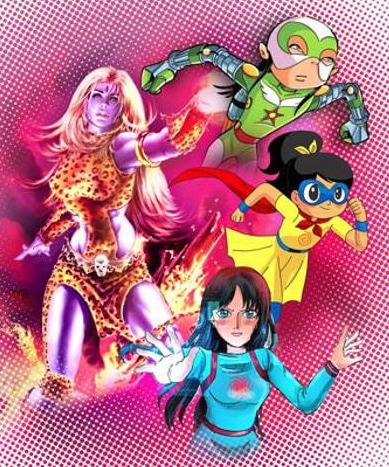
Women have typically been sidelined in the world of mainstream comic-book superheroes. In India, this began changing around the turn of the century. Since the late 1990s, comic books have added women superheroes to their rosters to take on a range of causes, from helping children realise their potential to fighting on behalf of all womankind.
In Raj Comics’s Shakti* (1998), a homemaker named Chanda discovers that her husband has been murdering their newborn daughters. She draws on the goddess Kali for strength in exacting her revenge, and turns into Shakti. She then slays her husband and vows to protect other women like herself. Her superpower is that she can sense the anguish and rage of women around the planet, and can travel at the speed of light to go to their aid. She also has the ability to melt any metal with the beam from her third eye.
In Devi* (2006; Virgin Comics, now Graphic India), the tale is flipped. Devi is reincarnated within a young woman named Tara Mehta, and must now come to terms with who she really is.
Dabung Girl* (2019; Dabung Girl Comics) is a sassy social-impact superhero with a super-elastic body. She helps children find the strength to solve some of their problems. SuperAvni* (2021; Dabung Girl Comics) combines empathy and technology to fight modern-day challenges like cyberbullying. In some plots, the two work together. In one instance they join forces with US Vice-President Kamala Harris to save America from a cyberattack.
WingStar* (2015; ACK Media) is the superhero alter-ego of Mapui, a 13-year-old girl from Aizawl, Mizoram. Her powers of super-flight and super-strength come via gadgets created by her father, an inventor with the government’s space development arm.
And, in a quirky take, there’s Aisha of SuperWeirdos* (2012; ACK Media), a 12-year-old who desperately wants to be a superhero. She tries everything, jumping from trees, dancing around stone circles. She doesn’t gain any superpowers. What she does end up with is the ability to detect strange superpowers in others, ones that appear useless or embarrassing until they’re deployed at just the right time. A boy whose dance moves are infectious, for instance, in one episode saves the world!
“It’s about how being different is good,” says Vaisian. “It’s also about offering children heroes that they can understand.”


