
 E-Paper



Krabbe Disease: Causes, symptoms, types, diagnosis and treatment

 Prefer HTon Google


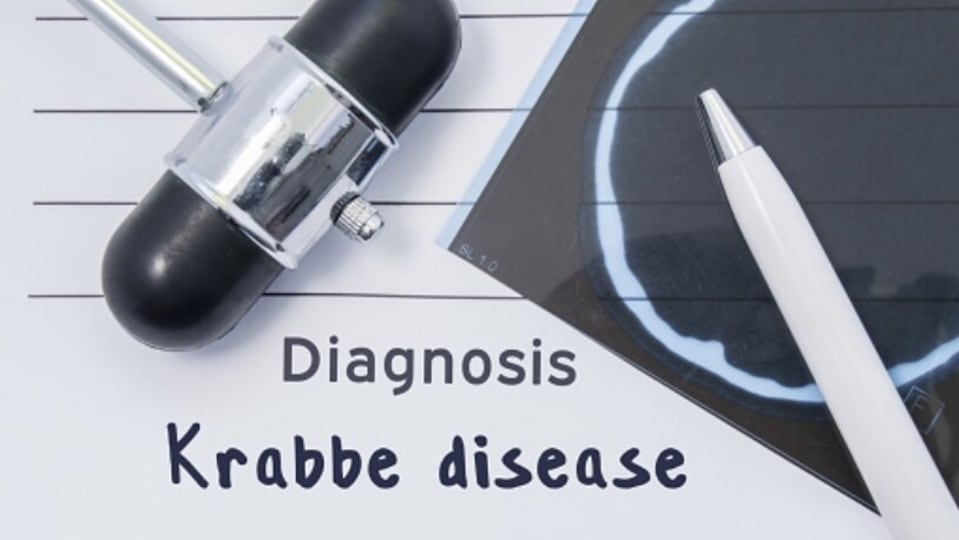
From the types of Krabbe disease to the symptoms to how the disease is diagnosed, know all about Krabbe disease from the experts here.
Named after the Danish neurologist Knud Krabbe, Krabbe disease (also known as globoid cell leukodystrophy or galactosylceramide lipidosis) is a rare and often fatal lysosomal storage disease that results in progressive damage to the nervous system. Krabbe disease involves dysfunctional metabolism of sphingolipids and is inherited in an autosomal recessive pattern. It is an is an inherited disorder that destroys the protective coating (myelin sheath) of neurous in brain and throughout the nervous system. In most cases, it develops before 6 months of age.
ALSO READ: Krabbe disease causes degeneration of neurons directly: Study
Causes:
In an interview with HT Lifestyle, Dr Rohit Gupta, Chairman, Neurosciences, Accord Super Speciality Hospital, Faridabad noted down the causes of Krabbe Disease. "In Krabbe disease, two mutated copies of a particular gene result in little or no production of an enzyme called galactocerebrosidase (GALC). It results in the accumulation of galactolipids. An abundance of galactolipids has a toxic effect which trigger myelin forming cells to self-destruct. It is inherited in an autosomal recessive pattern. Both the parents carry one copy of the mutated gene but they typically do not show signs and symptoms of the condition. The gene can be found on chromosome 14. Krabbe disease patients can have pychosine level that one 100 times higher than those who don’t have the disease."
Types and symptoms:
Krabbe disease are of two types – Infantile-onset Krabbe disease and late-onset Krabbe disease.
Speaking to HT Lifestyle, Dr Dhruv Zutshi- Senior Consultant- Neurology at Fortis Hospital, Vasant Kunj stated the symptoms of the both types of Krabbe disease. They are:
Infantile-onset Krabbe disease: Symptoms of this type of Krabbe disease include limb stiffness, seizures, feeding difficulties, vomiting, staring episodes, slowing of mental and motor development, muscle weakness, spasticity, deafness, optic atrophy, optic nerve enlargement, blindness, paralysis, and difficulty when swallowing. Prolonged weight loss may also occur.
Late-onset Krabbe disease: This type shows a rather slower disease progression. Symptoms are esotropia, slurred speech, and slow development or loss of motor milestones.
Diagnosis:
"Newborn screening for Krabbe disease includes assaying dried blood cells for GALC enzyme activity and molecular analysis for evidence of GALC enzyme mutations. Infants displaying low enzyme activity and/or enzyme mutations should be referred for additional diagnostic testing and neurological examination. High concentration of psychosine in dried blood spots may also be identified as a marker for Krabbe disease," said Dr Dhruv Zutshi.
Treatment:
Till date, there has been no cure or treatments for Krabbe disease. However, stem cell transplants, bone marrow transplants and gene therapy have shown to benefit in the early courses of the disease. Physical therapy can help increase muscle tone and circulation in this case.


