
 E-Paper



Ciudad Bolivar's art revolution: Colourful murals and cable car tourism boosts local economy and safety

 Prefer HTon Google


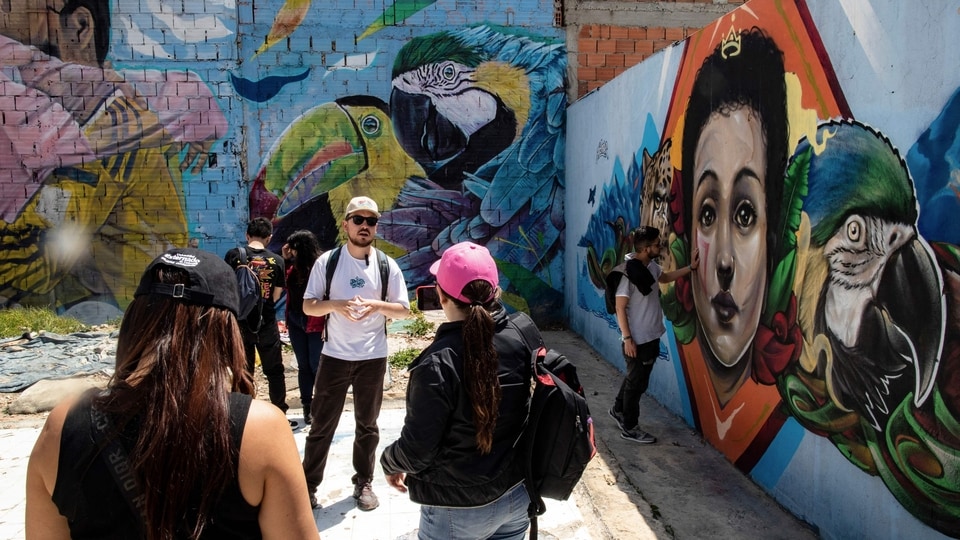
Ciudad Bolivar sees growth in tourism and safety with art-led revitalization projects and enhanced infrastructure, including the TransMiCable cable car.
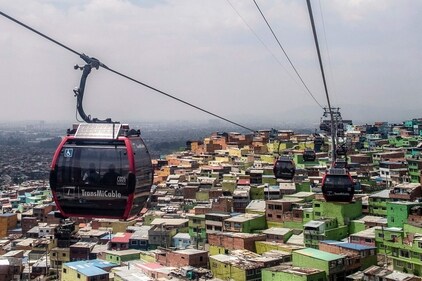
On Sundays in Ciudad Bolivar, one of Bogota's poorest neighborhoods, residents are treated to the incongruous sight of tourists riding the cable car that on weekdays transports thousands of workers to their jobs. A 15-minute ride on the TransMiCable takes the visitors from one end of the district to the other, looking out on the rickety homes clinging precariously to the mountainside, many painted in happy, bright colours. The tourists alight at the El Paraiso (The Paradise) lookout point, which offers an unparalleled view over the Colombian capital from its southernmost periphery.
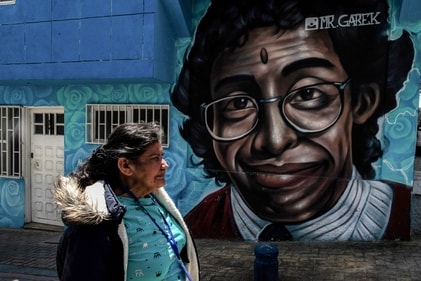
They then visit the "Calle del Color" (Street of Color), which boasts a series of murals that tell the history of the impoverished neighborhood and its residents, as well as paying tribute to Colombia's rich array of plants and animals. "We wanted to remove some of the stigma attached to Ciudad Bolivar, using art," Luisa Sabogal, a 24-year-old inhabitant of the neighborhood and co-creator of the Bogota Colors project, told AFP.
Sabogal and her colleague May Rojas started their project in 2016, summoning dozens of lobal and international street artists to paint neighborhood walls and the facades of homes. It seems to be working: the area now attracts about 400 tourists a month and conditions for the locals has improved with the creation of new businesses to sell food and drink and offer guided tours.
There is even the "Self-Built City" museum. "The street where the graffiti is used to be called the 'road of crime'. It used to be a street where they ... murdered, robbed," Andres Santamaria, director of the District Tourism Institute (IDT) told AFP. "This year we haven't had a single crime" in the area, he said. Ciudad Bolivar has some 660,000 inhabitants of whom more than half live in poverty, according to official data.
Mostly foreigners
The inauguration of the TransMiCable cable car in 2018 has forever changed Ciudad Bolivar, many of whose residents work in other parts of Bogota. What used to be an 80-minute ride on local buses via narrow, winding, mostly unpaved roads to exit the neighborhood is now a quarter-of-an-hour by air, according to the International Finance Corporation, a World Bank body that supported the project.
The cable car can transport 7,000 people an hour in 163 cabins -- some 20,000 residents per day. And it is a major part of the attraction for visitors looking for a bird's-eye view of the high-altitude city of seven million people nestled in the mountains. Resident Maria Sandoval opened a small shop four months ago to sell tamales -- a traditional dish of meat and corn -- and told AFP "almost half" her sales are thanks to tourism.
"The goal is that Ciudad Bolivar becomes one of the main tourist sites of Bogota" through investment in local businesses and infrastructure, said Santamaria. The city is building a tourist center for the neighborhood, and training 40 official guides -- up from only one today. For now, most of the visitors are foreigners. Residents of more upmarket parts of the capital tend to avoid the region that had the city's highest homicide rate in 2023, according to official data.
"I'm worried to take pictures of the graffiti... to take out my cellphone," 30-year-old Tomas Velasquez from Chapinero, an upper-middle-class neighborhood in northern Bogota, told AFP.


