
 E-Paper



Deepening the India-US defence partnership | US Ambassador Gor writes for HT
The Yudh Abhyas joint exercise is not happening in isolation. India conducts more military exerciseswith the US than with any other country

 Prefer HTon Google


High altitude, tough terrain, new technology, and American and Indian soldiers training side by side — that is Yudh Abhyas 2026.

This month, roughly 500 American soldiers and 600 Indian soldiers are training together across India in the 22nd edition of our premier annual bilateral army exercise. They are operating in demanding environments, working with new technology, practicing counterterrorism missions, and preparing for the kinds of challenges modern militaries increasingly face. When you look at what our soldiers are doing together this year, you see how far the US-India defence relationship has come and where it is heading next.
US President Donald Trump is results-driven. He wants America’s partnerships around the world to deliver for the American people, make the US stronger, and help capable partners strengthen their own security. Yudh Abhyas is a good example of what that looks like in practice. India is training directly with the best of the American military, from advanced technology to battlefield experience and specialised capabilities. At the same time, our soldiers are learning from India’s tremendous experience operating in some of the world’s toughest terrain.
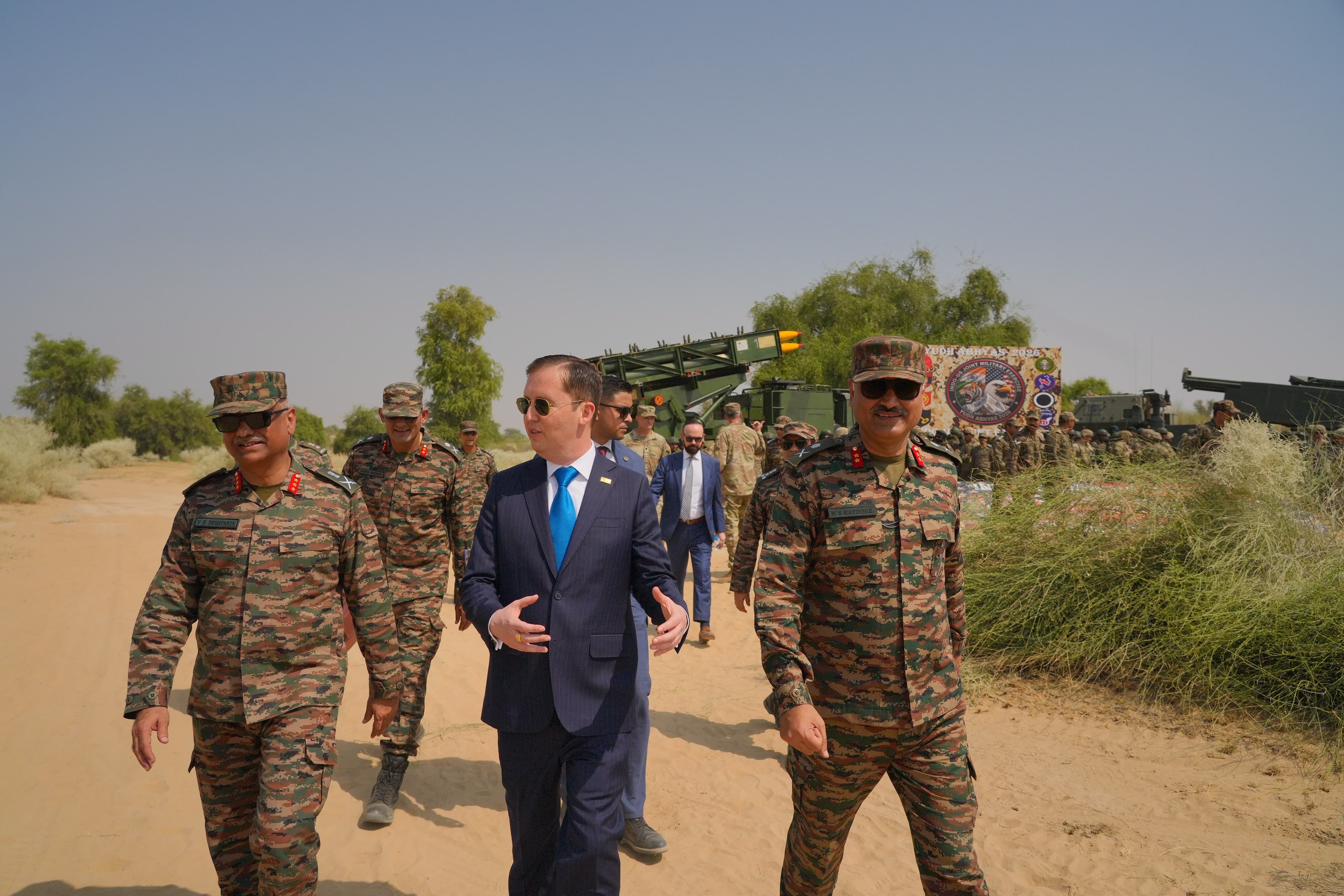
Both sides bring important strengths to the exercise, and training together helps each military better understand how the other operates. That matters because Yudh Abhyas is not happening in isolation. India conducts more military exercises with the US than with any other country in the world. That tells you something about the depth of this relationship and how much our two militaries already do together.
It also matters because warfare is changing very quickly. Think about drones. A few years ago, unmanned systems did not play the role on the battlefield that they do today. Now, every serious military has to think about how to use them, how to detect them, and how to defeat them.
For the first time at Yudh Abhyas, American and Indian soldiers are training with M-LIDS, the US Army’s advanced Mobile Low, Slow, Small Unmanned Aircraft Integrated Defeat System. It brings a cutting-edge American counter-drone capability directly into the exercise and gives Indian soldiers firsthand exposure to how the US is adapting to this rapidly changing threat.
The exercise is also bringing together specialised American capabilities. The US Army’s 3rd Multi-Domain Task Force is contributing expertise in long-range precision fires and integrated command and control, while soldiers from the 11th Airborne Division are bringing their Arctic and cold-weather experience to India’s high- altitude terrain. Across the exercise, our forces are also working through counterterrorism operations, equipment familiarisation, command-post training, and combined field operations.
All of this builds something you cannot create through a meeting or a joint statement. It builds familiarity and trust between soldiers, units, and military leaders. The more our forces train together, the better prepared both sides become.
But Yudh Abhyas is also part of a much larger story. For years, when people talked about US-India defence cooperation, much of the focus was on defence sales. Those sales remain important, but today, the relationship is much broader. We are training together, strengthening interoperability, expanding our defence industrial cooperation, and increasingly looking for opportunities to build together.
You can see that beyond the exercise as well. The Javelin is a good example. India’s planned acquisition of the combat-proven Javelin missile system strengthens an important capability for the Indian military. Separately, Tata Advanced Systems and the Javelin Joint Venture, the partnership between Raytheon and Lockheed Martin, recently signed a memorandum of understanding to explore Javelin co-production in India.
Together, these developments show how our defence relationship is becoming more integrated, more practical, and increasingly focused on what our two countries can build together.
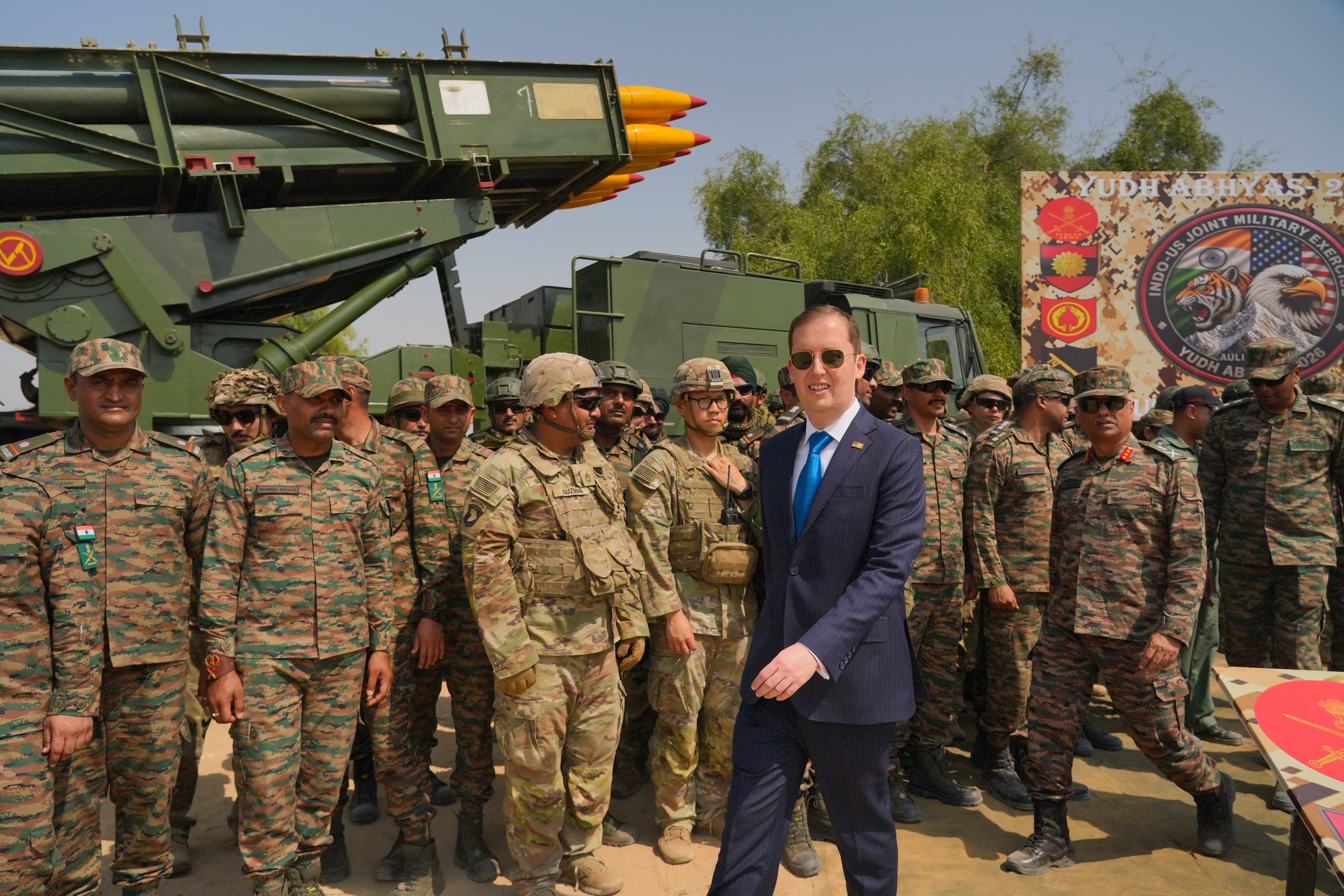
For India, cooperation like this can strengthen military capability and expand its defence industrial base. For the US, strong defence partnerships can support demand for American technology, strengthen our defence industrial base and supply chains, and help capable partners invest more in their own security. President Trump has been very clear that our partnerships should work for both sides, and this is exactly the kind opportunity to achieve common goals we should be pursuing.
The military and industrial sides of this relationship go together. We can produce and sell the best military equipment in the world, but soldiers still have to know how to operate, adapt, and work with partners. Yudh Abhyas puts that cooperation into practice.
Look at the trajectory. Our exercises are becoming more complex, our defence industries are working more closely together, and our militaries understand each other better than they did a decade ago.
Results matter, and Yudh Abhyas is a result you can see on the ground: American and Indian soldiers training together, learning from one another, and building a defence partnership that strengthens American national security and Indian security alike. That is how we continue taking the US-India defence partnership to the next level.
Sergio Gor is US ambassador to India. The views are personal


