
 E-Paper



India, China must first settle smaller disputes
By settling relatively smaller disputes first, both sides might build mutual confidence and political momentum necessary to tackle the more intractable issues.

 Prefer HTon Google


In diplomacy, every word and phrase matters. This is especially true when two countries are negotiating a disputed border. So, the appearance of a phrase “early and substantial harvest on boundary delimitation” in an eight-point joint China-India statement — the first in 11 years — after the 25th round of talks between the special representatives (SR) is fraught with strategic implications.
The phrase “early harvest” has been around for over a decade, but the usage of “substantial” is, well, substantial, even though all its implications are not yet clear. This comes on the eve of Chinese President Xi Jinping’s first visit to New Delhi since 2019 and amidst moves by the two sides to step up their economic and investment ties.
“Early harvest” made its first appearance in a Chinese note in the wake of the 2017 Doklam crisis which said that India and China had been discussing the possibility of making the border in Sikkim an “early harvest”. The Sikkim-Tibet border had been delimited and demarcated by the Anglo-Chinese Convention of 1890. Both sides agree with the border alignment here, though India has differences on the trijunction at Doklam.
On the eve of the Mamallapuram summit in August 2019, the Chinese said that they had sent some “early harvest” proposals. Then, after the 22nd round of the SRs’ meeting in New Delhi that December, the Chinese said that the two sides “exchanged views on the early harvest of boundary negotiations”. Reportedly, India turned down the early harvest offer at the time.
But all this went up in smoke with the clash in the Galwan Valley and the first casualties along the LAC since 1975. Relations between the two plunged to their lowest.
Also Read | Rethinking Viksit Bharat: China, G7 and contest for the world | Number Theory
In October 2024, through patient diplomacy and an insistence that India will not normalise relations as long as the situation in Ladakh was abnormal, the Chinese side slowly backed off. It agreed to create no-patrol zones at certain sites, and restore Indian patrolling rights in the Depsang bulge and Demchok. However, the additional troops on both sides brought to the region post the Galwan clash have remained, pending discussions on “de-escalation”.
The two sides then picked up the threads of normalisation. Between 2020-2024 there were no meetings of the SRs and the heads of government. In other words, talks on the resolution of the border issue did not occur.
Also Read | How Xi Jinping turned oil from a weakness into a geopolitical weapon
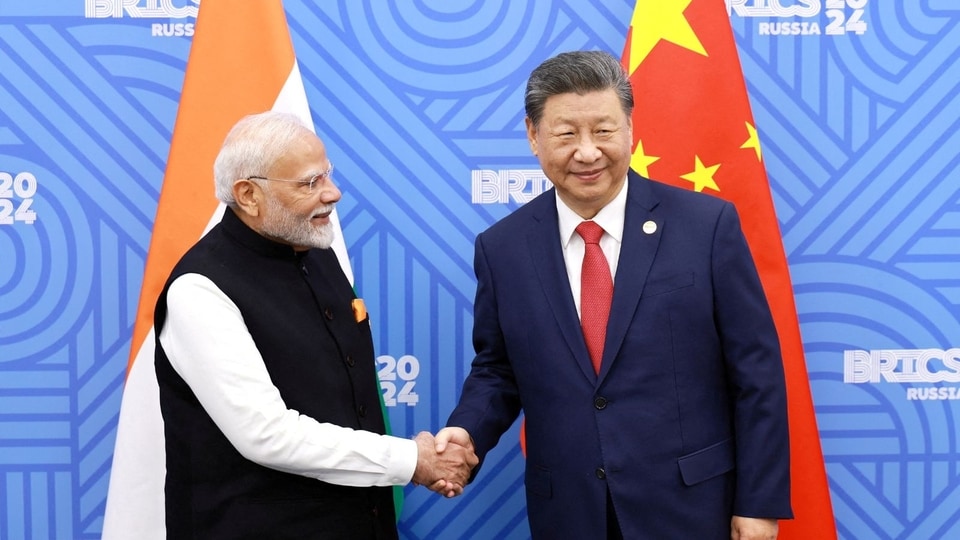
It was only following the October 2024 summit meeting between Prime Minister Narendra Modi and President Xi at the sidelines of the 16th BRICS summit in Kazan, that the subject of restarting talks were taken up again.
In 2025, at the 24th round of the SR meetings, the subject of an “early harvest” surfaced again. Both the Indian and Chinese press releases spoke of agreement to set up an Expert Group under the WMCC “to explore early harvest in boundary delimitation in the India-China border areas.”
The recently concluded 25th round gives us a clearer picture.
First, the joint press release signals congruence on the border negotiations.
Second, India is clearly on board with “early harvest” settlements.
Also Read | Modi-Xi bonhomie, Sharif’s quick catch-up with Putin after SCO photo op | Watch
Third, usage of “substantial” suggests that this could extend beyond the Sikkim-Tibet border to include the Middle Sector where the disputed boundary is relatively small.
Fourth, the SRs’ directive to the Expert Group to work out the terms of reference for their task suggest both are serious about moving ahead.
Fifth, two additional points will be created for senior military commanders meeting in the pattern of Chushul/Moldo. The Indian locations will be Joshimath in the Middle Sector and Tawang.
Still, the proof of the pudding will be in its eating. The “early and substantial harvest” phrasing is a new twist, but a positive one. The reason is because in both the Sikkim-Tibet (220 km) area and the Middle Sector (545 km), the dispute is minimal. The watershed of the Himalayas is fairly clear and both sides largely respect it. The real problems will be in the tri-junctions — the India-Bhutan-China one in Doklam and the India-Nepal-China one in Lipu Lekh.
In 2005, India and China had signed an agreement on the Political Parameters and Guiding Principles of a border settlement based on a comprehensive package settlement of all sectors. Yet, 21 years later, after they found the going tough, they are pragmatically modifying the 2005 agreement, even while publicly affirming it.
A resolution of the larger Sino-Indian boundary will not be easy. A primary reason is the Chinese demand that India cede the Tawang tract, along with Aksai Chin that it already occupies, is a non-starter for New Delhi. Nevertheless, by settling the relatively smaller disputes first, both sides might build mutual confidence and political momentum necessary to tackle the more intractable issues.


