
 E-Paper



What India must do when energy gets weaponised
Powers such as the US and China have leveraged energy, trade, and critical minerals. India needsa diversified, and increasingly domestic, energy system

 Prefer HTon Google


It is telling that US secretary of State Marco Rubio’s visit to India includes a stop at the Jamnagar oil refinery. This visit’s significance extends well beyond bilateral energy cooperation. Over the past few years, the US has increasingly weaponised energy and trade, while China has leveraged its dominance over critical minerals, electric vehicle components and manufacturing exports to exercise strategic influence over global supply chains. Energy, trade and technology have become tools of geopolitical power. For India, energy security can no longer be defined simply by assured access to imported oil and gas. It must encompass control over critical technologies, resilient supply chains, and domestic industrial capabilities. Otherwise, the transition to clean energy risks replacing one form of strategic dependence with another.
The war in West Asia is the latest reminder of what reliance on fossil fuel imports can cost. India imports close to 88% of its crude oil requirements, while around half of its natural gas consumption comes from imports. Even before the current disruption, India’s fossil fuel import bill stood at over $180 billion. As things stand, despite crude imports falling 18%, India’s crude oil import bill has risen 26% year-on-year in the first quarter of FY 2026-27. India’s energy transition must, therefore, be treated as fundamental to its energy security. The objective must be to build an energy system that is affordable, reliable, diversified, secure and increasingly domestic.
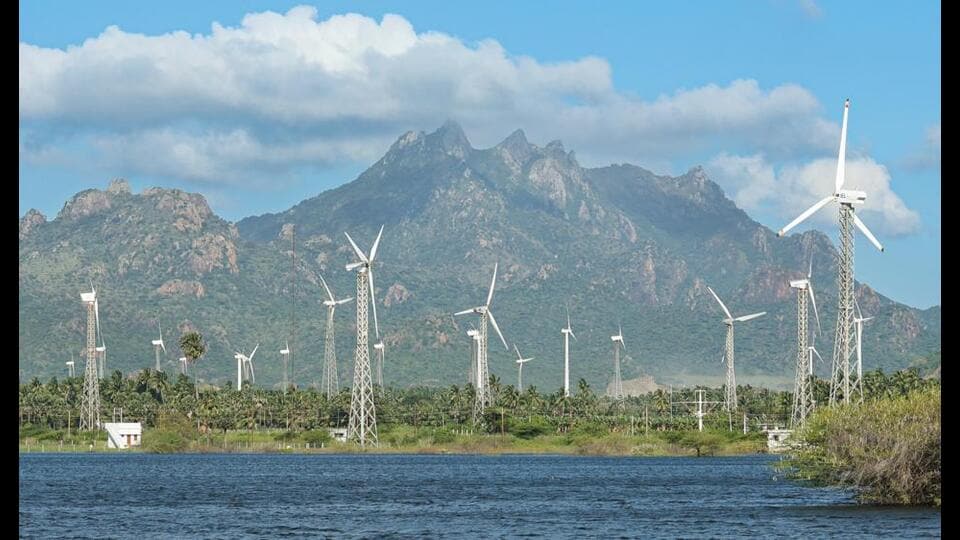
India has already made enormous strides towards this goal. In June 2025, the country crossed 50% of installed electricity capacity from non-fossil sources, five years ahead of its Paris commitment. India’s current non-fossil capacity has passed 300 GW, including about 168 GW of solar and 58 GW of wind. This has made India the third-largest global leader in installed renewable capacity.
The next phase requires India to build a power system that can carry a far larger, more industrial, and more electrified economy. India’s electricity demand is projected to grow at about 6.4% a year through 2030, among the fastest rates anywhere, adding more than 570 TWh of annual consumption. Data centres and AI are creating new and rapidly growing electricity demand. In this context, the 500 GW non-fossil target for 2030 should not constrain our ambition. The question now is how much reliable clean electricity the economy will actually need, at what hour, and in which region. Answering that requires planning transmission ahead of generation and modernising and digitalising distribution networks that, in many states, are still under real financial strain.
No single technology holds the answer to India’s future energy security. We must develop a portfolio of technologies to meet this challenge. Solar and wind will remain fundamental, but for India to become energy secure, it will also need hydro, nuclear, clean hydrogen, pumped storage, battery energy storage systems and flexible generation. Energy efficiency must be an equally important part of this equation, as it is one of the least-cost measures available for strengthening energy security.
Nuclear power is likely to matter more than in the past because firm, low-carbon power will be needed alongside rapidly expanding variable renewable generation. Small modular reactors (SMRs) could eventually supply captive industrial power, not just the grid. The recently enacted SHANTI Act provides a framework for wider private participation in the nuclear sector. This is part of a broader shift that India now needs across clean-energy technologies, where the private sector plays a much larger role. Companies must increasingly lead in R&D, technology adoption, manufacturing scale and global market development. Additionally, industry, startups, universities, and research institutions need stronger links so technologies move faster from laboratory research to demonstration and then commercial scale.
Clean hydrogen and its derivatives need to be deployed where they can create genuine demand and directly reduce fossil fuel imports. The focus should be on steel, refineries, fertilisers, shipping, and selected industrial clusters where direct electrification is difficult. At the same time, India should aim to become one of the world’s most competitive producers and exporters of clean hydrogen and green ammonia.
Storage will be fundamental to integrating large amounts of renewable generation and providing the flexibility needed for a reliable power system. Battery Energy Storage Systems must be deployed close to renewable projects, but also at substations, industrial clusters and load centres where they can reduce congestion and improve grid reliability. Pumped storage projects can also provide the longer-duration balancing that a high-renewables system will require.
India must also build domestic capabilities to manufacture clean technologies at scale. If we do not manufacture battery cells, grid equipment, and electrolysers while also developing a skilled labour force for the new energy system, we will remain import-dependent. That does not mean chasing self-sufficiency in everything, as some imports will remain necessary and pretending otherwise would be expensive if not impractical. The sensible path is to build strong domestic value chains where feasible and to lock in dependable, diversified international partnerships where they are not. There is also a case for taking technological bets beyond what has already been proven elsewhere. The more promising opportunities lie in areas where no country has an unassailable lead yet, including advanced battery chemistries, long-duration storage, advanced nuclear technologies, next-generation electrolysers and AI applications to energy systems.
However, manufacturing alone will not be sufficient, as critical minerals are the upstream vulnerability. A battery gigafactory is only as secure as the mineral and processing supply chains behind it. China controls between 70% and 90% of global refining capacity for critical minerals such as lithium, cobalt, nickel, and rare earths, which are integral to clean tech manufacturing. Escaping one chokepoint only to create another would simply substitute one strategic vulnerability for another. To address this risk, India must develop midstream mineral processing capabilities, secure access to mineral resources through strategic partnerships with resource-rich countries, build strategic stockpiles while simultaneously developing domestic exploration and recycling.
India has already shown that it can deploy clean energy at enormous scale. The real test now is whether we can turn that scale into technological capability, industrial strength and greater energy independence. If we do, the energy transition can fundamentally change India’s strategic position from a country managing the vulnerabilities of imported energy to one that increasingly controls the technologies and systems on which its energy future depends.
Amitabh Kant is chancellor, NIIT University, chairperson, Fairfax Centre for Free Enterprise, and ex-G20 Sherpa and ex-CEO, Niti Aayog. The views expressed are personal


