
 E-Paper



The promise and peril of the global city in our times
Global cities such as New York, London, Tokyo and Singapore became epicentres of capital and enterprise, of talent and culture.

 Prefer HTon Google


In 1972, S Rajaratnam, Singapore’s first minister of foreign affairs, delivered a prescient speech entitled “Singapore: Global City”. Drawing on Arnold Toynbee’s Cities on the Move (1970), Rajaratnam underlined that a “new form of human organization and settlement” was emerging — the global city. For millennia, cities had been “the creators and sustainers of civilization, culture, technology, and wealth”, he observed. But while cities like ancient Rome or Renaissance-era Florence had been “centers of local civilization”, changes in technology, which were “annihilating time and distance”, were now permitting cities like New York, London, and Tokyo to become the epicentres of enterprise and capital on a scale never seen before.
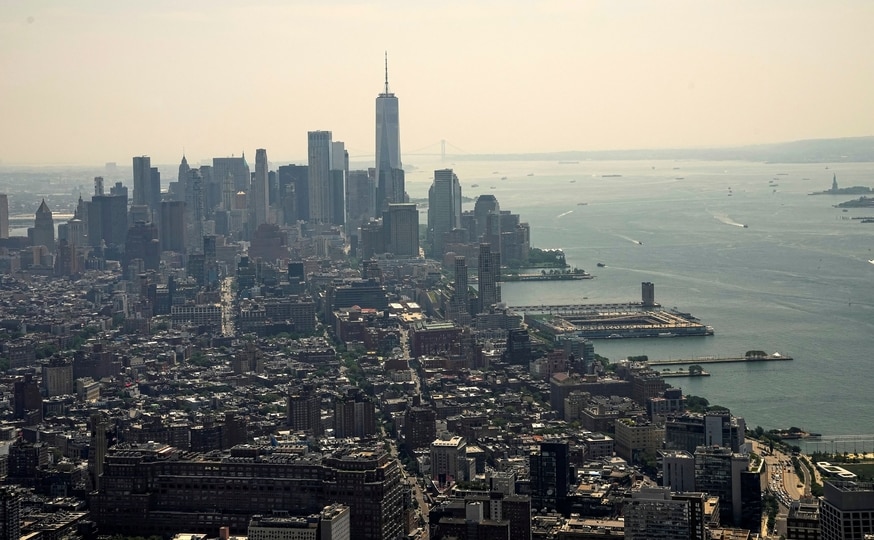
For Rajaratnam, the implication was clear. With global cities driving growth and opportunity, his own country’s future depended on its ability to become one such key “node” in the world economy. But he also foresaw that global cities had an “Achilles’ heel”. It was relatively easy to develop the “economic infrastructure” that a global city required, as Singapore was feverishly doing at the time. Far harder, he warned, was preparing citizens for the “political, social and cultural adjustments such a city would require to enable individuals to live happy and useful lives in them”.
The promise and peril that Rajaratnam identified have become pressing features of the contemporary world. The successes are well known: The New York metropolitan area’s GDP, at $2.6 trillion, is larger than the economies of all but nine countries in the world; London anchors nearly 40% of global foreign exchange trading and its GDP of £680 billion accounts for 23% of the UK economy; the Greater Tokyo region contains 37 million people (or a third of Japan’s population), making it the largest metropolitan area in the world; while Singapore’s GDP per capita at $163,354 (in PPP terms) is the highest in the world today. The figures are equally striking in other dimensions: global cities dominate rankings for culture, connectivity, and well-being. Tokyo, for instance, has the most Michelin-starred restaurants in the world (160); London’s airports collectively form the world’s busiest city airport system, handling more than 170 million passengers; and Singapore leads the world in life expectancy, at 85.4 years.
These achievements have, however, exacted costs. The most pervasive is glaring inequality, especially in housing. Because global cities attract high-paying knowledge industries and internationally mobile capital, housing demand often outpaces supply, pricing lower-income workers out of central areas. Little wonder, then, that virtually every global city is experiencing rent stress (commonly defined as a household spending more than 30% of its income on housing) and an affordability crisis, with median home prices far exceeding three times median household income. In New York, for instance, 52% of renter households are described as “rent-burdened” while the median home costs ten times median household income. The resulting discontent has bolstered movements like the Democratic Socialists of America, whose quick fixes — such as rent freezes — will, experience shows, only worsen the underlying shortage.
Another consequence has been increased immigration, because the success of a global city depends on being able to draw talent regardless of national origin. Rajaratnam’s colleague, Lee Kuan Yew, Singapore’s founding prime minister, put the point memorably when, in 1980, he advised the upcoming Singapore Symphony Orchestra to “cast its net widely”. There could only be so many good musicians in Singapore, and so, he wrote, “if we are chauvinists, we shall never have a good orchestra”. Singapore has followed this wise advice more broadly as it has developed into an advanced service-led economy. As a consequence, its non-resident population rose from 132,000 in 1980 to 1.91 million in 2025 (an increase from 5.5% to 31.2% of the total population). But this demographic transformation has met with significant backlash. The complaints — about competition over jobs and housing and the weakening of national identity — closely resemble those heard in the US. Quite a few Singaporeans seem to share Steve Bannon’s view that “a country is more than an economy”.
Another prominent cost is the intensification of identity politics as residents, drawn from around the world, rally around shared characteristics — and shared grievances. The danger, increasingly visible in cities like London and New York, is that some identities can come to be disfavored. Consider, for example, how reported antisemitic incidents have risen sharply since October 2023 and remain at historically elevated levels. In New York, for instance, anti-Jewish bias accounted for approximately 57% of reported hate-crime incidents in 2025, although Jewish residents make up only 10% of the population. Questions of even-handedness arise in other forms, too. New York mayor Zohran Mamdani has publicly denigrated the BJP as “exclusionary” and branded India’s three-term prime minister a “war criminal”, but has had little to say about Pakistan which has an official state religion and has been the subject of countless reports documenting abuses of religious minorities such as Ahmadis and Sikhs through “blatantly discriminatory” blasphemy laws and “widespread patterns of abduction and forced religious conversion“. How long can a global city remain open and appealing when its officials have a preferred side?
Global cities can also arouse envy or resentment. Few cities have made as concerted an effort as Dubai has to become a global city. A byword for ambition, Dubai’s population has grown to 4 million, with more than 90% of its residents coming from overseas. Its striking bets on trade, spectacle, and luxury have turned it into a magnet, drawing in nearly 20 million visitors in 2025. But openness does not always appeal to closed minds. Witness, for instance, the desire, voiced by an Iranian commentator in the early days of the ongoing conflict, to “kill the idea of Dubai”.
The challenges confronting global cities have important implications for India. Because of their dynamism and cosmopolitanism, these cities have absorbed vast numbers of educated migrants from India, who have in turn brought back capital, ideas, and expertise. As the backlash against globalisation gathers pace, this channel may narrow (the significant decline in the issuance of visas to Indian students is one such warning sign). India’s knowledge economy will therefore depend increasingly on whether it can build globally competitive cities of its own — cities capable of creating, retaining and attracting human capital. But it is hard to be optimistic when, as the 2025 Kearney Global Cities Report recently summarised, India’s leading cities “rank among the lowest globally in personal well-being, reflecting persistent deficits in safety, pollution, and livability”. Perhaps, then, the time has come for India’s political leaders to pick up Rajaratnam’s speech and reflect on his warning that, in a rapidly urbanising world, a city that fails to address human needs risks becoming not a great metropolis but a necropolis.
Rahul Sagar is a Global Network associate professor at NYU Abu Dhabi. His latest book is The Birth of Indian Liberalism. The views expressed are personal


