
 E-Paper



Today’s AI infrastructure could be toast tomorrow
AI giants are betting the world will rent intelligence forever. But as AI becomes cheap enough to own and run, customers will have less reason to keep paying

 Prefer HTon Google


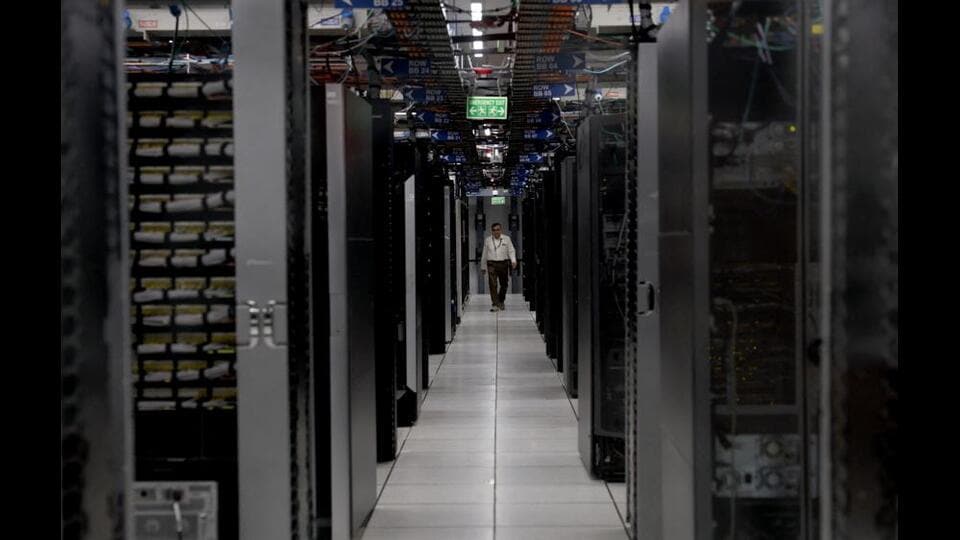
Big Tech is betting its future on bigger artificial intelligence (AI) data centres, with Alphabet disclosing more than $1 trillion in commitments. India is joining the spending frenzy, with the Adani group pledging $100 billion and Reliance $110 billion for AI infrastructure. These bets could become monuments to a disastrous assumption that growing demand for intelligence guarantees demand for the infrastructure being built today.
AI use will surely increase exponentially, but much of that intelligence will move into people’s hands. Companies counting on keeping it centralised could become toast, and India should study what happened to earlier computing pioneers before buying its own toaster.
Exponential technologies become smaller, faster, and cheaper, opening markets that their pioneers often fail to capture. In the 1960s and 1970s, mainframes were synonymous with computing. IBM dominated, with Burroughs, Univac, Control Data, Honeywell, and later Amdahl competing for the rest of the market. Their machines occupied special rooms, cost fortunes, and required specialists to operate them. It was easy to assume that an expanding appetite for computing would mean more demand for bigger mainframes. Yet IBM barely survived, and its rivals’ computer businesses became toast.
Then came minicomputers from companies such as DEC, Data General, and HP, followed by workstations from Sun Microsystems and others. Computing moved directly into departments and laboratories. People no longer had to beg the computer department for time on its expensive machines, and the market exploded as they discovered what they could do without the gatekeepers.
Personal computers took that freedom much further, followed by laptops and smartphones. Computing spread across desks, into homes, and eventually into billions of pockets. Companies that opened those markets became toast too: DEC and Data General were swallowed by competitors, Wang went bankrupt, and Sun was sold to Oracle. Someone predicting this explosion in computing could have been completely right about the demand and disastrously wrong about the companies that would supply it.
Today’s AI giants are betting that the world will rent intelligence forever. As it becomes cheap enough to own and run, their customers will have less reason to keep paying the landlord.
OpenAI and Anthropic sell access to their models, while Google, Meta, and Microsoft are building the AI equivalent of mainframes, betting that customers will keep renting intelligence from them.
But intelligence will move out of those data centres, onto phones and laptops, inside factories, hospital systems, and private clouds controlled by the organisations using them. Those systems will call on larger services when needed, while handling everyday work themselves. The intelligence will stay close to its users, and more of the latter’s money will stay in their pockets.
Training a frontier model can require enormous computing resources, but using it does not require repeating that investment or choosing the largest model for every task. A shopkeeper managing accounts, a factory inspecting parts in Coimbatore, and a tutor helping a child in rural Bihar have different requirements. None needs to pay for the world’s most powerful model when a smaller, cheaper one can do the job just as well.
Such models already run on small devices. In 2025, Apple described a compact language model that runs on its iPhones, calling on server models for more demanding work. As hardware and software improve, more of that capability will fit into an affordable phone, putting intelligence within reach of people who cannot afford another monthly subscription.
Privacy will be the key, because an assistant that works with me will come to know what I am researching, whom I trust, what worries me, and which ideas I am still afraid to say out loud. No corporation has a right to that window into my life.
Science fiction understood this long before chatbots arrived. R2-D2 in Star Wars and Rosie in The Jetsons were companions with intelligence of their own, living and working alongside the people they helped. That is the future I want — an assistant that grows with me, remembers what matters, and helps me turn unfinished ideas into things I could never have built alone. Its accumulated knowledge should remain mine for a lifetime, surviving changes in devices, providers, and business models.
For India, the opportunity extends far beyond constructing facilities for global platforms. A tutor that understands local culture and values, an assistant helping a kirana shopkeeper, or a medical assistant bringing traditional knowledge to a village clinic could put useful intelligence within reach of millions. India’s entrepreneurs and researchers should be building those capabilities on platforms they control.
Locating a foreign platform’s servers in India also does not give Indian users control over their knowledge or the freedom to change suppliers. India should measure its AI progress by what people can do with the technology, how affordable it becomes, and how much independence they retain. Distributed intelligence can bring capabilities once reserved for wealthy institutions to people who could never afford them before.
Cloud infrastructure will remain important, just as mainframes did, and cheaper intelligence will create new uses and expand demand. But that growth will not guarantee higher profits for the companies building today’s largest systems. Control will shift toward the people and organisations using AI.
India would be wiser to watch Silicon Valley’s trillion-dollar bets turn to toast than to volunteer as the next slice. Its talent should be solving its people’s unmet needs and putting affordable intelligence into their hands instead of copying someone else’s spending frenzy.
Vivek Wadhwa is CEO, Vionix Biosciences. The views expressed are personal


