

 E-Paper


PM CARES for Children: A significant effort to provide protection to children
The loss of a parent or a caregiver is a trauma difficult to overcome. However, it should not mean children grow up deprived of love, care, protection, nutrition, education and opportunities to thrive
The Covid-19 pandemic has left profound impact on the lives of children that go beyond the challenges of lockdowns and school closures. Children experienced isolation, uncertainty, and grief. Grief that acquired different dimensions for children who lost their parents, it meant the struggles to cope with the loss of the first lifeline of affection, care and protection: The parents
Family is the natural unit of society and is pivotal for children’s overall development. Losing a parent or a primary caregiver is associated with mental health problems, reduced schooling, lower self-esteem, and increased risk of suicide, violence, abuse, and exploitation. Several global studies such as the Bucharest Early Intervention Project (BEIP, Nelson et al., 2007), highlight the harmful impact on children of growing outside a family environment, and the rapid improvements when the situation is reversed.
The National Commission for Protection of Child Rights estimates that 147,492 children lost either parent between April 2020 and January 2022, of which 10,094 lost both or the single surviving parent. While the worst of the pandemic is over, difficult journeys lie ahead for the girls and boys who lost parental care.
India has a strong legal and policy framework for child protection. The Juvenile Justice (Care and Protection of Children) Act 2015, provides the foundation for the protection of the most vulnerable children. This Act, following international principles, emphasises the importance of ensuring that children grow in a family environment. The principles of institutionalisation as a measure of last resort and the importance of growing up in a family environment have been further underlined in Mission Vatsalya, the recently announced umbrella scheme of the ministry of women and child development.
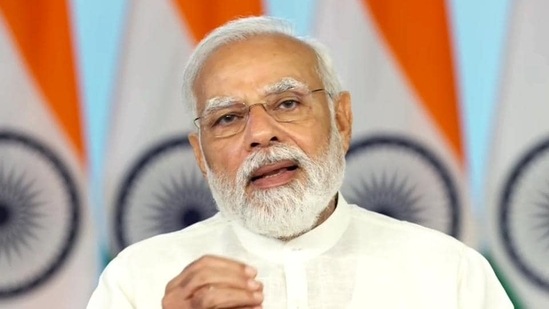
The Government of India has advanced significant initiatives to provide protection to children who lost parents to Covid-19, with at least 16 state governments setting dedicated schemes. It is in this context that PM-CARES for Children was launched by Prime Minister a year ago, when the country was fighting against the scourge of the second Covid-19 wave. The scheme, which has reportedly benefited 4,345 children from 557 districts, has a set of provisions to ensure children receive protection, health and education, and lays the foundation for self-reliance once these children reach adulthood.
In addition, the Supreme Court of India, recognising the vulnerabilities faced by children in need of care and protection, especially those in institutions, ordered the release of children after completing due diligence, and when conditions allowed so. As a result, over 145,000 children in need of care and protection returned to their homes or communities. This could open an opportunity to advance path of an Alternative Care Reform in India that encourages deinstitutionalisation of children and expands opportunities for more children to be placed in family-based care, including foster or kinship care.
So what does this government support mean for the children whose lives have irreversibly been changed by Covid-19?
For Vidya and Rekha (names changed), the support has allowed them to continue their education and remain in a known and supporting environment to cope with the grief. A year ago, the lives of these two adolescent sisters were upended. After losing their father in the first wave of the pandemic, the mother succumbed to Covid-19 in the second wave. Their aunt arrived just on time to honour her sister’s dying wish of taking the girls back home. Mother of five, she was as committed to carry her sister’s wish, as concerned about how to make ends meet. At this critical juncture, the village child protection officers in their native district in Mangalore, Karnataka, helped them access benefits under PM CARES for Children Scheme and the Bala Seva Yojana scheme.
The loss of a parent or a caregiver is a trauma difficult to overcome. However, it should not mean children grow up deprived of love, care, protection, nutrition, education and opportunities to thrive.
To the extent possible, it should not mean growing away from a family environment and in a community where children can develop stronger social connections and sense of belonging. UNICEF is committed to continue to support the Government of India's efforts towards this goal. Because children are India’s greatest assets, and to their protection we owe the greatest efforts we can collectively offer.
Soledad Herrero is chief of child protection, UNICEF India
The views expressed are personal

