E-Paper



9/11 attacks: How Twin Towers in New York became more than just iconic skyscrapers in the US
9/11 attacks: Before the attacks, Twin Towers housed 10.4 million sq ft of office space and up to 50,000 workers, making them commercial hub in Lower Manhattan

 Prefer HTon Google


Before their destruction on September 11, 2001, New York’s Twin Towers were far more than a pair of iconic skyscrapers dominating the Manhattan skyline. They formed the centrepiece of the World Trade Center, a vast commercial complex designed to bring together businesses, government agencies and organisations involved in international trade. The Port Authority of New York and New Jersey developed the complex on a 16-acre site in Lower Manhattan, according to official US government historical records.
Construction of the World Trade Center began in 1966, with tenants beginning to occupy its space in 1970, according to the US government's 9/11 Commission Report. The completed complex consisted of seven buildings connected by an underground shopping mall and pedestrian concourse. The Twin Towers, officially designated 1 World Trade Center (the North Tower) and 2 World Trade Center (the South Tower), were its signature structures.
Also Read: 25 years on, a fading memory: Nearly a third of Americans weren’t born by the time 9/11 happened
From a real-estate perspective, the scale was remarkable. The two towers together contained about 10.4 million square feet of office space, according to the 9/11 Commission Report. Each tower stood 110 stories high and was approximately 1,350 feet tall, with a square footprint measuring 208 feet on each side. On a typical workday, as many as 50,000 office workers occupied the two towers, while around 40,000 additional people passed through the wider World Trade Center complex.
The complex functioned almost like a small city within Lower Manhattan. A US government technical report on the World Trade Center earlier stated the wider complex contained more than 12 million square feet of rentable office space and had 256 elevators and 72 escalators. It also included a 22-storey hotel, additional office buildings, a US Customs House and an underground shopping mall. The complex was connected to multiple subway lines and the PATH rail network, reinforcing its role as a major commercial and transportation hub.
The towers were also notable for the amount of usable office space packed into their enormous structures. Government records noted that each floor was approximately one acre in size and designed without interior columns, allowing greater flexibility in office layouts. The buildings were therefore not simply symbols of New York’s skyline but highly ambitious pieces of commercial real estate designed to accommodate thousands of workers and businesses.
Also Read: India at forefront of fight against terror: PM Modi remembers 9/11 victims
9/11 attacks on September 11, 2001
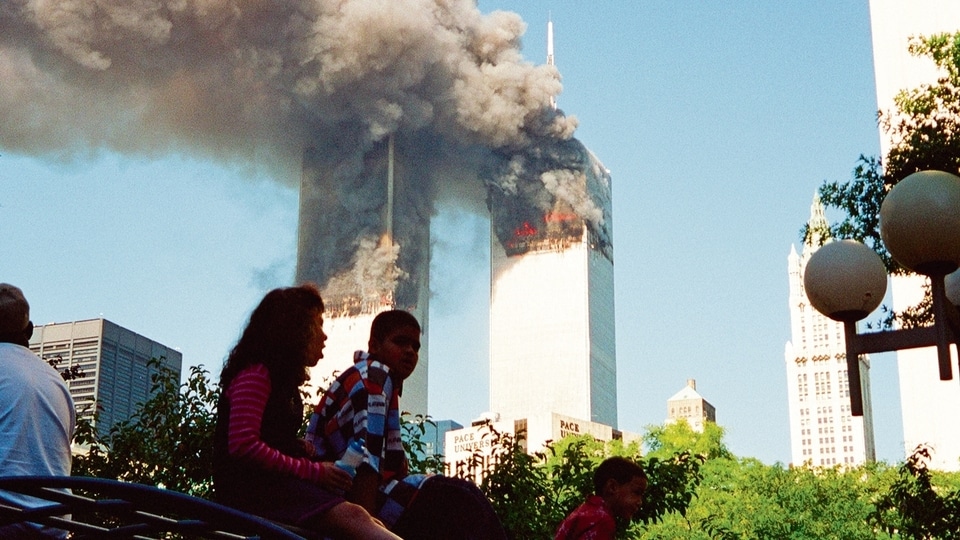
On September 11, 2001, the scale of the complex became part of the tragedy. The US National Archives records that American Airlines Flight 11 struck the North Tower at 8:46 a.m., followed 17 minutes later by United Airlines Flight 175 hitting the South Tower. Both towers subsequently collapsed.
US media reports have described the Twin Towers as a major commercial and transportation hub in Lower Manhattan before September 11, 2001. Their destruction resulted in the loss of millions of square feet of office space and significantly altered the area’s skyline and commercial landscape.