E-Paper



'Stop butchering south Indian culture': Bengaluru startup adds chapati in Onam sadya. Viral post
Ather Energy's Onam celebration sparked an online debate after chapati was included in the traditional sadya on a plantain leaf.

 Prefer HTon Google


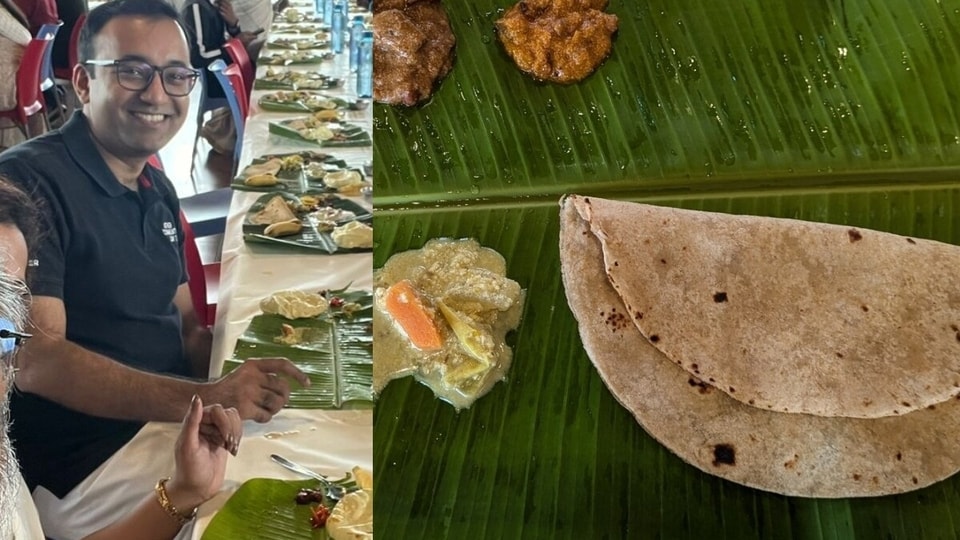
Ather Energy, the electric two-wheeler manufacturer, recently hosted an Onam celebration at its office, providing employees with a traditional sadya feast. However, what was meant to be a festive gathering quickly spiralled into an online controversy after a social media post revealed an unusual addition to the festive Kerala meal: chapati.
(Also read: Nikhil Kamath's ‘sh*t marketing’ jibe at Ather Energy gets a witty comeback from Bengaluru CEO)
The post, shared by Bengaluru-based Ather's co-founder Tarun Mehta on X (formerly Twitter), showcased the celebration, with one image drawing particular attention—a chapati included in the sadya. This sparked outrage from social media users, who were quick to criticise the company for deviating from the traditional vegetarian feast served during Kerala’s biggest cultural festival.
The sacredness of sadya
The Onam sadya is a key highlight of the festival, known for its elaborate spread, which includes dishes like avial, pachadi, erissery and payasam, all served on a banana leaf. Onam itself celebrates the return of the mythical King Mahabali and is a significant cultural event in Kerala.
For many, the inclusion of chapati—commonly associated with northern India—was seen as a cultural misstep. The sadya is not just a meal but a symbol of tradition, togetherness, and Kerala’s rich culinary heritage.
Social media reacts
Mehta’s post immediately caught the attention of X users, who did not hesitate to express their displeasure. One user, Sidin Vadukut, reacted sharply, stating, “If that is a chapati, then the rest of my life is dedicated to taking down this company. Apologies, you seem like nice people. But there is a limit. And you have crossed it.”
Another user expressed frustration, saying, “Vadaks (people from the north) stop butchering south Indian culture challenge”
Lavanya, sharing her dismay, wrote, “Why take something authentic and ruin it? No one would have had a problem if you guys had got a North Indian meal box for everyone! It’s a harvest festival after all.”
Devika Rajeevelse commented, “Much as I love it when non-Malayalis celebrate Onam, I really must draw the line at rotis as part of sadya. Pliss stop this madness!”
The significance of Onam sadya
Onam, celebrated from September 6 to 15 this year, is an integral part of Kerala’s cultural identity. The sadya, meaning "banquet," is a grand meal symbolising abundance, prosperity, and community. Consisting of around 24 to 28 dishes, each is served in a specific order, representing harmony between nature, culture, and the spirit of sharing.