
 E-Paper



 Trending News
Do Americans have a right to own assault rifles?
The Supreme Court is poised to rule on state bans


“MAiNLY, I just enjoy it,” says a firearms instructor in New Jersey, reflecting on the low recoil and reliability of his AR-15-style rifle. The gas-operated, magazine-fed semi-automatic is notorious because mass shooters have repeatedly taken advantage of its rapid fire. That has led Connecticut and other left-leaning jurisdictions to ban the weapon. Yet at least 16m Americans own one, often choosing it for self-defence or sport.
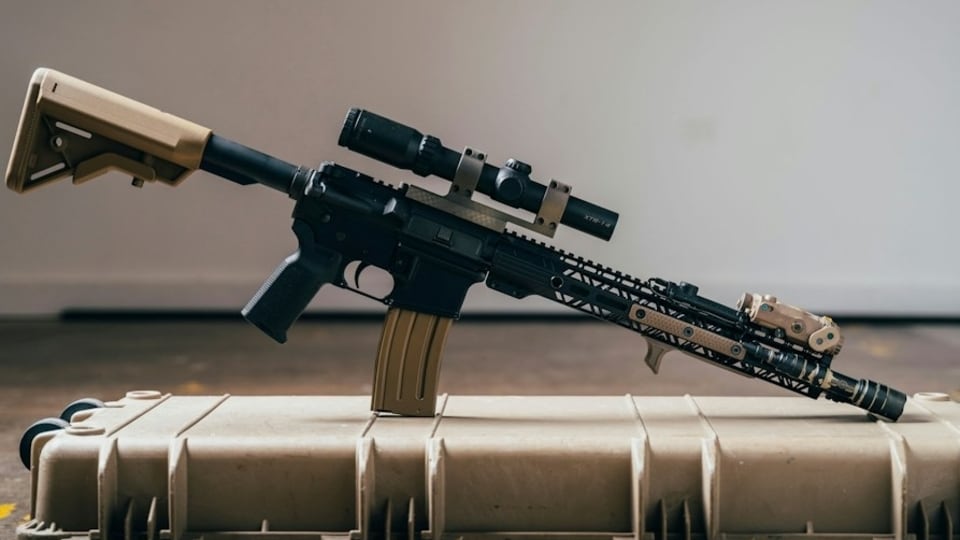
The AR-15 is at the centre of a case up for argument at the Supreme Court on December 2nd. Khaya v Cook County asks whether outlawing the rifle violates the Second Amendment’s “right to keep and bear arms”. When, in 1994, Congress enacted a federal assault-weapons ban, the AR-15 accounted for about 2% of guns manufactured in America. But after that law expired in 2004 the rifle’s popularity rocketed and, by 2020, it represented about a quarter of the total. Public outrage over its use in mass-casualty shootings—including at an elementary school in Connecticut in 2012 and at a July 4th parade in Illinois a decade later—led to some state and local bans.
Eleven states have barred the sale and, in most cases, the possession of specific AR-style guns and of other firearms with certain features—pistol grips, telescoping stocks and flash suppressors that dampen the burst of light each shot produces. But gun owners find workarounds. The New Jersey instructor’s own rifle, he says, is “virtually identical” to a model his state bans by name—yet, with a few modifications, is perfectly legal. Given how ubiquitous and easily customised it is, attempting to ban specific models is like “trying to ban the internal combustion engine”.
Khaya turns on whether these rifles can be outlawed, not on whether the laws are perfectly drafted. But the ability to evade bans that target specific models and features shapes both sides’ arguments. Challengers say the prohibited features are largely cosmetic and do little to make the guns more dangerous; the states reply that the restrictions leave plenty of alternative guns suitable for sport and self-defence. Joseph Blocher, a law professor at Duke University, acknowledges that barring certain features may seem silly—but so does claiming a Second Amendment “right to scary-looking features”.
The justices’ decision may rely on a series of recent precedents. The first touchpoint is District of Columbia v Heller, the landmark case from 2008 that protects an individual’s right to keep a handgun at home for self-defence. Heller covers weapons that are “in common use”, but allows lawmakers to ban “dangerous and unusual” weapons—including the M-16, the fully automatic cousin of the AR-15.
In 2022 the Supreme Court’s conservative supermajority adopted a strict new regime for judging the constitutionality of gun laws: only laws consistent with America’s “historical tradition of firearm regulation” could survive. Two years later the court ruled 8-1 that a domestic abuser could be stripped of his weapons without violating his right to bear arms. A law needs only to be “consistent with the principles that underpin our regulatory tradition”, Chief Justice John Roberts wrote.
The AR-15’s advocates, backed by the Trump administration, say Heller settles the matter: the rifle is plainly “in common use”. Yet Elizabeth Prelogar, who successfully argued the domestic-abuser case, points out that lawmakers in medieval England and 19th-century America banned popular but dangerous weapons such as slingshots, lancegays and Bowie knives.
AR-15s, for all their firepower, are not machine-guns: each shot requires a separate pull of the trigger. Yet it may prove tricky for the court’s conservative majority to craft a decision that extends constitutional protection to semi-automatic rifles alone. Nearly 200,000 fully automatic machine-guns, registered before a law froze new registrations in 1986, are legally owned. Though Mr Blocher says he would be “genuinely stunned” if the Supreme Court expanded the Second Amendment to embrace military-grade weapons, that “is where the logic would point”.


