
 E-Paper



Gadi Eisenkot has 6 weeks to prove majority in Israel. How he could get numbers in his favour
Israeli President Isaac Herzog tasked Eisenkot to form the next government after he received the support of 67 lawmakers, including those from Arab parties.

 Prefer HTon Google


Israeli opposition leader Gadi Eisenkot has been given the opportunity to form the new Israeli government after outgoing Prime Minister Benjamin Netanyahu's coalition fell short of a parliamentary majority in the October elections.
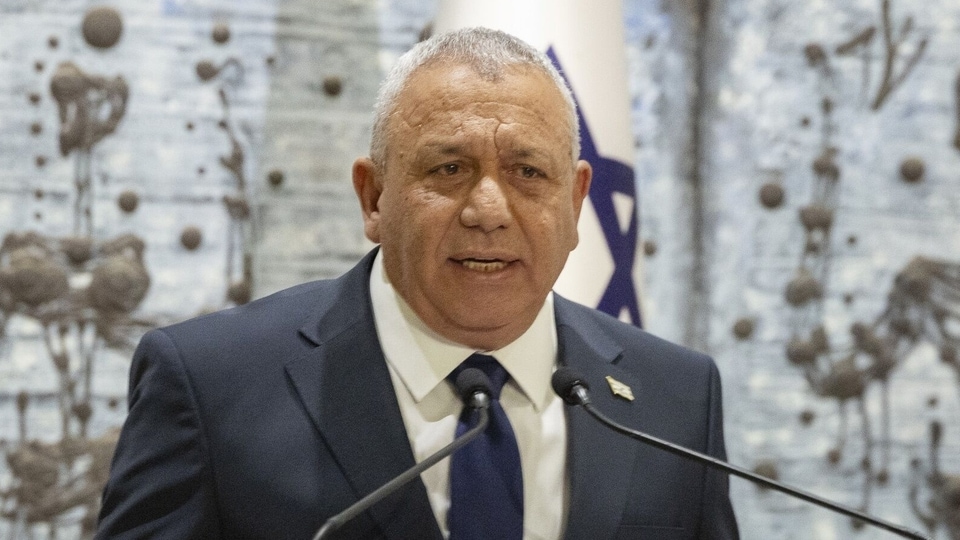
President Isaac Herzog on Sunday tasked Eisenkot with forming the next government after he received the support of 67 lawmakers, including those from Arab parties. Eisenkot now has a deadline of six weeks -- 28 days to put together a coalition to form a new government plus an extension of 14 days.
Also Read | Netanyahu rival Eisenkot gets chance to form new Israel govt, will have 6 weeks to prove majority
Deep Dive

Eisenkot said he was willing to include Netanyahu and the Religious Zionist party headed by far-right leader Bezalel Smotrich in the government, provided he remain the leader. "Now is the time to form a national emergency government. I will do everything to ensure we are worthy," he said on X.
However, the 66-year-old former general of the Israel defense forces (IDF) faces a tough path ahead as many of the opposition leaders in his bloc hold contrasting positions on national security, religion and the Israeli occupation of Palestinian territory.
What did the election results show?
The Israeli elections on October 27 threw up a hung parliament, with both coalitions led by Eisenkot and Netanyahu failing to secure a majority in Israel's 120-member Knesset. Netanyahu's Likud Party emerged as the largest party with 27 seats, while Eisenkot's Yashar won 21 seats.
For a government to be formed, a party or a coalition must have 61 seats in the Knesset.
Naftali Bennett's centre-right Together Party won 12 seats and the centre-left Democrats led by Yair Lapid won eight seats. Yisrael Beitenu, Otzma Yehudit and United Torah Judaism (UTJ) bagged seven seats each, while Shas and the Religious Zionism Party–Zehut list secured six each.
Also Read | Setback for Netanyahu as Israel’s Arab parties agree to back Eisenkot for Prime Minister
Overall, Eisenkot's coalition - including his Yashar party, the centre-left Democrats, Naftali Bennett’s centre-right Together party and Avigdor Lieberman’s right-wing Yisrael Beiteinu - won 48 seats, while Netanyahu's bloc got 53 seats. Arab-led parties Ra'am (United List) and Joint List emerged as kingmakers, winning 19 seats in total.
With recommendation from Arab-led parties, Eisenkot received the support of 67 lawmakers. On the other hand, only 46 lawmakers backed Netanyahu for the top post, after key ally UTJ declined to endorse either candidate.
Can Eisenkot break the Israel deadlock?
Eisenkot has ruled out bringing Arab parties into his government due to contrasting values. The October 7 attack by Hamas had hardened opinion against Arab parties. Naftali Bennett and Avigdor Liberman, whose parties are part of Eisenkot's bloc, has ruled out a minority government that relies on the two parties.
Arab parties have been angered by the policies of Netanyahu and his far-right allies. While Ra'am signalled willingness to formally join the coalition, the Joint List has expressed interest in extending outside support. These parties' support could give Eisenkot's bloc 67 seats.
Also Read | After designation, Eisenkot vows to ‘do everything’ to form government
Eisenkot could also seek support from the ultra-Orthodox Shas and United Torah Judaism (UTJ), a longstanding Netanyahu ally. These two parties combined hold 13 seats, which would give Eisenkot 61 seats, the exact number required for a majority. However, such an alliance would require compromises over military conscription exemptions for ultra-Orthodox religious students, which has been a long-standing contentious issue in Israeli politics.
There's now a third option. Eisenkot has signalled willingness to include Netanyahu and one of his far-right allies to form a unity government, provided he remain the leader. With Likud's 27 seats and RZP's six, Eisenkot's bloc would get 81 seats, far more than required for a simple majority. However, it would require opposition leaders to abandon their central campaign promise to oust Netanyahu from power.
If Eisenkot fails to form a government within 42 days, Herzog could turn to Netanyahu to form the next government. Subsequently, if Netanyahu also fails to achieve a majority to form a government, then it would trigger fresh elections in the country.


