
 E-Paper



The Deadly 1.5-Mile Corridor That Shows the Fatal Flaw in America’s Road Design
Six lanes and crosswalks a half-mile apart: How American urban-planning is failing walkers.


 Prefer HTon Google


Bessan-Gligo stepped into the middle of the street. Moments later, a large SUV hit and killed her.
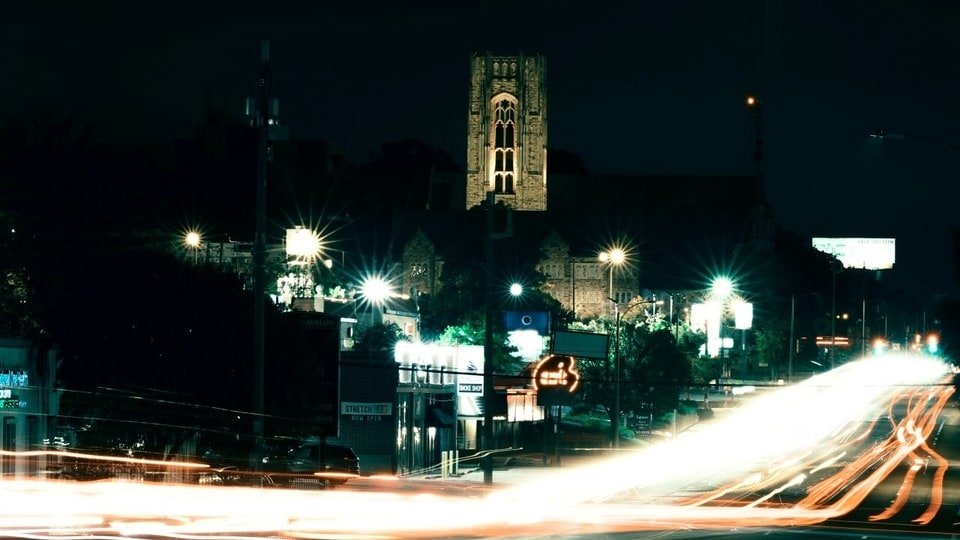
American roads are becoming deadlier for walkers. Between 2009 and 2024, pedestrian deaths increased 72% across the U.S., federal data show. Over the same period, such deaths declined in most other developed nations, according to United Nations data. In road safety, the U.S. is an outlier.
Pedestrian deaths are rising on certain roadways. Increasingly, people are hit by cars on roads designed like Union Avenue—all while this type of roadway continues to spread across the country.
Union Avenue is what urbanists call a “stroad,” a fusion of “street” and “road.” A street serves as a location for destinations like businesses and homes, while a road transports people at high speeds between destinations. A “stroad” tries to do both tasks at once, said Charles Marohn, the engineer widely credited with coining the term.
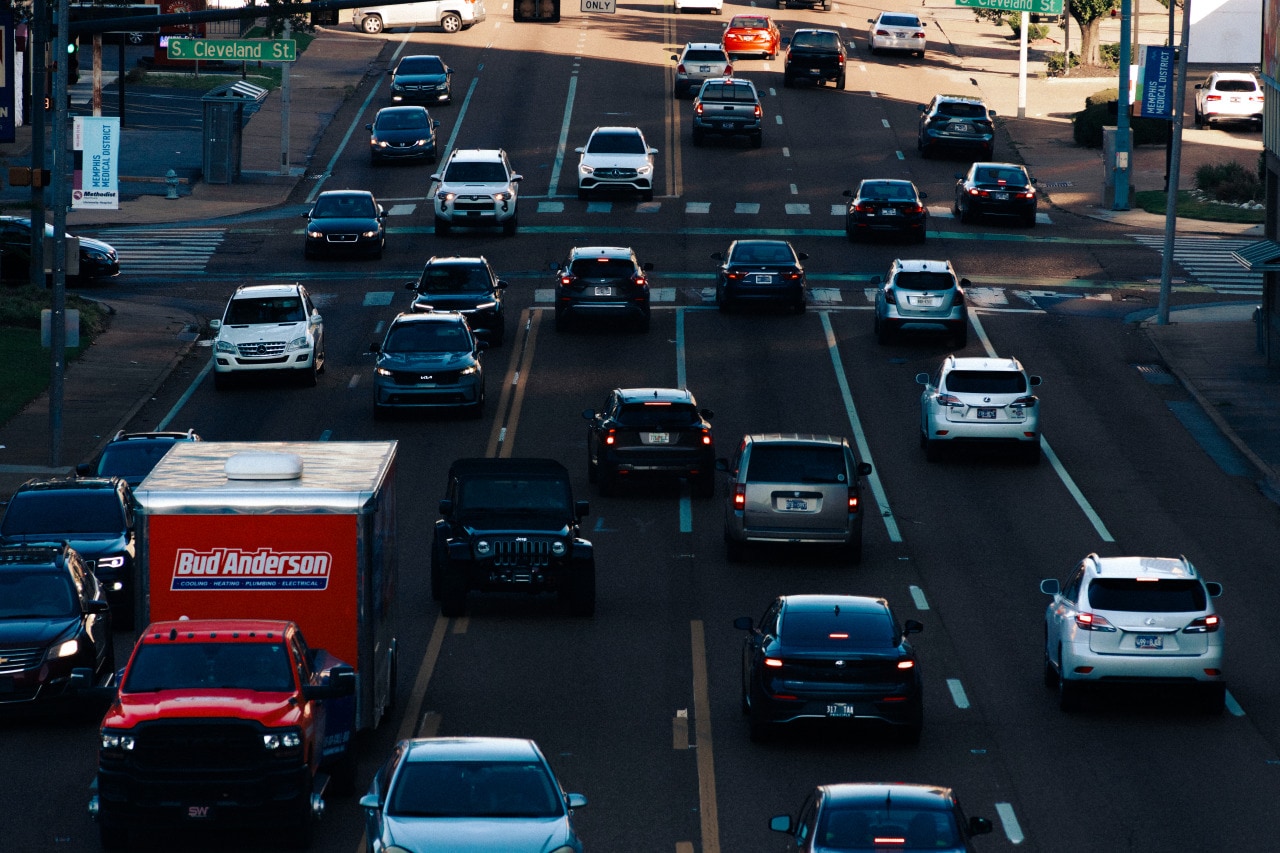
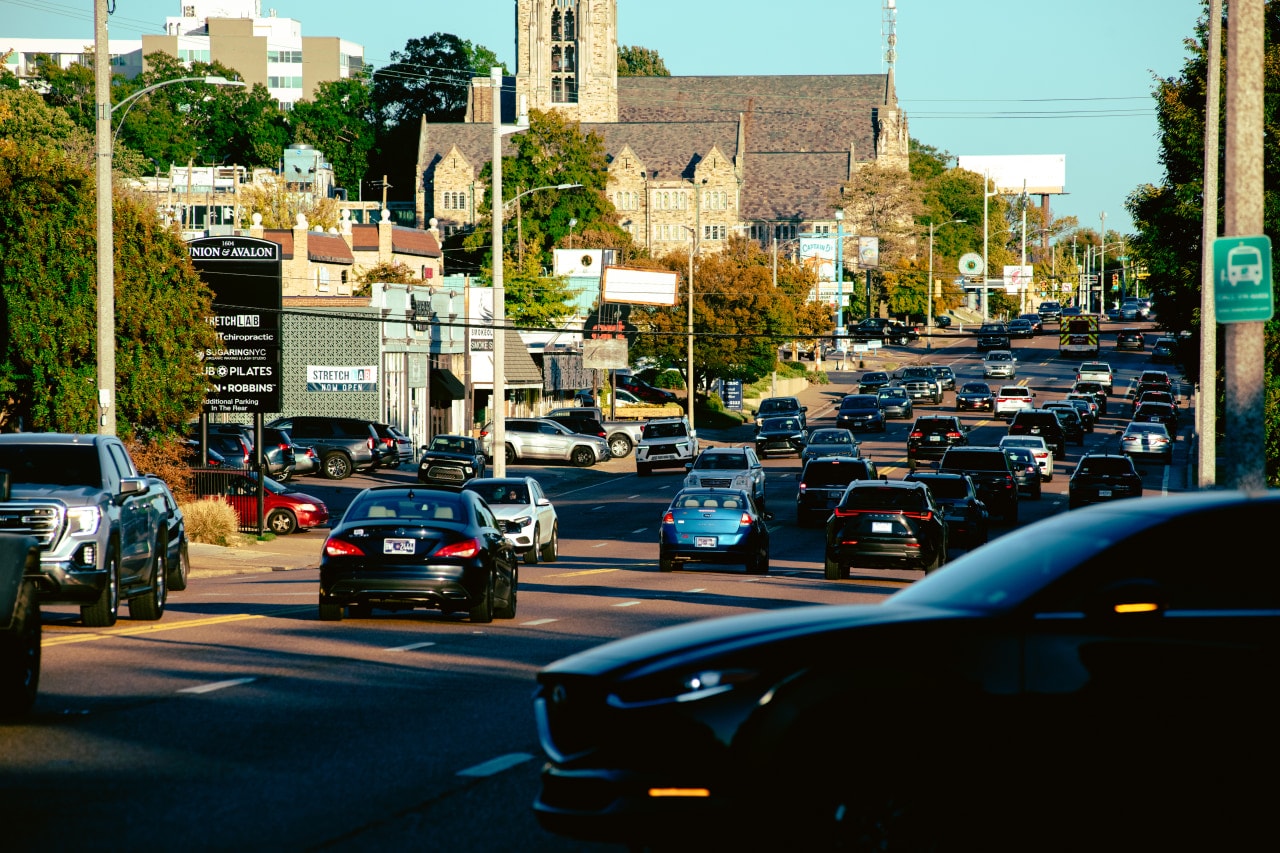
In Memphis, Union Avenue is a center of commercial activity, lined with grocery stores, fast-food restaurants and gas stations. It is also a six-lane highway that carries some 30,000 cars a day.
The road bisected Bessan-Gligo’s life. The school she attended, Central High School, was a few blocks away from Union Avenue. In class, she was an attentive student, her history teacher said—though she was most passionate about the school’s band. High-school bands are a matter of pride across the South, and Central’s band is among the best in the nation. Bessan-Gligo played the cymbals.
After band practice, she would begin her shift at a sandwich shop beside Union Avenue. Then she would cross it to get home. Bessan-Gligo almost always walked, a friend said; she didn’t have her driver’s license yet.

The stores and restaurants one might find on stroads like Union Avenue, such as the sandwich shop where Bessan-Gligo worked, employ workers who often cannot afford a car. But stroads aren’t designed for pedestrians. When workers attempt to walk, they encounter a landscape built for vehicles, said Heidi Simon, a director of urban-planning at nonprofit Smart Growth America.
Sidewalks on Union Avenue are narrow. There is no obvious place to cross the street; many intersections are located about a half-mile apart. For a driver going 40 miles an hour, a half-mile takes about 45 seconds. By foot, after a long shift, such a distance can feel like an eternity.
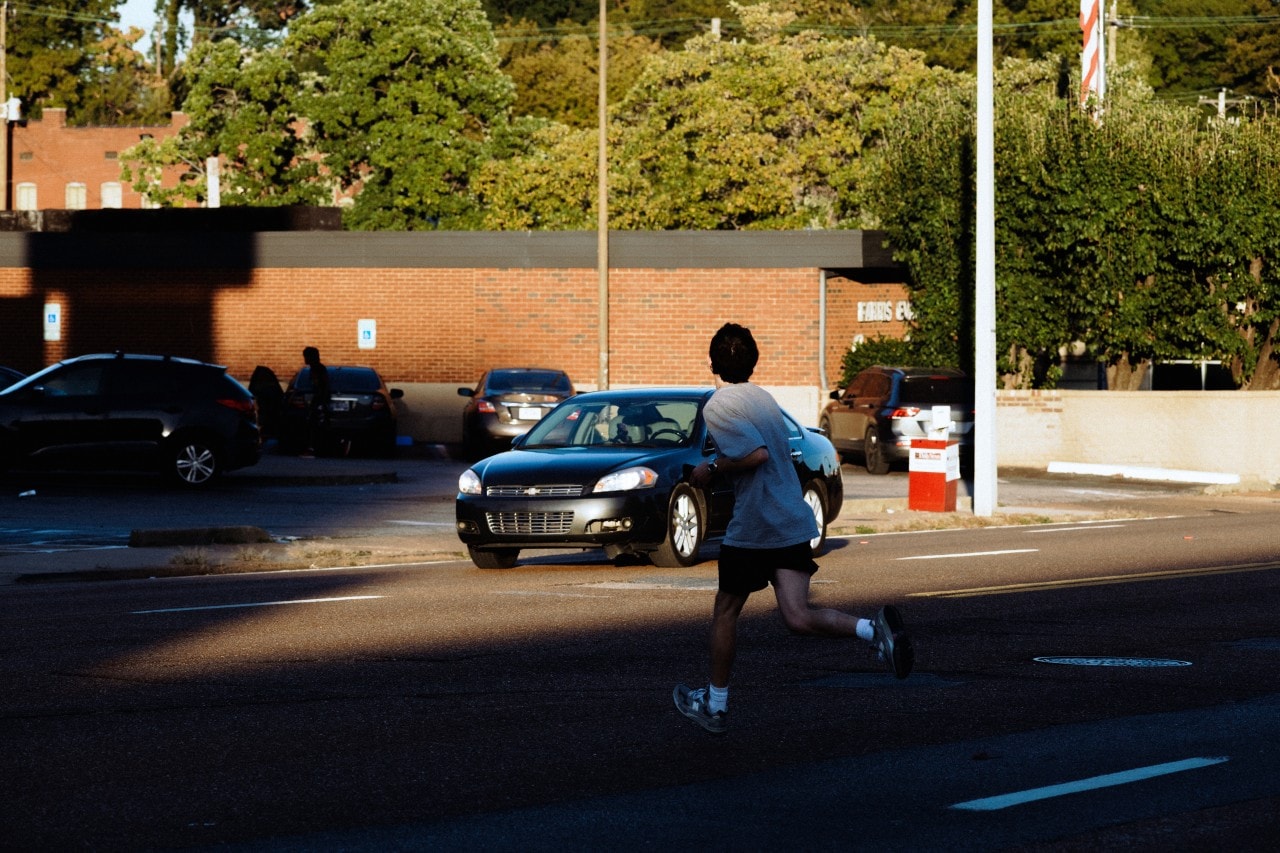
Bessan-Gligo frequently crossed in the middle of Union Avenue, her friend said. She had done it so often that it no longer felt dangerous.
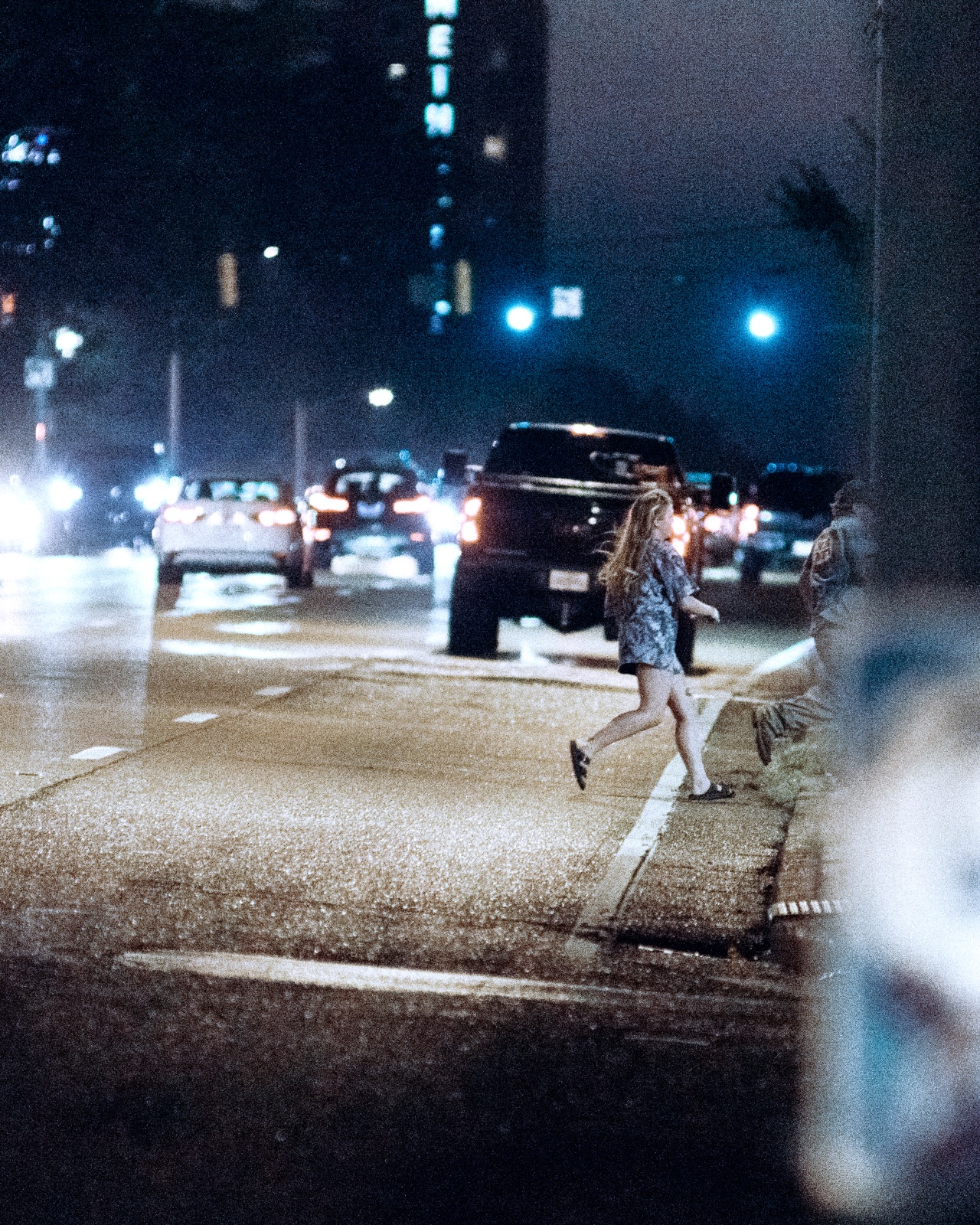
In reality, this kind of crossing is especially deadly, data show. Pedestrians are most likely to be killed by cars when they cross roads “midblock”—outside of crosswalks—at night.
Midblock crossings often surprise drivers, said Rebecca Sanders, national safety practice research lead at Fehr & Peers, a transportation consulting firm.
Drivers can usually guide their cars down a stroad without paying attention to their periphery, she said. The design of a stroad—wide, straight, multiple lanes—facilitates speed above all else. Drivers might find themselves going faster, well past the legal limit, without realizing it.
Meanwhile, stroads are often poorly lit at night, Sanders added. “You’d need a lot of light to light the width of a roadway that is six lanes across,” she said. By the time drivers notice a pedestrian in the road, it is often too late.
Yet the U.S. keeps building stroads, said Nicholas Ferenchak, an associate professor at the University of New Mexico and the director of the Center for Pedestrian and Bicyclist Safety. “When you plop 200 houses down 15 miles from the place where people have to work, you have to build big roads where they can drive fast,” Ferenchak said.
Stroads became a staple of American road design in the postwar era, he said. Urban planners assumed most people had cars, so metropolitan areas sprawled. Local and state governments built wide, multilane roads to allow people to travel to economic centers from their homes in suburbs.
The trend continues today, particularly in the Sunbelt, now the most dangerous region of the country for pedestrians.
Roads like Union Avenue—urban roads with speed limits of 35 mph or above—are now three times as deadly as other urban roads with lower speed limits, according to a 2022 Tennessee Department of Transportation report analyzing pedestrian fatalities in the state.
Many stroads are also state highways, like Union Avenue. A recent study from Smart Growth America found that in 2024, 57% of all roadway fatalities occurred on state-owned roads.
Other factors amplify stroads’ risks, said Robert Schneider, co-chair of the department of urban planning at the University of Wisconsin–Milwaukee. Many low-income Americans now work shifts that end late at night, when drivers find it difficult to see, he said. At the same time, Americans have gravitated in recent years toward larger vehicles, which hit pedestrians with greater force.
Ironically, larger, heavier vehicles are often safer for the occupants of cars, Schneider said. At the same time pedestrian deaths have swelled, the number of Americans dying in car accidents has declined.
The car that killed Bessan-Gligo was a GMC Yukon, an SUV that weighs more than 5½ thousand pounds. The car was barely damaged by the collision with her body, a police report noted. The occupants of the car—three teenage boys—walked away from the crash uninjured.
Deadliest in America
A pedestrian hit head-on by a car going 32 miles an hour—a little less than the speed limit on Union Avenue—has about a 25% chance of death, according to AAA data. If that car’s speed increases to 42 miles an hour, AAA says, the pedestrian is twice as likely to die.
Drivers often speed on Union Avenue, said Kelsey Huse, an advocate for road safety in Memphis.
“To walk on Union Avenue feels like you’re about to be killed,” she said. “You have to navigate people turning in and out of businesses. If you have to cross the street, good luck finding a place to do that because the crosswalks are so far apart.”
The Memphis metro area ranks as the deadliest in the U.S. for walkers per capita, according to a Smart Growth America analysis of data through 2024, the most recent available.
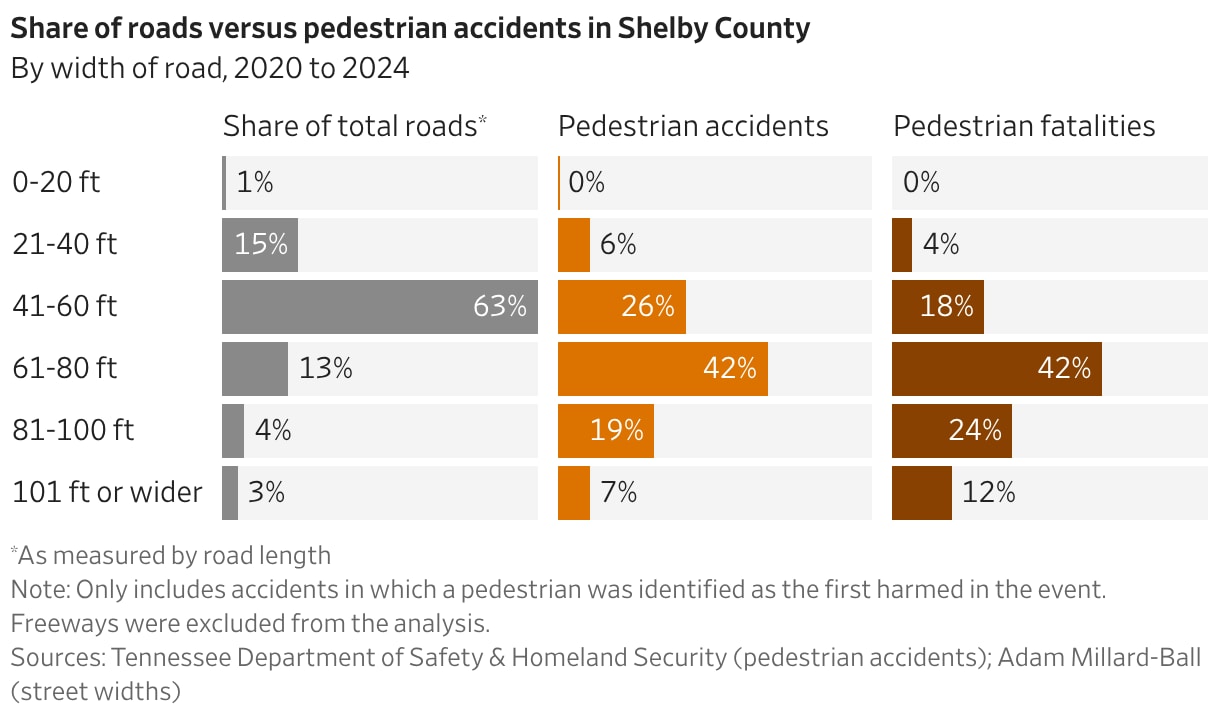
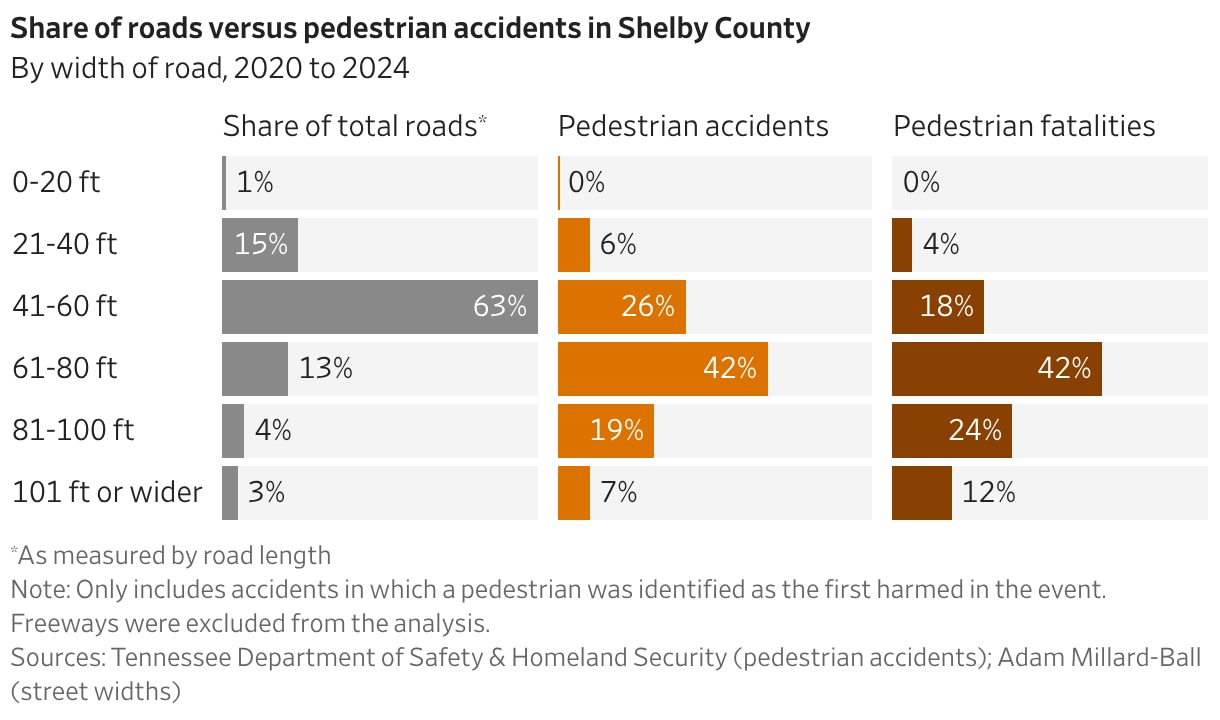
In Memphis, pedestrian deaths are concentrated on stroads, a Wall Street Journal analysis found. Stroads, which are generally more than 60 feet wide, account for only a small percentage of the city’s roads. But 78% of pedestrian fatalities happen on roads with such widths, the Journal found.
Bessan-Gligo was one of 15 people killed by a car along Union Avenue since 2020, according to state and federal data. Over the same period, state data show at least 402 pedestrians have been killed by cars in Shelby County, which includes Memphis.
Officials in some cities are trying to reduce pedestrian deaths by redesigning roadways. In recent years, Milwaukee started to change some dangerous roads by narrowing roadways, adding more crossing points and raising sidewalks, said Kevin Muhs, Milwaukee’s city engineer. These changes compel cars to follow speed limits and pay attention to pedestrians, he said.
“Wherever we see a redesign, we see reduction or total elimination of fatalities,” said Jessica Wineberg, coordinator of Milwaukee’s Vision Zero program, a traffic-safety plan. Between 2024 and 2025, pedestrian deaths in Milwaukee decreased 19%, she said.
Safety crossroads
Union Avenue in Memphis won’t be redesigned any time soon.
After Bessan-Gligo’s death, Tennessee officials started thinking about ways to make the road safer, said Steve Allen, the Tennessee Department of Transportation’s director of local programs and community investments. The state of Tennessee owns Union Avenue.
The state can’t add more crosswalks, reduce the number of lanes or lower the speed limit on Union Avenue, all of which would take time and money, Allen said. Instead, officials plan to encourage pedestrians to use pre-existing sidewalks with measures including improving lighting and repainting the crosswalk closest to Bessan-Gligo’s job.
Allen places the onus for pedestrian safety on walkers.
“Pedestrians think you have the right of way all the time,” he said. “But that doesn’t matter if you’re not paying attention. You assume that responsibility when you’re walking out on that kind of roadway.”
Tennessee’s plan probably won’t make Union Avenue safer, Smart Growth America’s Simon said. The crosswalks on Union Avenue are still a half-mile apart; if crosswalks are too far away, she said, pedestrians won’t use them.
Write to Rebecca Cadenhead at rebecca.cadenhead@wsj.com, Andrew Mollica at andrew.mollica@wsj.com and Audrey Valbuena at audrey.valbuena@wsj.com


