
 E-Paper


Chuck Schumer Was Democrats’ Punching Bag. Now He’s Riding High.
The Senate minority leader and his party’s progressives set aside their differences to win, but possible fights lie ahead.


 Prefer HTon Google


WASHINGTON–Even Chuck Schumer couldn’t believe it.
The Associated Press had projected that Democrats would succeed in their longshot effort to win back control of the Senate–and not just by flipping a few seats, but by flipping at least seven.
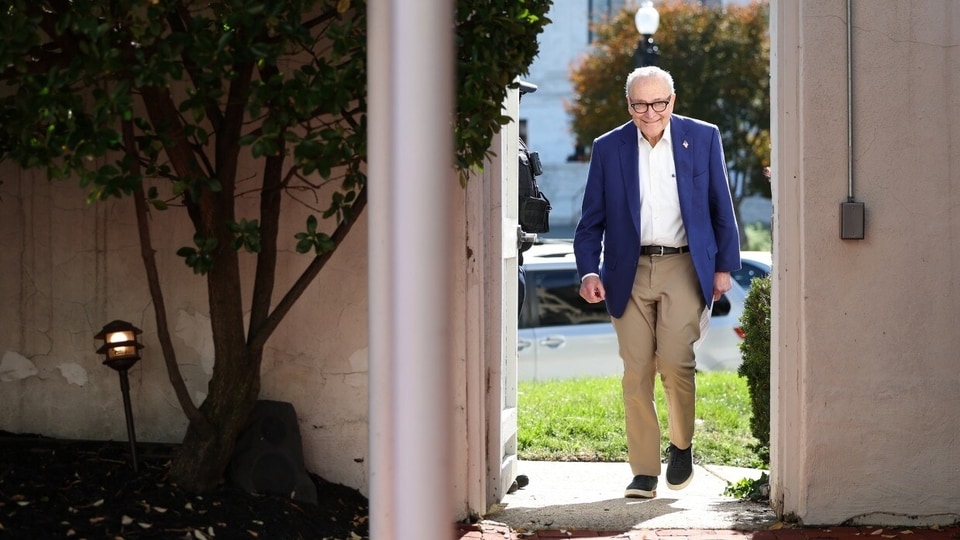
“Is this a night?!” the jubilant Senate minority leader asked as he greeted journalists and staffers in a courtyard of the Democratic Senatorial Campaign Committee near Capitol Hill late Tuesday night. “Oh man! Wow, wow, wow!”
Deep Dive

Last spring, progressives and activists had bombarded the 75-year-old New York Democrat with calls to resign and primary threats after he voted with a small group of other senators who caucus with Democrats to keep the government open. The backlash was so profound that Schumer had to postpone a planned book tour due to security concerns. Schumer was cast by progressive critics as too old-school and out of touch with voters consumed with anger at President Trump.
Now, after two risky government shutdowns and—as Schumer put it—“against all odds,” he made clear he expects to be re-elected as Senate Democrats’ leader in the next Congress, this time in the majority. Democrats will have at least 54 seats in the next Senate, with Alaska and Mississippi still too close to call.
On Wednesday morning, he posted a photo of himself cooking on his backyard grill, with photos of defeated Republicans among the hot dogs and burgers.
The magnitude of Democrats’ wins prompted Republican strategists to raise the alarm that their battered party could be looking at three daunting election cycles ahead.
“You can’t deny this is an historic and catastrophic loss for the Republican Party that will take years to dig out of,” said Steven Law, who helped build Republican Senate majorities at the helm of the Senate Leadership Fund super PAC when Sen. Mitch McConnell (R., Ky.) was GOP leader. “Just the Senate losses alone will be with us through 2032, if not longer.”
Producing victories on Tuesday required both Schumer and his left flank to set aside differences to serve the larger goal of winning, focused on a message of affordability and fighting corruption.
One question is whether the two parts of the Democratic coalition can find a durable accord. Political fights loom ahead—including on funding the government, restoring healthcare subsidies and possible impeachments—all of which could strain Democrats’ unity. Also, some of his newly elected colleagues have made it clear they aren’t fans of Schumer as leader.
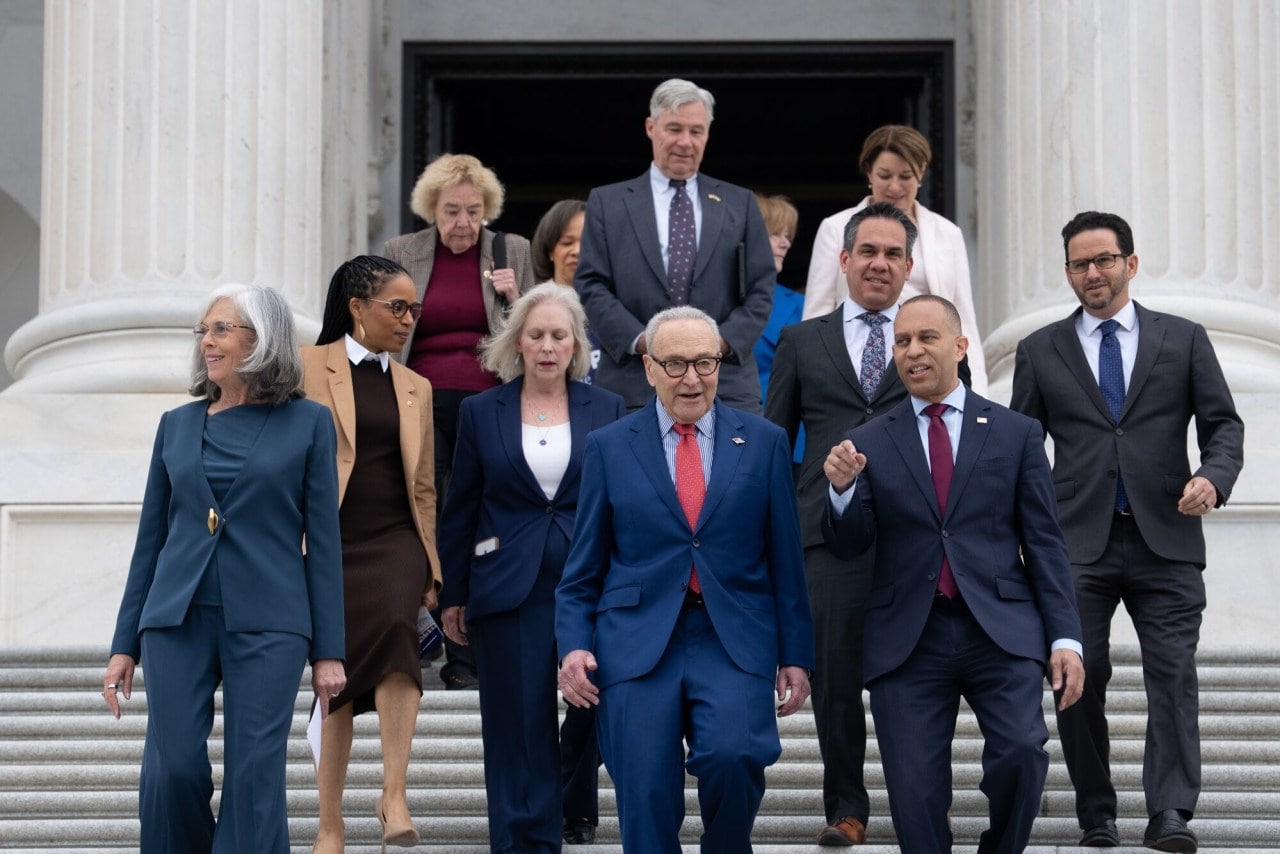
“We’re a big tent party,” Schumer said, noting that Democratic candidates across the spectrum all shared remarkably similar messages focused on reducing costs. “You talk about it differently in Maine than you talk about it in Kansas, but it was all the same message,” he said. “And we will be united as a caucus focusing on those issues.”
It “was like a shotgun marriage,” said Democratic strategist Rebecca Katz, who advised the campaign of Michigan Sen.-elect Abdul El-Sayed—the Democrat who defeated a Schumer-picked primary candidate. But in the end, both parts of the party “understood the assignment” of flipping the Senate, she said. Schumer put about $70 million into El-Sayed’s race via a super PAC aligned with him.
Now, Katz said, speaking about Schumer and Senate Democratic leadership, “my hope is that they will think a little differently about what is possible.”
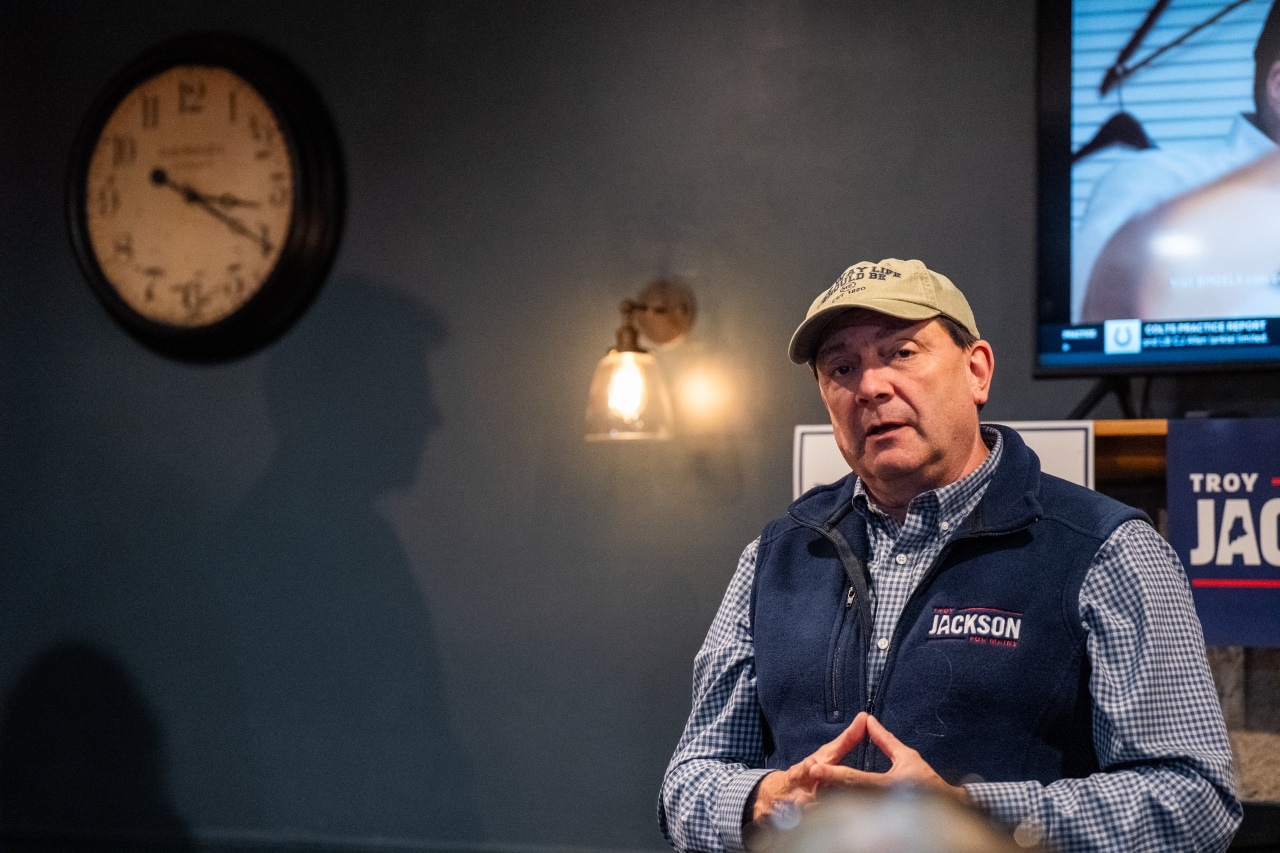
Some newly elected Democrats have said they don’t plan to vote for Schumer as leader. Sen.-elect Troy Jackson of Maine affirmed that position this week. El-Sayed, along with Sens.-elect Juliana Stratton of Illinois and Peggy Flanagan of Minnesota, have also said that they won’t back Schumer. And Sen. Chris Van Hollen (D., Md.) said the caucus needs to have a “robust discussion” about Democrats’ goals and how to achieve them before committing to anyone as leader.
“I already said that I told Sen. Schumer that I’m going to support somebody else. So it’s no different now,” Jackson said on the eve of his victory. He said that if Schumer wins election as Democratic leader, he would push him to embrace and advance “Medicare for All.”
Democrats’ leader is determined in a secret ballot vote later this year. Schumer hasn’t addressed his plans beyond the next two years, including whether he will run again for his seat in 2028. “This isn’t about me,” he said on Wednesday.
Sen. Richard Blumenthal (D., Conn.) said no one should doubt Schumer’s job security. He called him the “principal architect” of Democrats’ historic victory, citing his candidate recruitment, fundraising and messaging focus on costs and corruption. “I think he’s very much to be credited and the caucus realizes it,” he said.
Asked about how he would handle a possible push from progressive Democrats to impeach Trump, Schumer said the victorious party’s No. 1 focus has to be addressing high costs and going after corruption.
“Look, there was such rampant corruption, there has to be some investigations, but we’re not going to take our eye off the ball,” he said.
After wrapping up his Election Night remarks to the press, Schumer, his voice shaking with emotion, thanked staff and bear-hugged his longtime political ally, JB Poersch. Poersch serves as president of Senate Majority PAC, a Schumer-linked super PAC that spent heavily in key Senate races.
“I can’t believe it,” Schumer said, still in awe. “It’s amazing.”
Twenty years ago, Poersch had been executive director of the Democratic Senatorial Campaign Committee, with Schumer as chairman, when Democrats rode another wave, capturing six Republican-held seats to win the Senate majority in 2006. Asked if Democrats’ overperformance on a tough Senate map this year is vindication for Schumer, Poersch said he’d let others judge if that was the right term.
“You just gotta stay on the horse,” he said. “Schumer never fell off the horse. He stays on the horse.”
Write to Lindsay Wise at lindsay.wise@wsj.com and Siobhan Hughes at Siobhan.hughes@wsj.com


