
 E-Paper


Mamdani presses Trump on Haitian immigrants during 'productive' Gracie Mansion meeting: What they discussed
New York City Mayor Zohran Mamdani said he pressed President Donald Trump on the status of Haitian immigrants in the US during a meeting at Gracie Mansion.

 Prefer HTon Google


New York City Mayor Zohran Mamdani said he pressed President Donald Trump on the status of Haitian immigrants in the US during a meeting at Gracie Mansion.
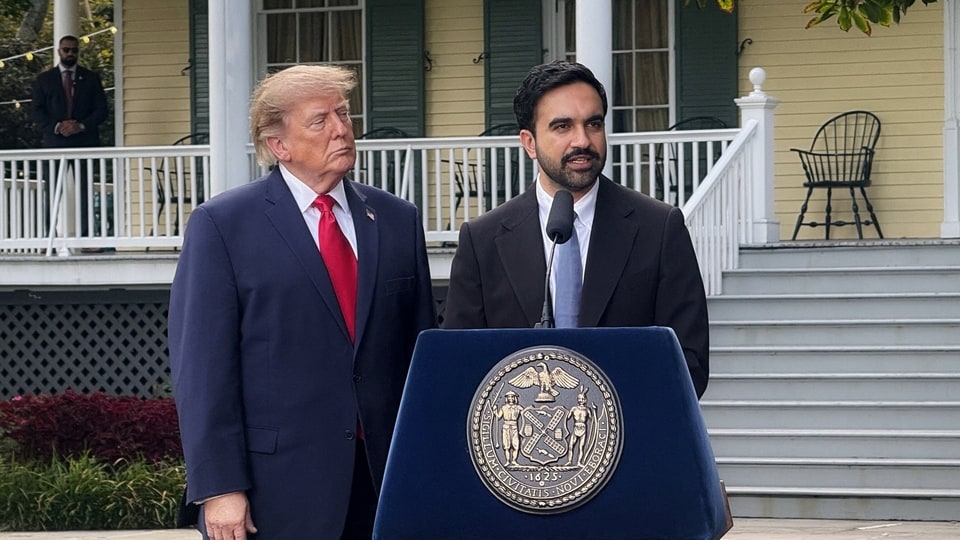
Mamdani said the leaders held a “productive” conversation Monday on the immigration issue during their third face-to-face meeting.
“We are talking about one of the most critical communities in our city,” he said, taking questions from the press after a largely frictionless joint appearance with Trump. “We’re talking about something that can either deliver or deny stability in their lives.”
The Trump administration has ended Temporary Protected Status for Haitians living in the US, leaving them vulnerable to deportation. Trump acknowledged that the mayor had raised the issue but made no commitment.
“I feel strongly about taking care of people,” he said.
Monday’s meeting at the mayor’s official residence was highly anticipated for the political pairing who in the past have indicated a willingness to work together even as they trade barbs in public. Ahead of the meeting, Mamdani’s office said the discussion would focus on issues affecting the city and its residents.
While Trump assailed Mamdani as a “communist” during his mayoral race, urging voters to reject his candidacy and threatening to withhold federal funding from New York, the two struck a surprisingly friendly tone when they met at the White House shortly after that election. At a subsequent meeting in February, they discussed ways to expand residential development in the nation’s most populous city.
“I want him to be a great mayor and he’s certainly got potential,” Trump said following the meeting on Monday.
The president added that a plan to build thousands of homes over Queens’ Sunnyside Yard would require federal funding and approvals.
“You’re going to need a lot of federal approvals and probably some federal money to do it,” Trump told reporters. He said the project should include “a pretty substantial component” of housing for low- and moderate-income residents.
Mamdani said the two agreed to begin technical discussions between City Hall and the White House on financing and federal authorization for a platform over the rail yard. The city’s proposal calls for about 12,000 homes and 30,000 jobs. Mamdani has previously said the project would require more than $21 billion in federal grants.
Mamdani is a prominent face of a new wave of self-described democratic socialists who have won key primary races in a push to reshape the Democratic Party. Trump has targeted those candidates in a bid to rally Republican voters ahead of November, casting their Democratic rivals as too extreme. Republicans face an uphill climb to retain control of Congress with polls showing voters unhappy with high costs of living and Trump’s handling of the Iran war.
Trump and Mamdani’s relationship remains volatile. In April, Trump accused Mamdani of “DESTROYING New York” with a mayoral push to increase taxes on wealthy residents. Hours later, though, he described the mayor as “a nice guy” who calls him frequently.
In July, Trump also rebuffed Mamdani for suggesting that Israeli Prime Minister Benjamin Netanyahu, who has been charged with war crimes by the International Criminal Court, could be arrested when he comes to New York for the United Nations General Assembly. Mamdani later conceded that New York did not have the independent legal authority to enforce the ICC warrant.
The mayor has also strengthened protections for migrants as the Trump administration ramps up its deportation campaign. Earlier this month, the Department of Homeland Security said more than 2,100 immigrants were arrested in New York City, Long Island, the Hudson Valley and upstate counties in a monthlong operation.
The city of New York and New York Attorney General Letitia James are also among the groups suing the Trump administration over a new “public charge” rule that gives immigration officers broader discretion to deny green cards or visas based on immigrants’ use of public benefits. The challengers accuse the DHS of exceeding its authority and are asking a federal court to block or overturn the rule.


