E-Paper



MP: Govt, NTCA differ on declaring Ratapani a tiger reserve
The Madhya Pradesh government and the National Tiger Conservation Authority differ on whether to declare Ratapani a tiger reserve, amid increased tiger sightings in the capital city.


The Madhya Pradesh government and the National Tiger Conservation Authority (NTCA) differ on whether to declare Ratapani a tiger reserve, amid increased tiger sightings in the capital city.
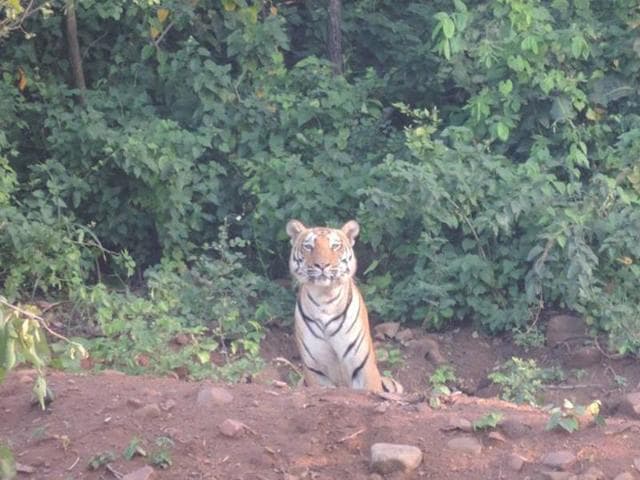
The NTCA told the high court this month that it had in principle approved the proposal to declare the wildlife sanctuary a tiger reserve and that “the state has to take a final call”. However, the state government told the National Green Tribunal (NGT) in January, “At present no such proposal for declaration of Ratapani Wildlife Sanctuary as a tiger reserve is pending before the government of Madhya Pradesh”.
“NTCA reply before the high court and the state government’s reply before the National Green Tribunal make it clear that both of them are not on the same page when it comes to declaring Ratapani a tiger reserve,” said wildlife activist Ajay Dubey.
Dubey is fighting a legal battle in the high court and the NGT over movement of tigers near Bhopal.
The proposal to declare Ratapani, including Ratapani and Singhori wildlife sanctuaries in Raisen and Sehore districts, was introduced in view of a growing tiger population, resulting in several tigers straying into Kerva and Kaliasote forests of Bhopal. There are 24-28 tigers in the Ratapani wildlife sanctuary, 40 km from Bhopal, and six to seven more that have strayed from the area.
In December last year, the NGT asked the state to present its stand on pending conservation efforts and proposals related to the protection of tigers in and around Bhopal with special reference to tigers of the Ratapani wildlife sanctuary, 40 kms from Bhopal.
Dubey said he had documents to prove that the government was flip-flopping despite the NTCA green-lighting the proposal. He said a departmental note dated July 17, 2014, showed that the principal chief conservator of forests started the process for declaring Ratapani a tiger reserve, and that the format of the notification for identifying 849.027 square kilometres as the “core area” was sent to the state government on December 16, 2011.
Principal chief conservator of forests Narendra Kumar told HT that the state government had not taken any decision on the issue as there were modalities that had to be taken care of first.
Progress of the proposal so far
Wildlife (Protection) Act 1972 says the state government shall notify an area as “Tiger Reserve” on the recommendation of the tiger conservation authority
According to the state government, since 2008, various steps were taken but no notification could be issued because of area/boundary dispute of the Ratapani sanctuary
In November last year, senior wildlife officials suggested that the possibility of issuing a notification could be explored “subject to specific conditions”:
Rs 600 crore from the Centre for relocation of at least 11 villages from Ratapani
In-principle approval of the state cabinet
(Based on the reply of the govt advocate in a case on Ratapani in the high court)