
 E-Paper



DDA to start work on cycling track along Yamuna floodplains in Delhi
Construction of a 52-95 km cycling corridor along Yamuna floodplains will begin soon, enhancing public access and ecological safeguards in Delhi.

 Prefer HTon Google


New Delhi
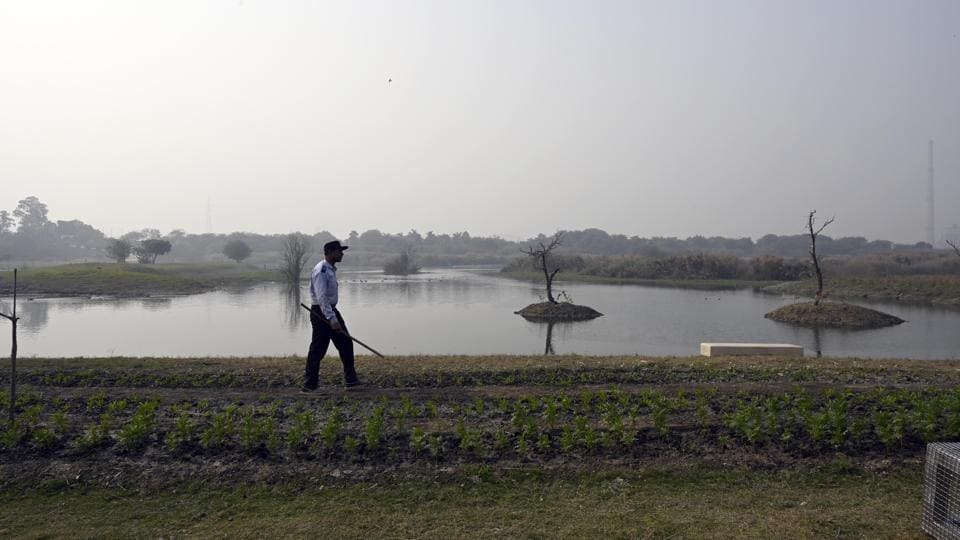
The first phase of construction of a 52-95-kilometre cycling corridor along the Yamuna floodplains is set to begin in the next few weeks, after the National Green Tribunal’s (NGT’s) principal committee gave its final approval for the project, officials of the Delhi Development Authority (DDA) said on Wednesday.
According to project documents, the corridor will be developed in three phases, with Phase 1 covering a 24.15-km stretch between the Old Railway Bridge and NH-24. Officials said preparatory work has been completed and tendering for the project is already in place.
“Work on Phase 1 is expected to commence shortly. The construction timeline for this stretch is about 12 months from the award of work, while the entire corridor is planned to be completed over three years,” a DDA official, who did not wish to be named, said.
The project, which will stretch from Wazirabad to NH-24 and further, towards the Kalindi Kunj Biodiversity Park, is planned as a continuous non-motorised loop aimed at improving public access to the river while maintaining ecological safeguards. The proposal is part of a broader riverfront development plan that seeks to restore and integrate over 1,700 hectares of the floodplains into accessible public spaces.
Once completed, the corridor is expected to become one of the longest riverfront cycling networks in the country, providing a dedicated, continuous route along the Yamuna. “The phased implementation will allow us to monitor impact and ensure that ecological safeguards are maintained at every stage,” the official said.
Authorities said multiple agencies are coordinating for the project, especially in areas that need regulatory oversight of existing infrastructure.
The corridor will link floodplains at Asita, Yamuna Vatika, Kalindi Biodiversity Park, Amrut Biodiversity Park and other zones along the river.
“The project is designed not only as a transport intervention but as a way to enable citizens to engage with the Yamuna in a structured and environmentally sensitive manner. It focuses on non-motorised mobility while ensuring that ecological restoration efforts remain protected,” the official said.
Officials said that the alignment of Phase 1 has been revised following expert inputs to minimise adverse environmental impact. The track will largely follow existing embankments and pathways instead of river edges, reducing vulnerability to flooding and avoid disturbing sensitive zones. Officials said that the alignment consciously avoids permanent construction within the floodplains.
The infrastructure will adopt a nature-based design approach, with the use of permeable materials to ensure minimal disruption to the natural terrain. Facilities planned along the corridor include cycle docking stations, parking areas, shaded rest points, viewing decks and route maps.
“These features are being designed to integrate seamlessly with the landscape while supporting useability for visitors,” the official said.
The corridor is also expected to improve connectivity between existing floodplain restoration projects undertaken by the DDA, many of which currently function as isolated green spaces. By linking them through a continuous track, the authority aims to enhance their accessibility and usage. Officials said that the cycle corridor is intended to also improve public health through increased access to open spaces, and strengthen the interface between the river and the city.
The proposal had been under consideration for several months and underwent minor alignment changes before receiving clearance from the NGT’s principal committee. Officials said these changes were made to address environmental concerns and ensure compliance with regulatory norms governing floodplain development.


Stay updated with all top Cities including, Bengaluru, Delhi, Mumbai and more across India. Stay informed on the latest happenings in World News along with Delhi Election 2025 and Delhi Election Result 2025 Live, New Delhi Election Result Live, Kalkaji Election Result Live at Hindustan Times.


