
 E-Paper



Delhi’s ₹2,454 cr interceptor project curbs only 60% Yamuna sewage: Centre audit
Out of 109 of the so-called “interceptor points” inspected, flow was successfully diverted at only 56 points.

 Prefer HTon Google


After two decades and more than ₹2,454 crore poured into the Delhi Jal Board’s (DJB) flagship Interceptor Sewage Project (ISP), a significant chunk of that investment appears to have effectively gone down the drain. An inspection ordered by the Centre has found that the project stopped only 60% of the sewage volume DJB claimed to have halted from entering the Yamuna.
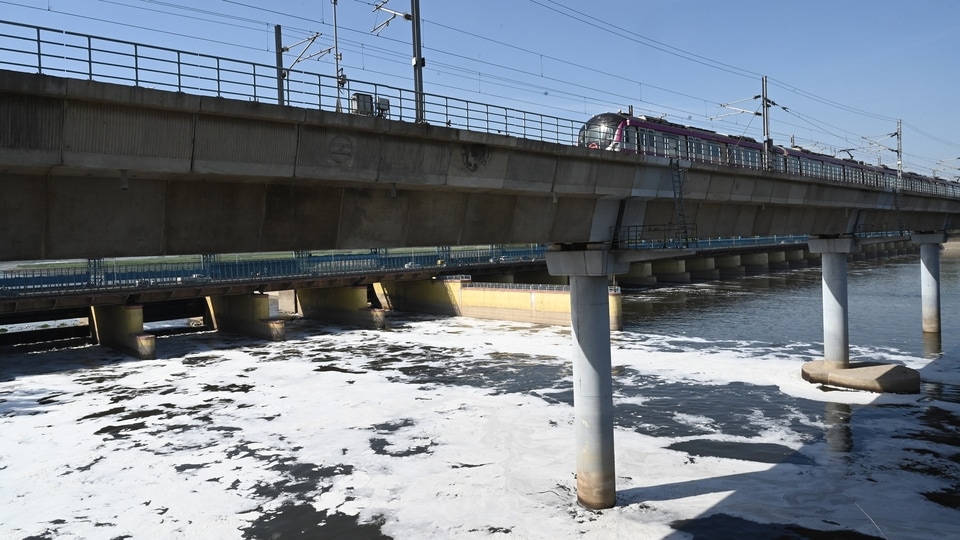
The ambitious project, launched in 2006, was designed to intercept smaller drains feeding the Yamuna and divert raw sewage to sewage treatment plants (STPs). But a series of inspections carried out in February this year by the Delhi Pollution Control Committee (DPCC) on the orders of the Centre found large-scale discrepancies in DJB’s performance data.
According to the DPCC’s report, which HT has accessed, while DJB claimed to have tapped and diverted 238 million gallons per day (MGD) of sewage, only around 142 MGD had been halted by measures introduced under the ISP. The report added that more than 117 MGD of untreated waste is still flowing into the river from drains the board had declared “completed.”
Further, the updated flow of sewage in smaller drains had risen to a total of 260 MGD.
Also Read | DJB invites new firms to install water meters
Out of 109 of the so-called “interceptor points” inspected, flow was successfully diverted at only 56 points. The remaining points had untapped or overflowing sewage totalling 117.7 MGD. Five points could not be inspected due to excessive waste dumping, missing infra, and damage from construction work, the DPCC report stated.
The inspection also found serious lapses in monitoring. DJB had installed flow meters at just 12 points, of which four were already defunct. CCTV cameras were reportedly installed at 23 locations, but only eight were found operational. The board’s claimed sewage pumping capacity of 310.26 MGD was also found to be overstated, with actual capacity pegged at 259.72 MGD.
DJB did not respond to queries on the report.
Last year, the Delhi government had informed the central government in a report that the ISP was “complete and verified” through an independent assessment. “The Yamuna monitoring committee got an independent assessment of the ISP done through a team. The team has confirmed that the sewage trapping part of ISP has been completed,” DJB’s submission toUnion ministry of jal shakti on September 22, 2025. stated.
DJB had argued that while trapping was done, treatment would only improve after old STPs were rehabilitated.
What was the ISP project?
The ISP was meant to cut off sewage from entering the Yamuna by building trunk drains and treating it before it entered the river. The project targeted three major drains – Najafgarh, Shahdara, and the Supplementary drain – aiming to intercept a total of 242 MGD of untreated sewage.
Work began in 2011, four years after Supreme Court approved the plan, with an initial completion target of 2015. “The three big drains currently carry 242 MGD of sewage into Yamuna. The treated water was then to be channelled to the river through the drains, in the process raising the biological oxygen demand level to an acceptable limit,” a DJB official explained.
Bhim Singh Rawat, Yamuna activist and member of the South Asia Network on Dams, Rivers and People (SANDRP), said the ISP has been delayed by over a decade and has failed to deliver results on the ground. “It was expected to be completed by 2016, but sewage generation has since increased with the expansion of unauthorised colonies. This points to a planning failure,” he said.
In 1994, after the Supreme Court took cognisance of the Yamuna’s poor condition, the Delhi government proposed installing STPs at the mouths of 23 drains discharging sewage into the river. The project was marred at the planning stage due to land availability issues.


Stay updated with all top Cities including, Bengaluru, Delhi, Mumbai and more across India. Stay informed on the latest happenings in World News along with Delhi Election 2025 and Delhi Election Result 2025 Live, New Delhi Election Result Live, Kalkaji Election Result Live at Hindustan Times.


