
 E-Paper



Local battery push can make EVs cheaper, create 7.2 million jobs: Study
The study was released on Tuesday at the fourth India Clean Transportation Summit (ICTS) 2026.

 Prefer HTon Google


As many as 7.2 million direct electric vehicle (EV) manufacturing jobs can be created by 2040 if India builds domestic battery-cell manufacturing capacity, according to a new study by the International Council on Clean Transportation (ICCT) and IIM-Bangalore.
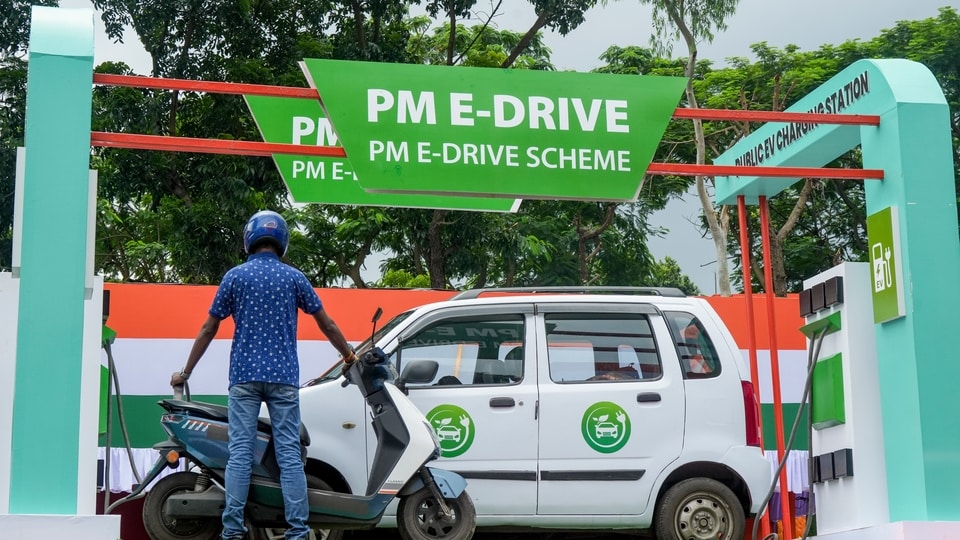
The study was released on Tuesday at the fourth India Clean Transportation Summit (ICTS) 2026. Hindustan Times is the media partner for the event.
Switch to clean energy alternatives
At the launch of the report, Commission for Air Quality Management (CAQM) chairperson, Rajesh Verma, said, “The road to clean air is an economic opportunity for India, and it runs through domestic manufacturing of vehicles and batteries, in line with Atmanirbhar Bharat and Viksit Bharat 2047. Our long-term ambition is zero-emission technology and not fuel switching alone.”
“India’s clean transport push is anchored in the Prime Minister’s commitment to net zero by 2070, and the government is working on a financing mechanism to support 50,000 electric buses and 50,000 electric trucks over the next five years, with trucks being the harder part,” said Hanif Qureshi, additional secretary, Union ministry of heavy industries, as part of the same panel. He said trucks, which account for 3% of the fleet, are responsible for over 40% of emissions, while their electrification remains below 0.1%.
The study found that domestic cell manufacturing could increase direct EV-related employment from 4.3 million to 7.2 million by 2040. Under the most ambitious of the three electrification pathways modelled in the report, annual EV production could reach 32 million vehicles, while EV-related economic output could rise from $12.8 billion in 2024 to $620 billion in 2040.
Job creation via domestic battery production
The report, titled ‘Employment implications of vehicle electrification under alternative fuel efficiency pathways in India’, models three electrification pathways through 2040, ranging from currently notified fuel-efficiency regulations to near-complete electrification across vehicle segments.
Battery cells are the highest-value component of an EV, and domestic manufacturing is the single largest determinant of how much economic value India captures from the transition, the study found. Compared with a pathway based on imported cells, domestic cell manufacturing could add nearly 2.9 million direct jobs, alongside more than 17 million further jobs across supply chains.
India currently has around 1.4 gigawatt-hours (GWh) of domestic battery-cell manufacturing capacity, meeting less than 3% of projected 2032 battery demand. If the announced pipeline of about 128 GWh is commissioned — including 50 GWh under the Production Linked Incentive Scheme for Advanced Chemistry Cell Battery Storage and roughly 78 GWh from other announced automotive projects — India would exceed 30% localisation by 2032 across all three pathways.
Also Read I Free registration of electric vehicles begins in Haryana's Gurugram | Check what your EV is eligible for
The employment gains, however, depend on the extent of battery localisation, the study warned. The study found that the balance between jobs created in EV manufacturing and those displaced from conventional engine, transmission, and fuel-system production turns positive only after domestic battery manufacturing crosses 25%. Below that level, the transition displaces more manufacturing jobs than it creates across all three pathways.

Stay updated with all top Cities including, Bengaluru, Delhi, Mumbai and more across India. Stay informed on the latest happenings in World News along with Delhi Election 2025 and Delhi Election Result 2025 Live, New Delhi Election Result Live, Kalkaji Election Result Live at Hindustan Times.


