
 E-Paper



No add’l water from Haryana to cleanse Yamuna in Delhi for Chhath festival
New DelhiIn the run-up to Chhath Puja scheduled from November 13 to 16, Delhi is yet to get additional freshwater from the Hathnikund barrage in Haryana—as was done last year to improve the ecological flow (e-flow) of the Yamuna and wash away pollutants

 Prefer HTon Google


New Delhi
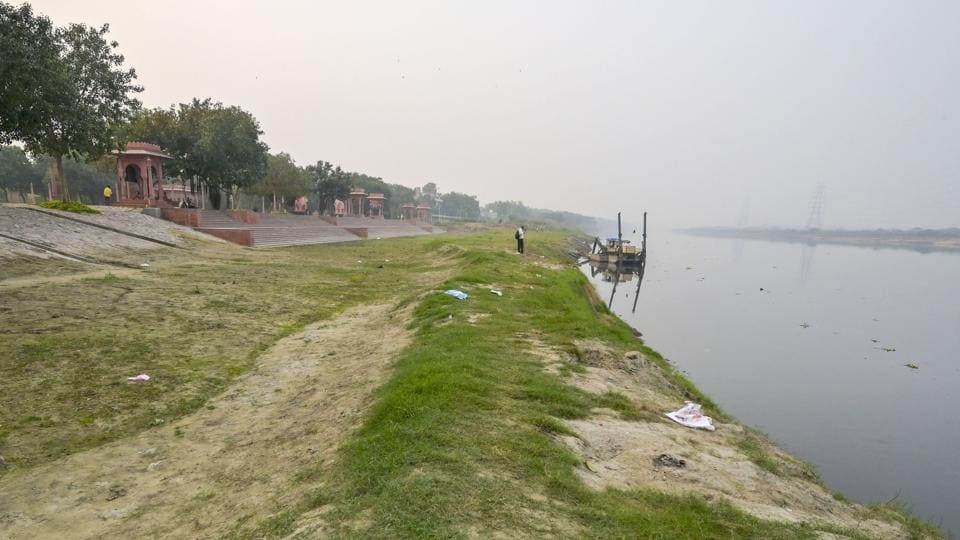
In the run-up to Chhath Puja scheduled from November 13 to 16, Delhi is yet to get additional freshwater from the Hathnikund barrage in Haryana—as was done last year to improve the ecological flow (e-flow) of the Yamuna and wash away pollutants. The water release over the past week has remained at 9.97 cumecs, which is insufficient to improve e-flow and much lower than the peak of 225 cumecs released last year, experts pointed out.
Environmental flow, or e-flow, refers to the minimum flow of water required in a river to sustain its ecological health. The Yamuna in Delhi has long fallen short of this benchmark. Experts argue that the 10 cumecs currently allocated to Delhi is grossly insufficient, while the quantum of water released in the river has remained less than 334 cusecs (1 cumec = 35.31 cusecs).
Bhim Singh Rawat, a Yamuna activist and member of the South Asia Network on Dams, Rivers and People (SANDRP), said that such a small amount of water being released in the river cannot help restore the e-flow. “It shows that if there is political will, the ecological flow of the river can be restored. Ensuring e-flow is critical to the health of the river. Last year, they started releasing extra water around 10 days ahead of Chhath but no such increase has been observed this year. Last year, ahead of the Bihar assembly polls, perhaps the government wanted to show a cleaner river,” he said.
Last year, Chhath was observed from October 25 to 28.
An official from the Hathnikund barrage, who did not wish to be named, however, said that there is hardly any additional water to release in the river. “Only 3,379.32 cusecs of water is available in the storage area. From this limited supply, 310 cusecs are diverted to Uttar Pradesh via the Eastern Canal, while approximately 2,200–2,700 cusecs are being supplied through the Western Canal for agricultural use in Haryana’s districts of Karnal, Panipat, Sonipat, Rohtak, Jind, Hisar, Bhiwani, and Sirsa. Part of Delhi’s water supply, around 1,050 cusecs, received via the Munak Canal, is also drawn from the Western Canal. Releasing additional water into the Yamuna could potentially lead to a shortage of drinking water for Delhi,” the official said.
Located near the Yamuna Nagar district in Haryana, the Hathinikund barrage acts as the primary regulation point for release of the Yamuna water to Delhi. Data from Hathnikund on Wednesday evening showed that, on average, 2111.66 cusecs of water were being released to the Western Jamuna Canal, 310 cusecs to the Eastern Jamuna Canal and 352 cusecs downstream to the river channel.
A DJB official said that some additional water is also being released from the Somb tributary, due to which the water supply has not been impacted over the past month. The official, asking not to be named, said that if Haryana remains adamant about not releasing additional water into the Yamuna, devotees observing Chhath rituals along the riverbanks may be compelled to undertake rituals in polluted water.
Diwan Singh, a water sector expert and convener of the Yamuna Satyagraha, said that 10 cumecs release was agreed upon in the 1994 agreement and multiple studies have shown that the river needs much larger amount of water to sustain itself. “At least half of the natural flow of the river should be allowed to remain in the river. It has been grossly over exploited,” he said.
Rawat said that with below average monsoon and lack of availability of raw water in the river, the flow in Yamuna has been low. “This year, during the monsoon, the river has not touched even the warning level once; 10 cumecs of water cannot go beyond Wazirabad, where the river is most polluted. During monsoon, the river gets flushed and it is critical for maintaining the river ecology. Hardly any water has been released in the river while diversion has been made to the canals,” he said.

Stay updated with all top Cities including, Bengaluru, Delhi, Mumbai and more across India. Stay informed on the latest happenings in World News along with Delhi Election 2025 and Delhi Election Result 2025 Live, New Delhi Election Result Live, Kalkaji Election Result Live at Hindustan Times.


