E-Paper



Can consumers choose between postpaid and prepaid power meters?
Centre’s RTI response offers no clarity on the scope or intent of Section 47(5) of the Electricity Act, 2003

 Prefer HTon Google


A recent RTI reply from the Centre has left unanswered the key legal question of whether consumers can choose between prepaid and postpaid electricity meters. While citing subsequent rules and regulations that make smart prepaid meters mandatory nationwide, the response offered no clarity on the scope or intent of the contentious Section 47(5) of the Electricity Act, 2003.
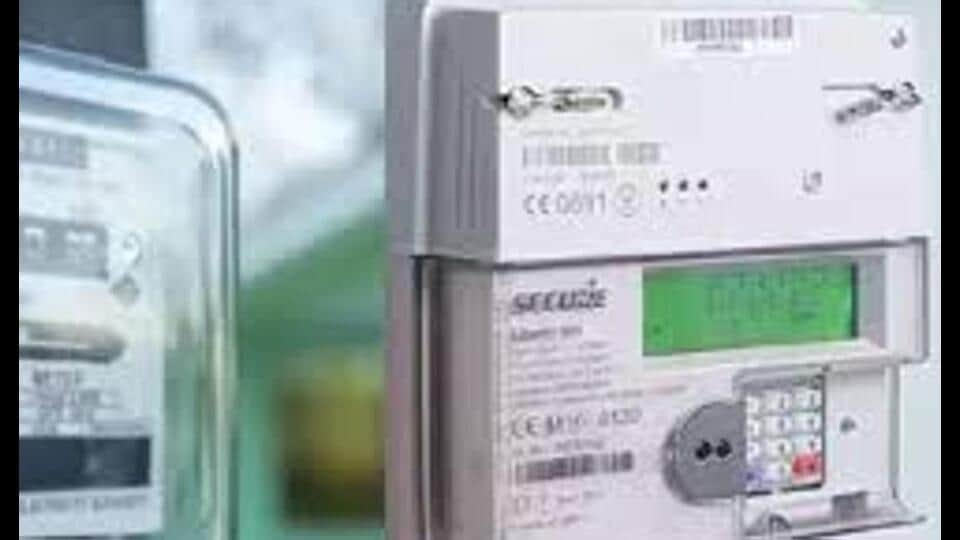
The RTI response issued by the Central Electricity Authority (CEA) to a query by this correspondent stopped short of answering whether Section 47(5) of the Electricity Act, 2003 gives consumers the option to refuse a prepaid meter as being claimed by some consumer activists and many people on the social media across the country amid the drive to install smart prepaid meters across states.
Instead of interpreting the section which states that a distribution licensee cannot demand security deposit if a consumer is prepared to take supply through a prepayment meter, the CEA merely reproduced the text without clarifying whether it implies a choice.
The RTI reply pointed to later frameworks that prescribe compulsory prepaid smart meters. It stated: “Distribution of electricity falls under the purview of the respective distribution utility which works as per the Supply Code and Performance Standards and Regulations laid down by respective State Electricity Regulatory Commissions (SERCs). As per Sub-section 5 of Section 47 of Electricity Act, 2003: ‘A distribution licensee shall not be entitled to require security… if the person requiring the supply is prepared to take the supply through a prepayment meter.’”
The reply then cited the Electricity (Rights of Consumers) Rules, 2020: “No connection shall be given without a meter and such meter shall be the smart prepayment meter or prepayment meter. Any exception… shall have to be duly approved by the Commission.”
It further quoted the CEA’s 2022 Metering Regulations: “All consumers in areas with communication network shall be supplied electricity with smart meters working in prepayment mode… within the timelines specified by the Centre.”
The RTI response also referred to the Revamped Distribution Sector Scheme (RDSS), under which smart prepaid metering is one of the key reforms for improving distribution efficiency. However, in its latest tariff order, the Uttar Pradesh Electricity Regulatory Commission (UPERC) noted that the language of Section 47(5) “does not make it mandatory.” The Commission refrained from deeper legal interpretation, pointing out that multiple petitions challenging compulsory prepaid meters are pending before high courts.
“Until a clear legal understanding emerges, the Commission would only like to state that, irrespective of whether the meter is prepaid or postpaid, the consumer should be provided with a correct meter, which is their undiluted right,” UPERC observed. Consumers facing issues with smart or prepaid meters have been advised to get them tested under the supply code until the courts settle the matter.
Experts note that the Electricity Act remains the parent law and subordinate rules cannot override its express provisions unless Parliament amends it. Since no amendment has been made to Section 47(5), the legal question of choice remains technically open. “The subsequent rules and regulations made by the Centre to make prepaid meters mandatory cannot override the parent Act,” Central Electricity Regulatory Commission’s Advisory Committee member and consumer activist Avadhesh Kumar Verma said.
‘Why Section 47(5) does not actually give a choice’
Though the RTI reply chose to be clear on the applicability of the Section 47 (5) of the Electricity Act, 2003, RK Tiwari, director distribution policy and monitoring, CEA, when contacted for clarification said presently consumers do not a choice between postpaid and prepaid meters, the latter now being mandatory.
He said the Section did 47(5) presuppose the existence of both post-paid (with security deposit) and prepaid (without security deposit), the provision deals exclusively with security deposits. “It does not confer any statutory right on consumers to choose between the two modes,” he said.
“If prepaid meters become mandatory, Section 47(5) simply applies to all consumers, and there is no conflict that would require amendment to the parent law,” he added. Tiwari also argued that the question of consumer choice could not logically arise because an electricity meter was legally the property of the distribution licensee. “If the meter belongs to the discom, they contend, a consumer cannot demand the right to decide what kind of measuring instrument the utility must install,” he argued.
‘Judicial interpretation alone may set the controversy at rest’
The contrast between the RTI reply’s silence on the legal intent of Section 47(5) and UPERC’s acknowledgment of ambiguity indicates that the question of whether prepaid meters can be compelled remains unresolved at the regulatory level, even though the Act itself does not create a consumer choice in as many words. “A judicial interpretation alone of the Section 47 (5) may set the controversy to rest,” a senior UPERC official said.