
 E-Paper



Goa CM’S pledge to start mining corporation evokes mixed response
The chief minister assured that the bill to set up the corporation would be introduced in the current session of the Goa Legislative Assembly.


Goa chief minister Pramod Sawant’s surprise announcement - that the state would set up a state-run mining corporation - has set the cat among the pigeons in Goa’s mining sector that has long been the fief of a small group of mining companies who were beneficiaries of concessions from the erstwhile Portuguese government.
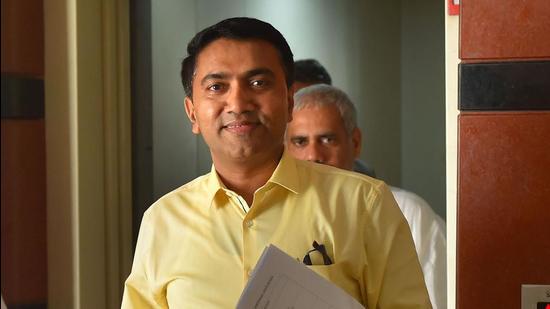
While the chief minister didn’t elaborate on what role the corporation would play towards the resumption in the state, Sawant assured that the bill to set up the corporation would be introduced in the current session of the Goa Legislative Assembly and that the state was “100 per cent committed to restarting of mining in the state at the earliest.”
The corporation route - in which Goa’s mining leases be handed over to a government-run corporation, thus dispensing with the need to conduct auctions - was one of the options before the state government which has had to contend with a stoppage in mining activity since March 2018 after the Supreme Court cancelled 88 mining lease renewals that were granted in 2015 ruling that the renewals were illegal.
The Supreme Court in its order asked the Goa government to issue fresh mining leases and not renew existing ones if mining is to restart in Goa. However, the MMDR Act, as amended in 2015, now mandates auctions for grant of fresh leases to private players, something the government has been reluctant to do.
Sawant’s announcement to set up a corporation is a fresh twist to the saga which began with the government first seeking a legislative cure, which meant asking the Central government to amend the Act to give retrospective validity to Goa’s leases, filing a review petition before the Supreme Court as well as more recently Sawant announcing that the state government would be going ahead with auction process for grant of fresh leases.
However, mining companies in Goa believe that treating Goa’s mining leases as ‘dead’ would be prejudicial to their claims that they are eligible not just for renewals but also to their claims to perpetual concessions as granted by the Portuguese.
The Goa Mineral Ore Exporters Association (GMOEA), has in a terse statement cautiously welcomed Sawant’s latest announcement.
“Resumption of mining operations in the state of Goa has always been the objective of the association and its members. Resumption of mining operations have to be as per prevailing laws and acts as well as in accordance with the matter before the Hon’ble Court,” the GMOEA said.
Several mining-related cases in Goa are pending before the Supreme Court, most notably a plea challenging the Central government’s act converting Goa’s mining concessions granted by the Portuguese into leases under the Mines and Minerals Development Act (MMDA) is also pending currently before the Supreme Court as well as a plea to retrospectively grant a 50-year validity to Goa’s mining leases till 2037, which the mining companies have said they are eligible for.
Any attempt to resume mining before adjudicating the pending cases would further obfuscate the ongoing saga, the miners have said, a claim which found support from the Central government which approached the Supreme Court, seeking early disposal of the cases.
“Till the legal issues pertaining to the rights accruing to the mining concession holders under the Portuguese Colonial Mining Law, which were converted into mining leases by the Abolition Act, are not decided one way or the other, the title of the mines will not get clear and as a natural corollary the directions passed by this court (SC) would not get implemented in its letter and spirit,” the mines ministry said in an appeal before the Supreme Court.
“Pending adjudication of the legal issues involved there will always remain an inherent legal uncertainty on the title rights of the mines if granted as per the directions passed by this Court as the original title of rights is still under litigation,” the ministry told the Supreme Court in its application.
Meanwhile, the Goa Foundation has welcomed the move calling it a step in the right direction.
“This is a welcome move. If installed with sincerity, it means the government of Goa has decided to get rid of the old system with its in-built weaknesses which have facilitated unaccounted and illegal mining,” director of Goa Foundation, Claude Alvares, said.
“Though the setting up of a corporation is welcome, its management also needs to be completely professional. Hitherto, the Directorate of Mines and Geology has handled mining, but with poor business sense, and hardly any skills with the trade in minerals or their use. The new Corporation should not be run by bureaucrats or politicians,” Alvares said.
“The very need to do illegal mining will come to a halt if the corporation holds on to all leases, hands out extraction contracts to capable persons under bidding schemes, takes charge of the output and e-auctions it professionally. Most of the wealth generated will accrue to the public exchequer. The best way to handle the revenue is to place it in the permanent fund, and distribute its investment gains to all citizens of Goa as a basic dividend, keeping the capital intact for coming generations,” he added.
The Goa Mining People’s Front, a collective of workers’ unions, too, said they welcome the decision but cautioned against any premature jubilation.
“We want work at the mines to start, it doesn’t matter how. But unless previous legal issues are resolved, attempts to restart mining will lead to more litigation,” Puti Gaonkar, president of the GMPF said.


