


 Live Score
 Cricket Teams
 Cricket Players
Ranji Trophy: Five things to watch out for in the new season
As the premier domestic tournament starts on Sunday, a look the likely high points of the 2026-27 edition

 Prefer HTon Google


The drama in Ranji Trophy unfolds over four days amid the frenzy that is white-ball cricket. IPL commands attention, yet Indian Test cricket cannot thrive without the premier first-class tournament.
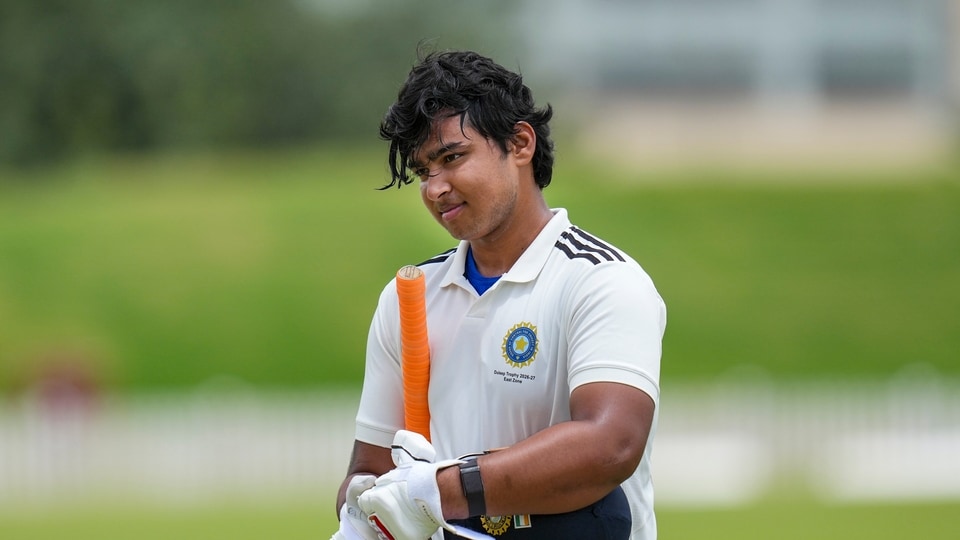
Before the packed stands and the India cap come uneven pitches, facing the hard new ball and learning the discipline to last sessions. For the next few months, the future of Indian cricket will take shape far from the spotlight.
As the new season begins on Sunday, a familiar question is whether the first-class calendar gives its flagship competition the room to breathe.
Will Vaibhav Sooryavanshi adapt?
Deep Dive

At 15, the batter belongs to a generation for which the boundaries between formats are increasingly porous. IPL has turned Sooryavanshi into a household name. But Ranji Trophy asks different questions. Can he leave the ball in the opening hour? Can he resist the temptation to attack when the opposition bowlers offer nothing? Can he rebuild after a difficult spell?
There is already a complication—international commitments mean Sooryavanshi will miss the opening round for Bihar, and his availability thereafter remains a question. His participation thus bears watching.
Expect quick scoring, big scores. The real test is whether he can make his talent count in a format where the game doesn’t move at his preferred pace. Indian cricket has had precocious players, Prithvi Shaw for instance. What it needs is such players who can learn patience without losing their instincts.
Can Jammu & Kashmir do an encore?
Jammu & Kashmir’s maiden Ranji Trophy win last season was more than an upset. It was a reminder of what is possible when a team’s resilience and skill gets the time and space to grow.
Their final win over Karnataka was built on an imposing first-innings total of 584 and the bowling of pacer Auqib Nabi, who has since then made his India limited overs debut. The Ranji triumph was all the more striking given J&K’s limited success in the competition. The harder part will be to prove that the performance wasn’t a one-off.
The champions will have to contend with the expectations. Nabi must sustain his wicket-taking form, while the batting unit must demonstrate that its title win wasn’t about one extraordinary week. Their opening game against former champions Madhya Pradesh will offer a glimpse into how well they have carried their momentum into the new season.
Winning a title can change a team’s belief in what it can do, and J&K, having scripted history, have the opportunity to build on that.
Stars can rehearse for Aussies
The profile of Ranji Trophy gets a fillip when international players return to domestic duty. Their presence gives younger players competition against elite opponents while reminding established names that habits needed to thrive in red-ball cricket can’t simply be summoned on demand. With the Australia tour due in January-February, it could be good preparation.
Ravindra Jadeja is expected to represent Saurashtra against Chhattisgarh. Yashasvi Jaiswal is in the Mumbai squad for the opening fixture against Chandigarh. The rookies can watch and learn how an international player prepares for a long innings or manages his bowling workload.
Yet the familiar problem is that India’s packed international calendar often competes with the domestic season. Workload management, selection and national commitments mean the celebrated players can play Ranji only for brief periods.
Finding the next big name
Every Ranji season produces impressive numbers, but the question is which performances will point to an international career. Nabi provided last season’s most compelling answer. His 60 wickets helped J&K win the title, establishing him as one of domestic cricket’s outstanding performers. Who will deliver this time?
The fast bowlers deserve particular attention. India’s search for seamers capable of maintaining pressure over long spells, even in conditions that are not favourable, makes Ranji an invaluable proving ground. A bowler who can repeat his methods across four days may offer more to a Test side than one who produces an occasional spectacular spell.
Among the batters, 19-year-old Ayush Mhatre is worth following. The Mumbai player has already led India’s U-19 side to a World Cup title. The next major discovery may not come from a traditional powerhouse. That’s the most captivating aspect of Ranji Trophy — someone you would probably overlook too can shine.
Jolt to the rhythm
Continuity is the Ranji Trophy’s greatest resource. A team can turn a match around after appearing out of contention. Players can emerge from injury and hit the stride just before the knockouts. These are not incidental, team plans often hinge on hope, exigencies and momentum.
This season will see the tournament again split into two phases. The first leg runs across October-November and the next phase resumes in January. The break allows BCCI to deal with a crowded domestic calendar, but comes at a cost.
Continuity can’t happen on demand. Teams that establish combinations in the opening weeks must start over again. And though scheduling is not simple, Ranji Trophy deserves a lot more visibility.


