E-Paper



Engineer’s Day: Why India’s AI, semiconductor push demands new-age engineers- VIT Bhopal VC explains
VIT Bhopal VC explains why engineering education must focus on interdisciplinary learning, practical experience, AI literacy and sound human judgement.

 Prefer HTon Google


Every Engineer's Day is a chance to look back at what engineering has made possible. This year, it is also worth looking at what India is now asking engineers to build.
The scale of the country's technology push has changed the brief. The ₹1 lakh crore Research, Development and Innovation Fund, approved in 2025, targets areas including AI, robotics, quantum technologies, space, biotechnology and advanced manufacturing. The National Quantum Mission carries an outlay of ₹6,003.65 crore, while the National Mission on Interdisciplinary Cyber-Physical Systems has a ₹3,660 crore outlay and 25 Technology Innovation Hubs. These are not isolated technology programmes. Together, they point to an economy where engineering problems increasingly cross traditional departmental boundaries.
Why Talent Will Decide India’s Semiconductor Future: Mitsubishi Electric India HR Head explains
The semiconductor push makes the shift tangible. By June 2026, 12 semiconductor projects with investment commitments of about ₹1.64 lakh crore had been approved. Three had already entered commercial production. The ecosystem also includes 24 supported chip-design projects and 105 companies with access to advanced electronic design automation tools.
AI is developing at a similar pace. IndiaAI's shared compute capacity crossed 45,000 GPUs by June 2026. By August, 237 projects had used subsidised AI computing, accounting for 93.18 lakh GPU hours. The point for engineering education is not simply that students need to learn AI. They need to understand the systems around it: computing, electronics, data, energy, manufacturing and the physical environments in which AI operates.
Preparing India’s cybersecurity workforce for cloud, AI and quantum risks
An electric vehicle, for instance, cannot be understood through mechanical engineering alone. It involves batteries, power electronics, embedded systems, software, sensors, data and manufacturing. A semiconductor plant brings together materials science, electronics, process engineering, automation and precision manufacturing. A cyber-physical system connects computation to machines, infrastructure and human behaviour. The interesting work increasingly happens in these intersections.
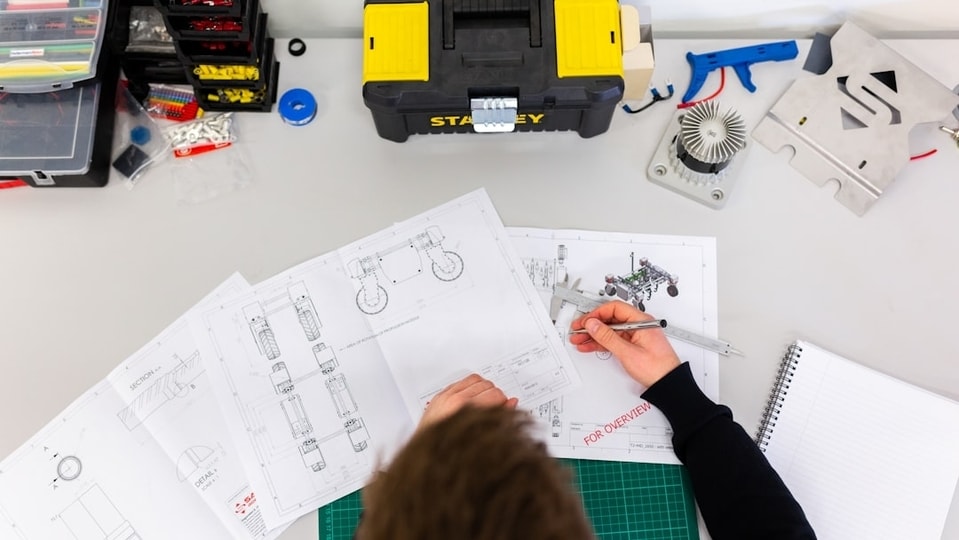
That has consequences for the classroom. Students need fewer exercises where the problem is neatly framed and the answer already exists, and more situations where they have to define the problem themselves. They should build, test, fail, redesign and work within constraints that cannot be reduced to an examination question. Engineering education has to move closer to the messy reality of engineering itself.
This is also where AI changes the nature of the engineer's job. IndiaAI is already providing shared computing infrastructure to researchers, start-ups and academia, lowering the cost of experimentation. AI can accelerate simulation, analysis and design. It cannot decide whether the assumptions behind a model are sound, whether the data is reliable, or whether the problem being solved matters. Those remain engineering judgements.
From Uniform Classrooms to Individual Learning Journeys: Making the new CBSE curriculum work
This is the distinction at the heart of Industry 5.0. The next phase of industrial development is not simply about adding more automation. It is about combining advanced technology with human judgement, creativity and purpose. The engineer who knows how to operate an AI tool will have an advantage. The one who understands when not to trust it will have a bigger one.
India's space programme offers a useful example. ISRO recorded around 231 accomplishments in 2025 across missions, ground tests and technology demonstrations. The SpaDeX mission demonstrated autonomous docking and undocking, including power transfer between satellites, making India the fourth country to demonstrate docking in space. Such achievements are not products of one discipline. They depend on systems engineering, electronics, software, materials, control systems, manufacturing and relentless testing working together.
That should shape what an engineering degree means in the coming decade. Strong fundamentals will remain non-negotiable. But they need to be combined with interdisciplinary projects, access to laboratories and industry problems, computational tools, prototyping and the ability to communicate across specialisations.
The question is no longer whether engineers will work with AI, robotics or advanced manufacturing. They already are. The more important question is whether engineering education will give them enough experience to use these technologies with judgement.
The future will need engineers who can build sophisticated systems. More importantly, it will need engineers capable of deciding which problems are worth solving in the first place.
(The author Prof. Satish Kumar Modh is the Vice-Chancellor of VIT Bhopal University)