
 E-Paper



Chargze Targets 50,000 EV Charges a Day, Plans 5,000 Charging Points Across India
Chargze tackles the EV charging infrastructure problem by utilising a demand-led model, collaborating with fleet operators for strategic charger placement.

 Prefer HTon Google


Harshit Pandey was not looking to build a company. He was looking to buy a car.
Last year, the Delhi-based investment banker began researching electric vehicles — comparing models, evaluating running costs, and tracking the surge of new launches. The case for going electric appeared favourable on paper.
Then he asked a simple question: if he bought an EV in a multi-storey society in Delhi, where exactly would he charge it? And what about at work, or on a highway?
He couldn’t answer it — and neither could many users in India.
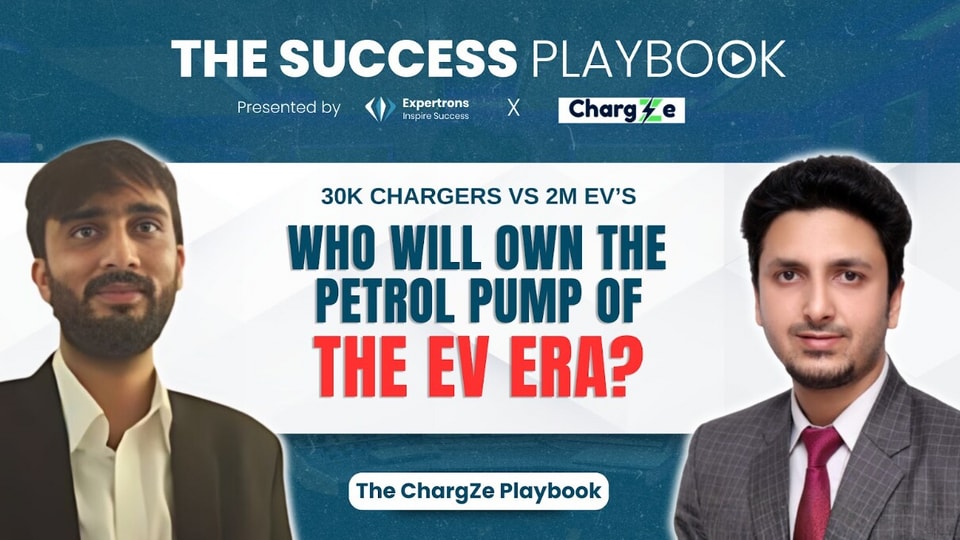
India has already sold over 2 million electric vehicles, but operates fewer than 30,000 public charging stations — roughly one charger for every 200 EVs on the road. As EV adoption accelerates, charging infrastructure is emerging as a key challenge in the transition.
That gap is what Pandey set out to solve when he founded Chargze.
The company was recently featured on The Success Playbook, a business podcast by Expertrons & Shine, hosted by Jatin Solanki, Co-founder of Expertrons & Scale100x.Ai.
“The challenge is not about the vehicle — the technology for the vehicle is evolving and multiple big companies are working on it,” Pandey said on the podcast. “The real challenge is the charging infrastructure.”
Chargze is building a city-wide EV charging platform that combines strategic deployment with pre-secured demand.
Instead of installing chargers and waiting for users, Chargze follows a demand-led deployment model — partnering with fleet operators, logistics companies, and cab aggregators to secure usage first, and then placing chargers in locations such as urban clusters, highways, and fleet hubs, where utilisation is already anticipated.
This approach aims to ensure that infrastructure is built around real demand, rather than speculative installation.
Partners with access to viable locations can participate through a franchise-owned, franchise-operated model, with Chargze managing site evaluation, hardware, installation, software, and ongoing support.
The company is currently focused on metro markets, starting with NCR, before expanding into other Tier 1 cities as EV adoption grows.
Government initiatives such as PM E-Drive and FAME II, along with financing schemes like SBI’s EV Mitra, are contributing to infrastructure development — a shift Pandey believes is narrowing the window for early movers.
“Think about how petrol pumps were established decades ago,” he said. “The early movers who secured the right locations built an advantage that was almost impossible to displace. The next few years will define who owns the key infrastructure in EV charging.”
Over the next three to five years, Chargze aims to deploy 4,000 to 5,000 charging points, build 300 to 400 dedicated fleet hubs, and charge 50,000 EVs every day.
For Pandey, that number is not just a business milestone — but a measure of whether India’s electric transition can work on the ground.
Note to the Reader: This article is part of Hindustan Times' promotional consumer connect initiative and is independently created by the brand. Hindustan Times assumes no editorial responsibility for the content.


