E-Paper



Abhishek Banerjee cites 10th schedule to call TMC rebels' merger 'invalid'. What does law say?
After meeting Lok Sabha Speaker Om Birla, Abhishek Banerjee spoke at length and explained why he deems the TMC merger with the NCPI “invalid”.

 Prefer HTon Google


Trinamool Congress general secretary Abhishek Banerjee, along with some party MPs, met Lok Sabha Speaker Om Birla on Friday to express reservations with the merger announced by 20 rebel MPs.
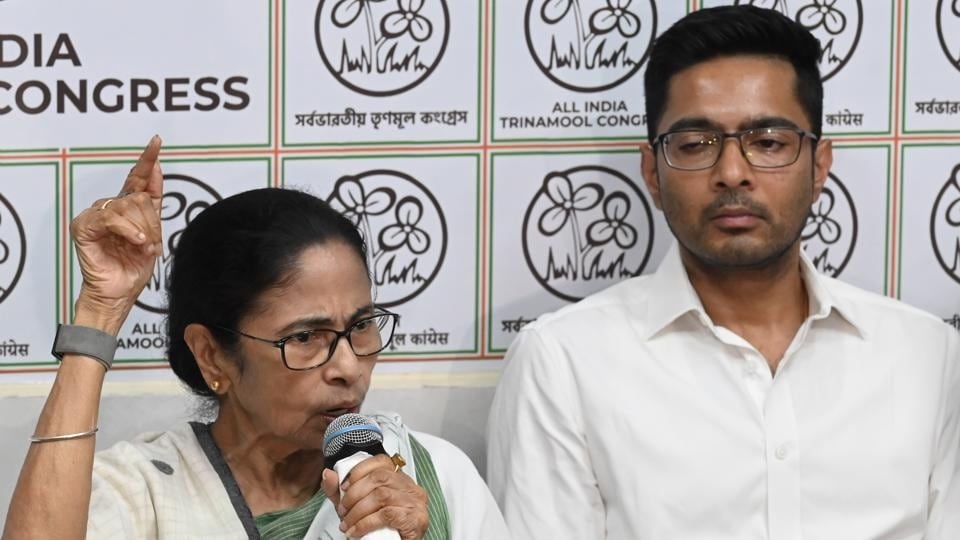
After the meeting, Banerjee spoke at length and explained why he deems the merger “invalid”. A recurring mention in his argument was the 10th Schedule of the Constitution. “The 10th Schedule is against them, against these people who claim to have formed a separate group,” Banerjee told reporters as he held up a copy of the 20 different disqualification petitions he submitted before the Lok Sabha Speaker.
Banerjee countered the rebel MPs' claims on two grounds as he cited the 10th schedule:
- “One should be disqualified from Lok Sabha once they decide to join another party.”
- “Merger only valid if two-thirds of the entire party merges into another, and not just members of the legislative party.”
Earlier this week, the 20 rebel lawmakers from TMC told the Lok Sabha Speaker that they have merged with a little-known Tripura-based party called the Nationalist Citizens Party of India or NCPI. It was after this move that Banerjee had sought time with the Lok Sabha Speaker to present his side of things.
As Banerjee quotes the 10th Schedule of the Constitution as a rebuttal to the rebel MPs, here's a look at what the law says:
The Tenth Schedule of the Constitution defines the anti-defection law, which was enacted to curb the practice of legislators frequently jumping ships to topple governments or for personal gain.
There are two key factors defined under the law, also stated in an earlier HT report.
- A legislator can be disqualified if they voluntarily leave their political party or vote against the party’s official direction in the legislature.
- Paragraph 4 however has an exception: “The merger of the original political party a House shall be deemed to have taken place if, and only if, not less than two-thirds of the members of the legislature party concerned have agreed to such merger.”
The second point was also cited by Trinamool MP Mahua Moitra before the rebels announced the merger. She had argued that merely having a group of MPs does not automatically create a recognised faction under the anti-defection law.
Earlier, this law had a “split” exception that protected legislators if at least one-third of a party’s members broke away. However, the provision was done away with in 2003 after being widely misused.
Abhishek Banerjee seeks disqualification of rebels
In his remarks on Friday, the TMC MP sought the disqualification of the rebel MPs from the Lok Sabha citing their will to break away, electing a Lok Sabha leader, chief whip and asking for a separate sitting arrangement.
"So if (they) have been elected on a symbol and (are) claiming after two years that they are joining a new party, their membership should go," he said.
Also Read: Ex-WB minister Jyotipriya Mallick quits TMC posts; Siliguri mayor also resigns
He pressed that the rule on two-thirds of the members merging with another party applies to the whole party, and not just the legislative party. TMC MPs Saugata Roy, Kalyan Banerjee and Mahua Moitra also accompanied Abhishek in meeting the Lok Sabha Speaker at the Parliament House.