
 E-Paper



BJP plans month-long ‘Seva’ outreach across India, spanning party and government
The campaign includes various initiatives like blood donation drives and public art, aiming for broad participation across India, with a grand finale planned.

 Prefer HTon Google


The Bharatiya Janata Party (BJP) is set to turn Prime Minister Narendra Modi’s birthday into the launch pad for a nationwide outreach campaign from September 17 to mark his 25 years in public life.
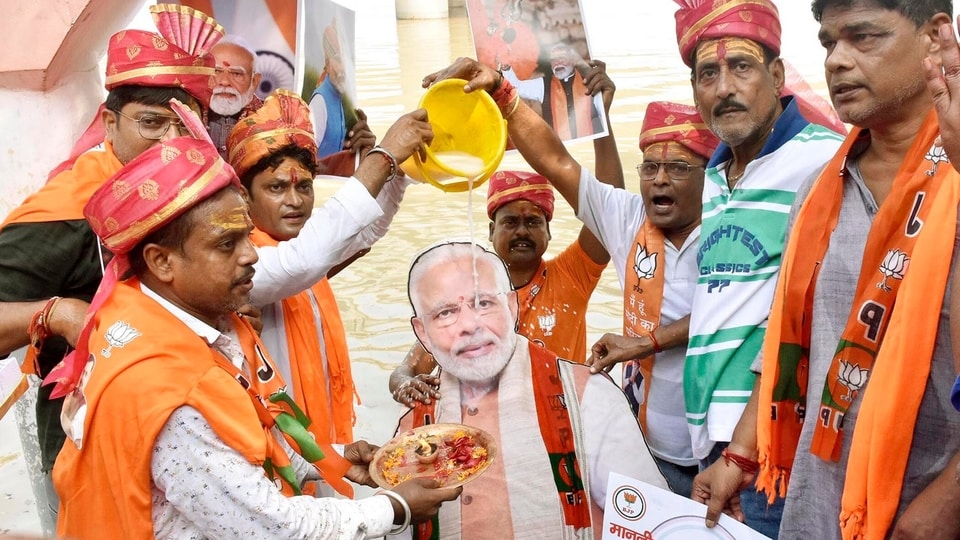
Built around the idea of “seva” (service), the campaign will run till October 17 and span nearly every rung of the party and government machinery, from booth workers to chief ministers. One of its strands, “Seva Mera Yogdan”, has drawn up a list of 25 service activities, from blood donation camps to tree plantation drives, and is asking citizens to pick at least one and participate.
The exercise is less a single event than a web of parallel programmes, each assigned to a different arm of the party and the state machinery. Party workers, government departments, schools, Anganwadi centres, digital influencers, NGOs and elected representatives have all been roped in, with nodal officers appointed at the block, district and state levels to monitor how each component is implemented.
Also Read | Rajnath, Yogi to launch Modi 76th birthday bike yatra from Varanasi to Vadnagar
Deep Dive

Interestingly, party circulars have asked state education departments to frame their official communication around “Viksit Bharat Sankalp” and “25 years of service work”, while avoiding any direct mention of the PM’s birthday, even as the campaign’s start date coincides with it. The instruction points to a conscious effort to present the drive as a governance initiative rather than a personality-led one, though the timing itself will hardly go unnoticed.
The first big moment comes on the evening of September 17 itself. Under “Ashirwad Ka Diya”, booth workers will visit the homes of scheme beneficiaries and ask them to light a lamp as a mark of gratitude for welfare schemes. State governments have been asked to share beneficiary lists, including those who received Covid vaccines, so the visits can be planned door to door. The lamps, once lit, are meant to travel further online under the hashtag #AshirwadKaDiya.
Also Read | NDA allies to meet in Varanasi tomorrow on PM Modi's 76th birthday
Schools get their own version of the campaign through “25 Crore Children’s Dreams of India”, a drawing and speech competition to be held between September 17 and October 7. States can choose any window of seven to 10 days that suits them. The best drawings will move from school to district and then state-level exhibitions, while winners will receive certificates signed by CMs.
There is a cultural push too. “Nukkad nataks” or street plays under “Namo Seva Gatha” will be staged in villages, schools and colleges nationwide, retelling 25 years of welfare schemes through music and drama, with a major push planned for October 2.
Anganwadi centres, meanwhile, will host a three-day event between September 25 and October 7 called “Aangan Ka Utsav”, where workers will be publicly felicitated and mothers briefed on nutrition and maternity schemes.
Central to the campaign is “Kahani Badlav Ki”, under which party workers will fan out to record the real stories of 2.5 million citizens whose lives, the party says, have changed through government schemes. From this pool, around 25,000 stories will be shortlisted, and roughly 250 of the strongest ones will be turned into polished videos for a national compilation.
Digital creators occupy a bigger role in the campaign this time than in past BJP drives. Under the “Viksit Bharat Sankalp Yatra”, between 300 and 500 influencers and content creators will be taken to sites the party sees as proof of visible change, from the changed security situation in Bastar to Gujarat’s GIFT City and innovation hubs such as iCreate. States have been asked to submit lists of such “transformative sites” within three days, and are expected to both send their own influencers and host visitors from elsewhere.
Two more journeys add a religious and symbolic layer to the month. The “Seva Jyoti Yatra” will carry a ceremonial flame through villages by foot and motorcycle, converging at fixed points for gatherings where beneficiaries speak and crowds take a collective pledge for a developed India by 2047. A separate “Jal, Jan aur Seva Sankalp Yatra” will move holy water between Vadnagar in Gujarat and Varanasi on a 500-pilgrim, 250-motorcycle relay, with 10 groups fanning out on different routes each way to cover an estimated 60 to 80 locations a day.
Also Read | Delhi to mark PM Modi’s birthday with four events, 125k diyas on Kartavya Path
The month builds up to a grand finale on October 17, the “Jansevak Mahakumbh”, where around 125,000 sarpanches (village heads) and other public representatives are expected to gather across Delhi, Gurugram, Ghaziabad, Surajkund and Varanasi. The plan includes a mass rendition of all six stanzas of Vande Mataram, aimed at a Guinness World Records attempt, followed by a formal resolution and an address by the Prime Minister.
Stripped of its many names and hashtags, what emerges is essentially a coordinated public outreach exercise running for a month, bringing together party workers, beneficiaries, schools, Anganwadi centres, influencers, digital creators, local artists, NGOs, public representatives and government departments under one umbrella. Whether the numbers, particularly the 2.5 million beneficiary stories and the Guinness record bid, hold up will only become clear once the month plays out.


