E-Paper



India, Bangladesh likely to sign at least six agreements
Among the agreements expected to be signed is one on the sharing of the waters of Kushiyara river that was finalised during a meeting of the bilateral Joint Rivers Commission last month. Agreements on cooperation in railways and energy are also expected to be signed

 Prefer HTon Google


India and Bangladesh are expected to sign at least six agreements for cooperation in areas ranging from sharing of river waters to connectivity following talks between Prime Minister Narendra Modi and his visiting Bangladesh counterpart Sheikh Hasina on Tuesday.
Also Read:Bangladesh PM received by Modi at Rashtrapati Bhavan: Whenever I come to India..
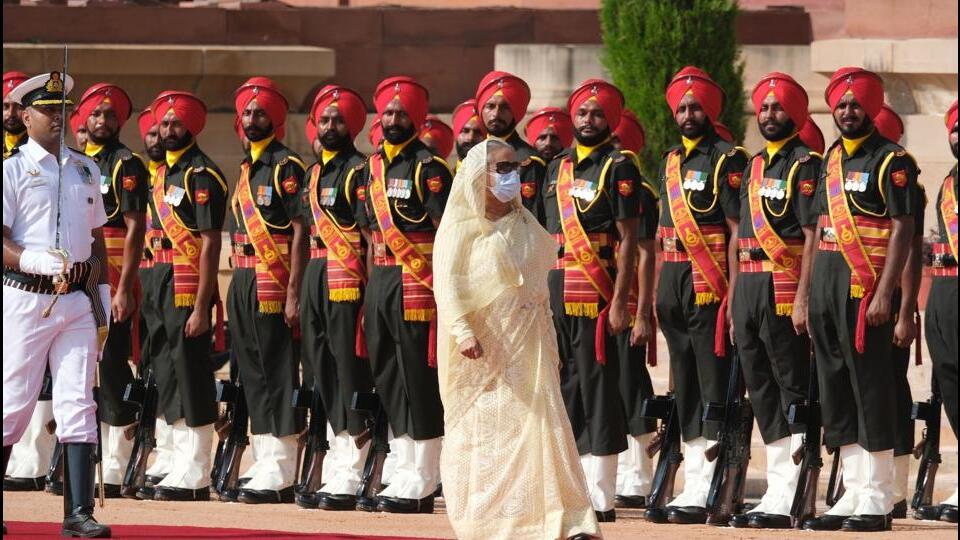
Ahead of the meeting, Hasina was accorded a tri-services guard of honour on the forecourt of Rashtrapati Bhavan on Tuesday morning. She was greeted by Modi on her arrival at the presidential palace and introduced to several ministers, including JP Nadda, Kiren Rijiju and S Jaishankar.
In brief remarks to the media after the ceremony, Hasina said it is possible for friendly countries such as India and Bangladesh to tackle all problems. “With friendship you can solve any problem, so we always do that,” she said.
Describing India as “our dear friend”, she recalled the country’s support during the 1971 war that led to the emergence of Bangladesh from the erstwhile East Pakistan. Speaking in a mix of Bengali, Hindi and English, she said Bangladesh is indebted to India for its support during the Liberation War.
Among the agreements expected to be signed on Tuesday is one on the sharing of the waters of Kushiyara river that was finalised during a meeting of the bilateral Joint Rivers Commission last month. Agreements on cooperation in railways and energy are also expected to be signed, people familiar with the matter said.
During a meeting with external affairs minister S Jaishankar on Monday, Hasina raised the issue of instability in the Rakhine state of Myanmar and concerns that it could spread further, Bangladesh foreign secretary Masud bin Momen told reporters. Momen quoted Jaishankar as saying that India too is keeping a close watch on the turmoil, which is not good for the region.
At a brief interaction with journalists during a diplomatic reception at the Bangladesh high commission late on Monday, Hasina said that a big country such as India can “do a lot” to help find a solution to the problem of Rohingya refugees from Rakhine.
Momen also said Hasina had raised several pending issues that should be given priority, such as Nepal’s plans for transporting goods to Bangladesh’s ports through Indian territory and a proposal for greater connectivity through the Bangladesh, Bhutan, India, Nepal (BBIN) grouping.
Hasina and Jaishankar also discussed the global fallout of the Ukraine crisis and ways to collaborate to overcome the impact of the conflict, Momen said. He added that Bangladesh could look at buying fuel and gas from India, if the country has any excess supplies, on “mutually agreed terms and conditions”.