
 E-Paper



What does an environment designed for healthy ageing look like? Experts decode design of longevity-focused living

 Prefer HTon Google


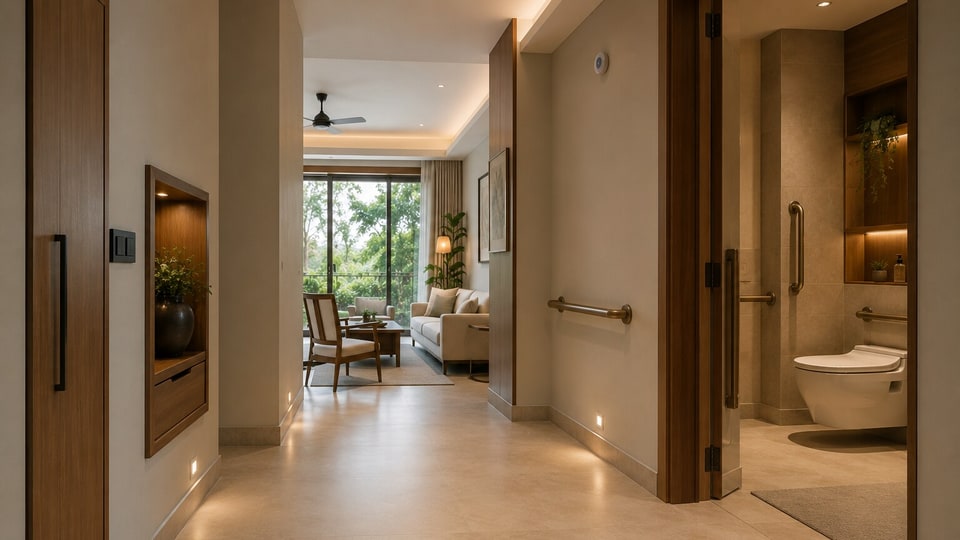
Longevity is reshaping senior living, highlighting design that fosters active living. Know the key features of an environment built to improve holistic living.
Longevity has become a major part of the wellness conversation, as people today are not only looking to live longer but also to live better, with greater independence, purpose, and quality of life. A similar idea took centre stage at the Longevity Summit 2026 held on August 15 and 16, 2026, in Mumbai, where discussions explored how healthy ageing can be supported through healthcare, wellness, food, technology and even the spaces people live in.
With age, mobility, balance, vision, and care requirements may change. So, what does a longevity-centric environment actually look like?
Addressing this question was one of the central ideas behind Shremoha, a premium senior independent living platform launched at the summit with the aim of creating longevity-focused communities where seniors can continue to live independently.
HT Lifestyle spoke to experts Saumyajit Roy, co-founder and CEO of Emoha Elder Care and co-founder of Shremoha, and Nitan Chhatwal, founder, chairman and managing director of Shrem Infrastructure and co-founder of Shremoha, to understand how longevity-focused design can help homes and communities adapt to changing needs of older adults.
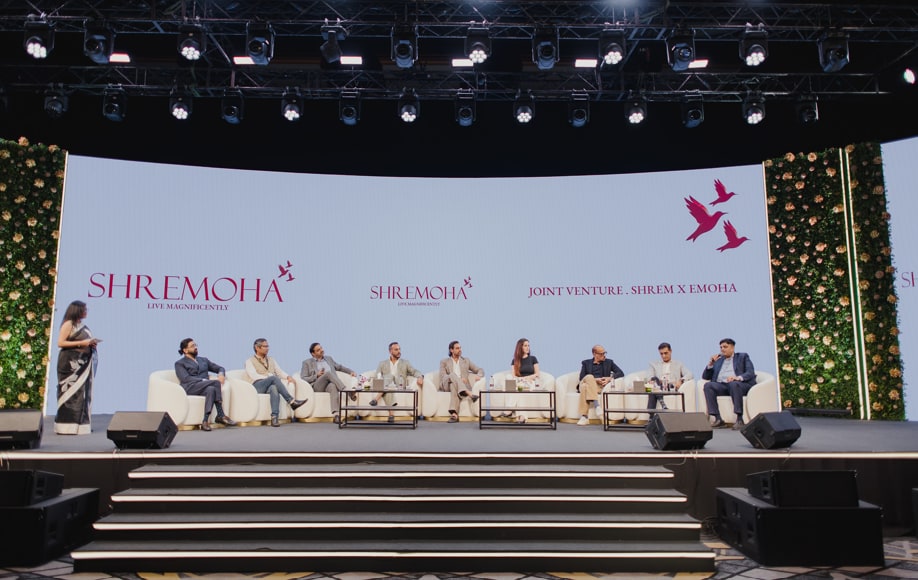
The experts talked about longevity design and why it needs to be integrated right at the beginning, from day zero, and rather than retrofitted later when mobility accessibility of care requirements begin to emerge.
Why are longevity-focused senior living communities becoming more relevant today?
First, let's understand what is driving the shift towards longevity-focused senior living.
1. Longer lives are changing what retirement looks like
Nitan Chhatwal believed that with India's ageing population and rising life expectancy, many people may spend several decades in retirement, but they still want to remain active, continue to work, socialise, and live independently.
He said, “Life expectancy has been going up over the years; people are living longer. People want to work till 70, 75. They just don't want to sit down because they are active in life; your life has a meaning.”
2. Changing family structure is reshaping senior living
Saumyajit Roy broadened the perspective by talking about migration and changing family structures as another reason behind the growing relevance and demand for such communities. As many younger adults move away from their hometowns for education and work, older parents are living on their own. He said, “In those cities, in smaller towns, actually, there are more elders who are alone.”
With children living elsewhere, they may still want their parents to have the best possible quality of life, and may not want to wait until their parents suffer mobility issues in their 80s to consider a ‘holistic’ living arrangement.
3. More people are planning their later years earlier
And not just at the prompting of their children or as older adults adjust to changing circumstances, even middle-aged people are pausing to reconsider what they want their later years to look like. Saumyajit noted, “Increasingly, people in their 50s and 60s are now pausing and thinking, ' What should I do for the next 30 years? Where should I stay? Who should be my friends? What should the community be? Is the place designed to give me activities and events and still be able to take care of my core care needs?” He added that this is becoming an increasingly important trend today.
Nitan agreed with his point, adding that even empty nesters are beginning to think differently about senior living. He said, "Our senior living planning is a thought that you live in a place. You are able to work, you are able to enjoy work within that place, you continue your life so that the care is available.”
He then clarified that the idea behind Shremoha is not simply to create a conventional senior living space. Instead, it is meant for people who are transitioning from a highly active phase of life to a more relaxed, semi-active one, while still wanting to work, socialise and retain a sense of purpose. He emphasised that the aim is not to create something that feels like an ‘old-age facility’, but rather an environment where people can continue living actively, along with care and support when needed.
How should a longevity-focused environment be designed?
In practice, what does a longevity-and wellness-centric environment look like? According to the experts, the space should go beyond a checklist of conventional senior-friendly features and take a more holistic approach, ensuring accessibility, independence and better mobility.
Saumyajit and Nitan walked us through several key aspects of such an environment, from physical design and how longevity-focused spaces differ from conventional senior living facilities to social design that can enable active ageing.
1. Physical space
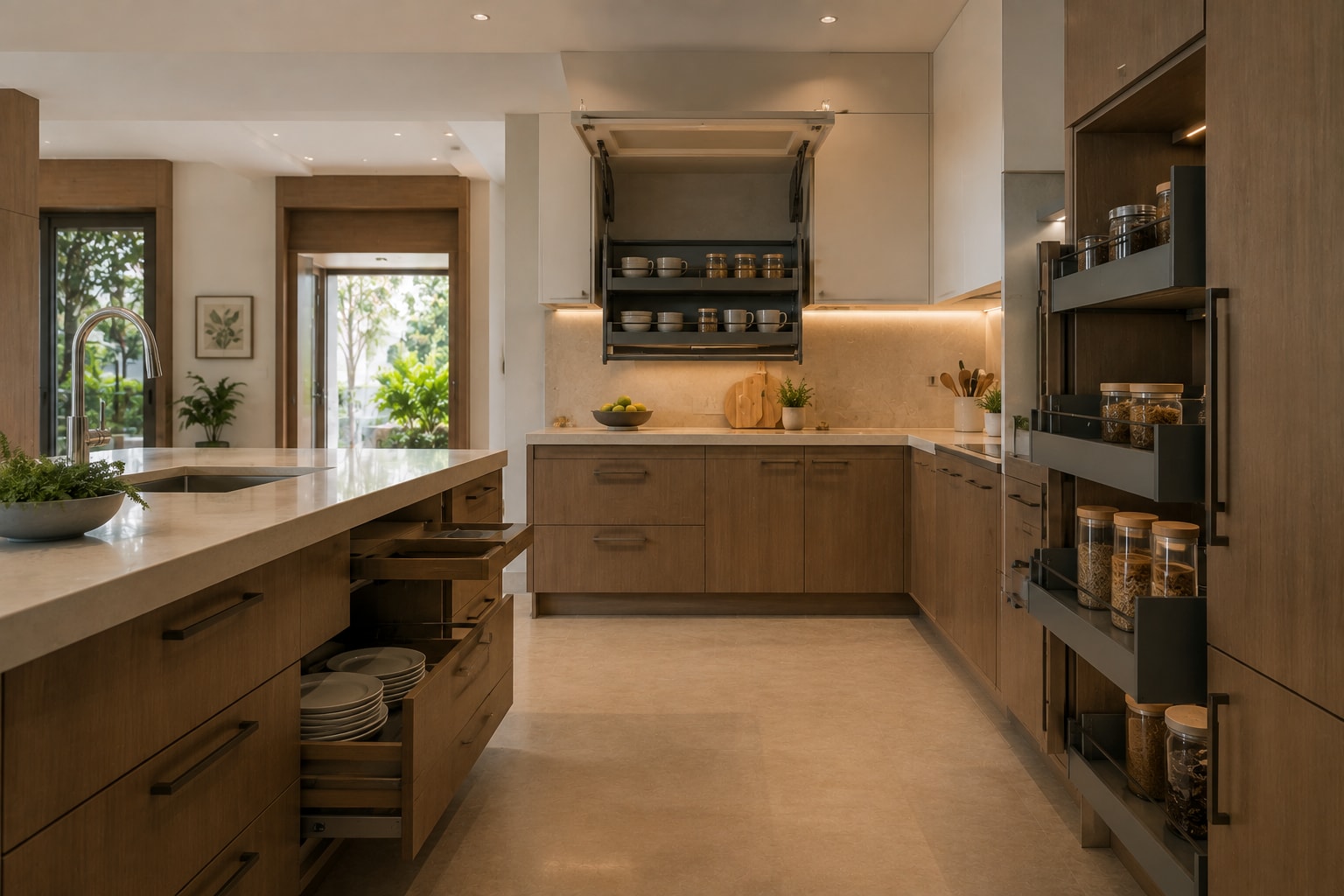
Nitin talked about the larger environment, where luxury is defined as openness, greenery, and sufficient space. He also mentioned a wider doorway as a key feature.
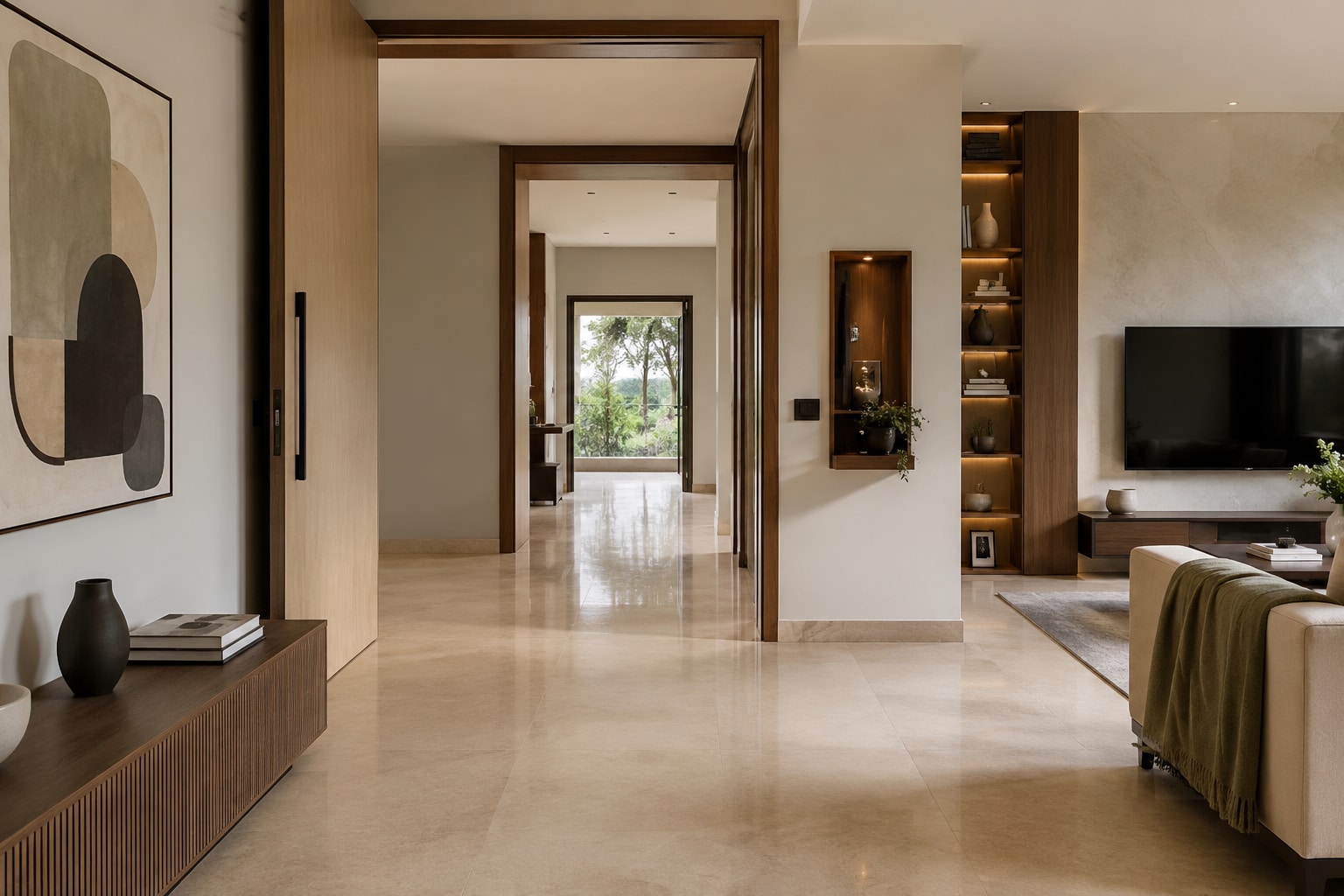
Saumyajit then drew attention to the micro aspects of the designs, such as lights that can switch on automatically when a resident gets up at night, and kitchens that reduce the need to stretch or reach for heavy objects stored at a height. He also acknowledged that longevity-focused design requires thinking several years ahead and anticipating how a resident's mobility and care needs may change over time. The main point is designing for future mobility and care needs from day zero.
The experts furthermore highlighted the role of technology, particularly when it is integrated into the environment for monitoring and support. But what about seniors who may be uncomfortable using technology? Sometimes, they are technologically averse. Nitan said, "We are not giving any technology for seniors to use. We are using technology for us to know what’s happening.” He cited automatic lighting and sensors that can detect a possible fall as examples.
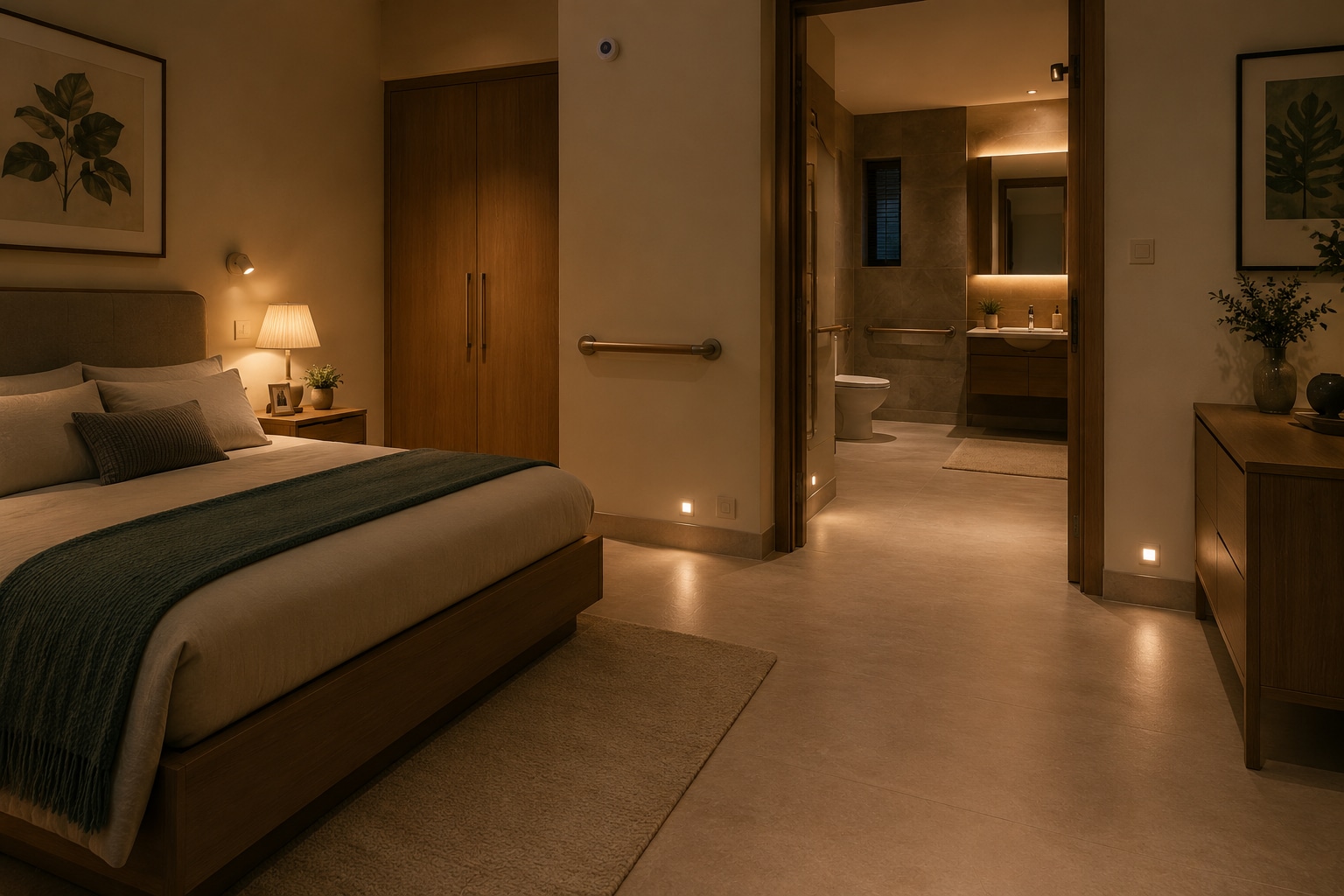
Saumyajit added that technology can help identify when something may be wrong without being ‘intrusive’ or necessarily requiring residents to wear or carry a device.
So, this tells us that for physical space, smart technology in longevity-focused environments is becoming an integral part of the ecosystem.
But technology and accessibility features alone do not make up a longevity-focused design. Nitan brought to attention that often senior-friendly spaces are reduced to a checklist of ‘visible modifications'. Most builders are talking about making a building with a few support bars, then anti-skate floats, and that becomes a senior living. no. Senior living is creating the community, creating a care culture, creating an environment in which a person loves to live."
Grab bars and anti-skid flooring may improve safety, but that alone does not cut it. In fact, Saumyajit voiced that many conventional homes are not designed around the physical changes that accompany ageing. He said, "In our country, the spaces that we stay in are not designed for seniors. With it all, washrooms, our bedrooms, our kitchens. Elderly typically reduce in size, reduce in height, and the spaces then become inaccessible.”
Longevity design, therefore, does not simply mean adding a few senior-friendly features. It requires thinking about the lived experience of older adults and how easily they can navigate and use everyday spaces as their needs change.
2. Social space
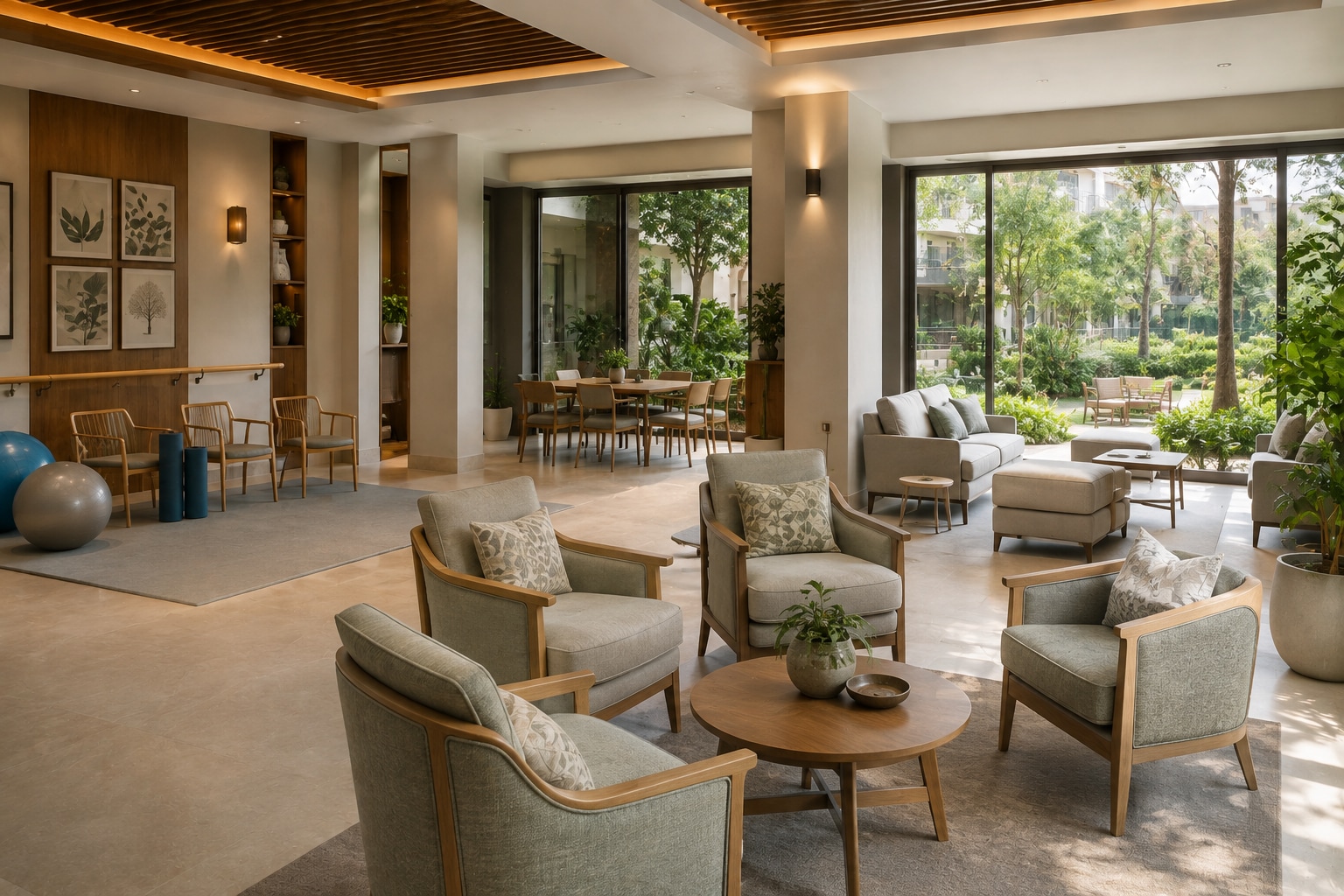
Nitan highlighted the importance of social interaction and participation, noting that longevity-focused environments can include gyms designed specifically for older adults, with greater attention to balance and mobility rather than simply replicating spaces meant for younger users. Building on this, Saumyajit said that physical activity does not always have to feel formal. Activities such as dancing, games, or even playing with balloons can encourage movement and bring residents together. So, when designing social spaces for such communities, the focus is on integrating both physical activity and purposeful connection.


