
 E-Paper



Tisca Chopra, Linda Fernandes talk about raising teenagers in the age of AI: Psychologists explain how to balance creative freedom and digital safety

 Prefer HTon Google


As AI becomes part of everyday life, parents like Tisca Chopra share how they are encouraging creativity and raising responsible digital citizens.
Artificial intelligence is slowly becoming part of everyday family life, whether it is helping children with homework, sparking ideas for a creative project or simply answering their endless questions. But as teenagers become increasingly comfortable with tools like ChatGPT, parents are also figuring out where to draw the line.
How much freedom is enough? What should children be careful about? And how can parents ensure that AI helps children think rather than think for them? In an interview with HT Lifestyle, these parents share how they are navigating the opportunities and challenges of raising children in the age of AI. (Also read: Riddhima Kapoor opens up on her strict parenting style for daughter Samara: ‘I can’t be her friend’ )
Tisca Chopra on parenting in the digital age
For actor, author and parent Tisca Chopra, understanding AI has also meant learning from her daughter, who is already quite comfortable using ChatGPT. “I’m curious about it. And if you really want me to learn how something works, have my daughter tell me, ‘You won’t get it, Mom.’ That did the trick,” she says.
Tisca is happy to let her daughter teach her about the technology, but she also makes sure that there is room for questions. What matters to her is not simply getting the right answer, but understanding how her daughter arrived at it.
“She knows her way around ChatGPT better than I do, and I’m happy for her to teach me. I still get to ask, ‘What makes you think that answer is right?’ If she can explain how she arrived at an answer in her own words, I know she’s understood it.”
Tisca also emphasises age-appropriate safeguards, quiet hours and open conversations, encouraging her daughter to approach her whenever something online feels confusing or uncomfortable. “I want her to feel she can put the phone in my hand and say, ‘Mom, look at this,’ without bracing for a lecture,” she says.
On creativity, she encourages her daughter to question AI suggestions and preserve her individuality. “ChatGPT might offer her something smoother, but that odd little line might be the one I remember the next day,” she adds. Her ground rules include fact-checking, acknowledging AI's contribution and being mindful before uploading photographs.
How to ensure AI safety for teens
Aparajita Bharti, public policy expert and co-founder of Young Leaders for Active Citizenship (YLAC), believes digital safety should prepare teenagers to use AI responsibly rather than simply restrict access. “The challenge is to protect young people without limiting the opportunities these tools offer for creativity, learning and building,” she says.
She recommends setting clear boundaries around AI use and being mindful of the personal information and images teenagers upload. She also flags emotional dependence on AI as a growing concern. A 2025 YLAC and Youth Ki Awaaz study found that 57% of young Indians surveyed turned to AI when stressed or anxious.
“AI cannot replace real-world relationships and support, and peers, parents and trusted adults remain their first port of call,” she emphasises. She also believes technology companies must strengthen age-appropriate safeguards while allowing teenagers to explore AI, question its responses and seek help without fear of being banned from using it.
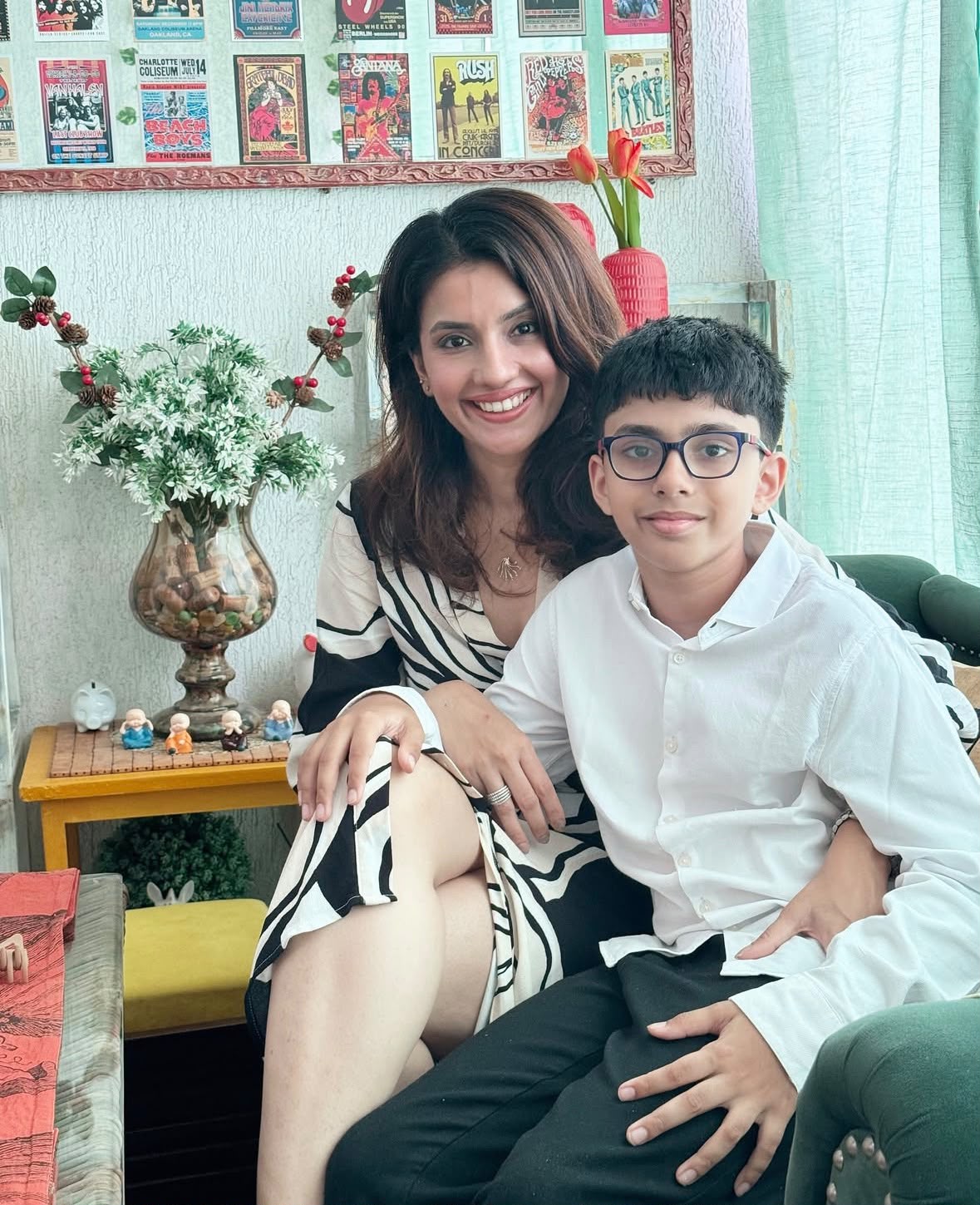
For content creator Linda Fernandes, AI has made storytelling with her son more interactive. She has noticed him questioning AI-generated ideas and developing his own creative choices. “I want him to develop his own voice, feel comfortable rejecting a suggestion and take pride in improving an idea,” she says. She also highlights the importance of fact-checking, privacy awareness and independent problem-solving.
Bengaluru-based mother Rasika Tandon believes children need different levels of guidance depending on their age. While younger children can explore AI creatively with parental involvement, teenagers should be encouraged to experiment independently and think critically. “We talk about questioning AI-generated responses, protecting personal information and using AI to support their own thinking rather than replace it,” she says.
What psychologists say about raising AI-smart, emotionally healthy teens
Preeti Sharma, consultant clinical psychologist at Ganaa Mental Health Care, believes that completely restricting technology is neither practical nor developmentally helpful. “Adolescence is a phase marked by curiosity, identity formation, a growing need for autonomy and peer acceptance. Rather than viewing teenagers’ engagement with AI as problematic, parents need to understand what they are seeking through these platforms,” she says.
Emphasising a collaborative approach, she adds that parents should encourage curiosity while establishing age-appropriate boundaries. Teenagers must also understand the risks of misinformation, privacy violations, deepfakes, cyberbullying and excessive emotional dependence on AI chatbots. “AI cannot replace the emotional understanding and reciprocity of human relationships,” she says, recommending that parents explore AI tools with their children, establish technology-free periods and encourage offline activities, friendships and independent problem-solving.
Dr Jaya Sukul, clinical psychologist and founder of Headspace Healing, Noida, believes parents should encourage teenagers to view AI as a creative partner rather than a substitute for their imagination. “Encourage them to experiment with AI-generated art, music and storytelling while developing their own ideas and independent thinking,” she says.
She also cautions that misinformation, online manipulation, deepfakes and privacy risks need to be discussed openly. Constant comparison with digitally altered images, she adds, can affect teenagers’ confidence and self-esteem. Sukul recommends promoting self-acceptance, celebrating individual strengths and encouraging offline hobbies, sports and meaningful friendships.
Rather than imposing an outright ban, parents should establish healthy digital boundaries around screen time, meals and bedtime. The objective, she believes, should be to raise emotionally intelligent and digitally responsible young people who can embrace innovation without compromising their individuality or well-being.
Note to readers: This article is for informational purposes only and not a substitute for professional advice.


Catch your daily dose of Fashion, Taylor Swift, Health, Festivals, Travel, Relationship, Recipe and all the other Latest Lifestyle News on Hindustan Times Website and APPs.


