
 E-Paper



What do we do with our privilege? Keshav Suri on hospitality, inclusion and real change

 Prefer HTon Google


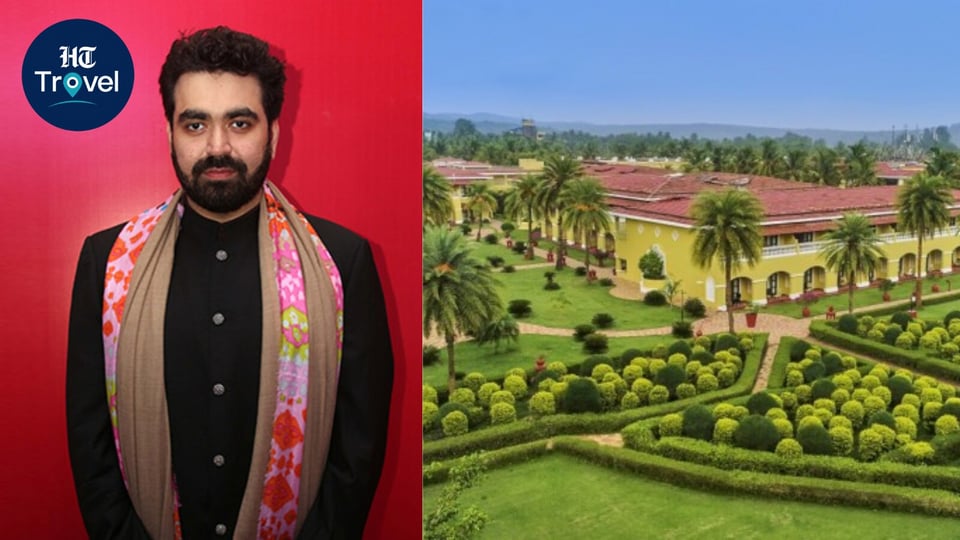
Keshav Suri talks about The LaLiT, local livelihoods, inclusive hospitality, skilling communities and using privilege to create meaningful grassroots change.
I have stayed at The LaLiT Goa twice, once for three days and another time for two. One of those stays was with my son when he was around four or five. I have also stayed at The LaLiT Srinagar, though that was a much shorter one-night stay. I am very much a five-star hotel person. My husband is even more particular. For him, a spacious hotel room and bathroom matter more than almost anything else. But during my stays at The LaLiT Goa, I found myself noticing the people.
When I checked in with my son, I was told that anything he needed could be arranged. Children's meals could be sent to the room. If I wanted bananas for him, I could simply call, and they would be sent without a charge. Then there was something else we kept noticing. So many of the people working at the hotel seemed local. We actually kept pointing it out to each other.
At many hotels across India, you meet service staff who have travelled from UP, Bihar or other parts of the country for work. Here, seeing so many people who seemed to belong to the place itself was fascinating to me.
So when I got the chance to speak with Keshav Suri, Executive Director of The LaLiT Suri Hospitality Group, I wanted to begin there.
I have personally experienced that local element at The LaLiT Goa. What is it in your decision-making that makes hiring people from the local community so important?
“The LaLiT believes in the diversity of India. The LaLiT believes in the different cultures of India, the different languages of India, the different people of India. We firmly believe in the Constitution of India and the plurality of India. India has so many cultures, languages and communities, and that diversity ultimately brings unity.” , said Keshav. He added,
“Our old tagline was developing destinations, not just hotels. When we came to South Goa, there was almost nothing around, and the village was tiny. When the hotel came up, the village got a facelift, and South Goa became a destination. Something similar happened in Bikaner. But that could only happen with the support of the local people and by giving people livelihoods.”
“Who doesn't want livelihoods? Who doesn't want poverty alleviation? Who doesn't want to get out and have a life lived with dignity? We didn't want to encroach on somebody else's space. We wanted to be with them and work with them.”
Employment is one part of this, but what happens after you hire someone locally? How important is training and skilling?
Keshav passionately pointed out, “Employment is one part. The other part is training and skilling people. We have The Lalit Suri Hospitality School in Faridabad, which has been running for more than 10 years and is now going to turn into a university. And it isn't only for The LaLiT. We take people from wherever they are, whatever hotel they may be in, and put them into the hospitality school.”
“We have a full-fledged hospitality degree, and we run scholarships. We have a scholarship for LGBTQIA plus students and scholarships for neurodivergent students, including the Apna Heera Scholarship and Aditya Nanda Scholarship. In Goa and Bikaner, we also ran Disha, a computer training and learning centre for women. The idea was to empower local women, particularly in places such as Kerala and South Goa where women are such an important part of the workforce.”
A hotel also creates an entire economy around itself. There are local vendors, people supplying fresh fish, horticulture, gardening, and so much more. Do you see a hotel as something much larger than the property itself?
“A hotel is almost like a township. There is a job for almost anybody. Our philosophy is that opportunities should first go to the people who live there and then go wider. We believe talent is available across the country. It is not only available in metros. There is talent in tier 2 and tier 3 cities, and there is talent in communities people often don't look at.”
“We have also tied up with the Ministry of Tribal Affairs for a hospitality skilling programme. More than 75 tribal people from Jammu and Kashmir, Manipur and Nagaland have been trained. It is a six-month programme, with three months of skilling at the hospitality school followed by on-the-job skilling. It is a pilot project.”
“There is this constant complaint that there is no talent or there is a lack of talent. No. We are looking in the wrong spaces.”
That brings me to inclusion. A company can have inclusion in its policies, but does it reach the person cleaning a room or chopping vegetables in the kitchen? Does it change how people at ground level see those who are different from them?
“I think hospitality is one of the most inclusive industries, and it should be. Hospitality is about bowing to the customer. It is Atithi Devo Bhava. When you say Namaskar, you are recognising the divine in the other person.”
“That person can be gay, straight, bisexual, an acid attack survivor, a woman, a man, from another community, a foreigner or a domestic tourist. Hospitality is anthropology. It is the study of human behaviour. It is also a sociology experiment.”
“Our team is deeply sensitised. It is not just formal training. These conversations happen everywhere. It is difficult to walk in everyone's shoes, but being able to do that is what makes us good human beings.”
“Our biggest strength is having people from the communities we want to serve working with us at all levels. We don't only give jobs at entry level. We have people at managerial levels, senior levels, entry levels and on the board. We also have people who have survived acid attacks.”
This is where privilege came into the conversation for me. Having access, a platform and a position is one thing. What one chooses to do with that privilege is something else. And it is beautiful to see when that position is actually used to create change.
“Our team is the heart of our business. Without our team, we don't have a business.”, Keshav passionately pointed out with a smile that radiated his pride.
When a large hotel enters a new place, there must also be issues at ground level. You could be talking about hundreds of employees alongside communities, vendors and guests. What happens when things don't go as planned?
“We don't look at problems. We look at opportunities and experiences. Hospitality teaches you that for every problem there is a solution. When you are running something like a township and dealing with so many human beings, there will naturally be issues, particularly in the beginning. But they are solvable and manageable.”
“You can solve them with love, compassion, empathy and by putting your money where your mouth is. We focus on livelihoods, safety and belongingness. We tell our team that the hotel is their home because many of them spend more time here than they do at home.”
“If we can't give them that freedom, that space, that sense of belongingness, then we fail, and the problem is ours, not theirs.”
Perhaps that is also why, as an end user, I have never seen the problems behind the scenes. I have only experienced the final stay. You also said something interesting about not going into a community believing you are there to save it.
“We're not here to save the village. We're not here to save the community. We're here to enable. A good leader and a good hotel chain enable their team. You create an army of people.”
“Hospitality also gives you opportunities to redeem yourself, both with your customers and your team. Even if a customer has a bad experience, there is an opportunity to redeem it if they allow you to do so.”
During the pandemic, you were working with communities outside the hotel too. What did that look like?
“During the pandemic, beyond our team, we went into villages, distributed food and medicines and helped get vaccinations done. We went to the trans community and the sex worker community. Through my foundation, we worked with grassroots NGOs and in places where knowledge did not exist. It wasn't only about a photo opportunity.”
“Doctors stayed with The LaLiT for an entire year in Delhi and Mumbai during the pandemic, and our team supported them. Some of our team members wanted to stay because they considered the hotel their second home, and for some, even their first home.”
The LaLiT is also a luxury hotel group, and luxury hotels in India are becoming more expensive. How do you balance the cost of taking care of employees and creating opportunities with the need to keep the hotels accessible to guests?
“We have redefined luxury. We don't believe in old-school luxury. Luxury isn't simply about increasing prices. Instead of welcoming somebody with a garland, we can welcome them with our diversity, equity and inclusion team. We use sign language to welcome VIP guests or guests who may benefit from it.”
“Our rooms have books that discuss subjects that are very unconventional. Through The LaLiT Loyalty programme, we also have Points for Good, where members can use their points towards NGOs they support. Those causes include climate, LGBTQIA plus communities, women, underprivileged children and education.”
“Customers are becoming smarter about where they spend their money. They want to know where that money is going.”
So are guests also beginning to question what their idea of luxury actually supports?
“We are a luxury hotel, but we have price points for many consumers. You have people from the trans community who may be begging on the streets walking into our lobby like they own the place.”
“We have Annapurna, our team cafeteria, where trans people around red-light areas near our hotels can come and eat free food. They can come when they need to eat.”
“The LaLiT has time and time again proven that the money is being spent on developing not just the destination but also nation-building. We are trying to build an inclusive and diverse nation.”
You are also bringing some of these stories together in “Hospitality with a Heart”. What is the idea behind the book?
“Hospitality with a Heart is about the stories of our member diversity, equity and inclusion team. We want to humanise hospitality workers. They aren't just people who serve you.”
“The book brings together stories from general managers as well as people at entry level. We want people to understand who these people are and hear their stories.”
“We also have our Pure Love campaign. Our team members wear Pure Love badges and flags representing different communities. This is the world that we have created at The LaLiT. It may not always be the world outside, but we wish it was.”
I think that is what stayed with me after our conversation.
When I first noticed so many local faces at The LaLiT Goa, I did not know the thinking behind it. I was simply a guest noticing something that felt different. After speaking with Keshav, I realised that the experience I saw at the hotel began much before I checked in.
It began with decisions about who gets hired, where talent is found, who gets trained, who gets a scholarship, which communities get access and, importantly, who gets to feel that they belong inside a space that might once have felt inaccessible to them.
Which brings me back to the thought I shared with Keshav during our conversation.
Having privilege is one thing.
What we choose to do with it is what really matters.
Similar articles for you
I spent a week in Hong Kong in November. Here’s how to plan your 2026 trip
I went to Chandigarh to learn golf and came back with a new way to holiday; Golf-cation decoded
I stopped folding my clothes while packing, and my suitcase suddenly had a lot more space
I fly often, and these are the handbag essentials that make long flights and layovers easier

Catch your daily dose of Fashion, Taylor Swift, Health, Festivals, Travel, Relationship, Recipe and all the other Latest Lifestyle News on Hindustan Times Website and APPs.


