E-Paper



Lok Sabha elections 2019: Bucking anger against citizenship bill, NDA set to conquer Northeast
The anger against Citizenship (Amendment) Bill which sparked protests across the Northeast a few months ago, did not have any impact on the BJP’s political prospects in the region.

 Prefer HTon Google


As protest against the Citizenship (Amendment) Bill (CAB) was raging in Assam and several other states in the north-east in January and February this year, many political experts predicted that the Bharatiya Janata Party (BJP) was likely to face an uphill battle in the region in the 2019 Lok Sabha elections.
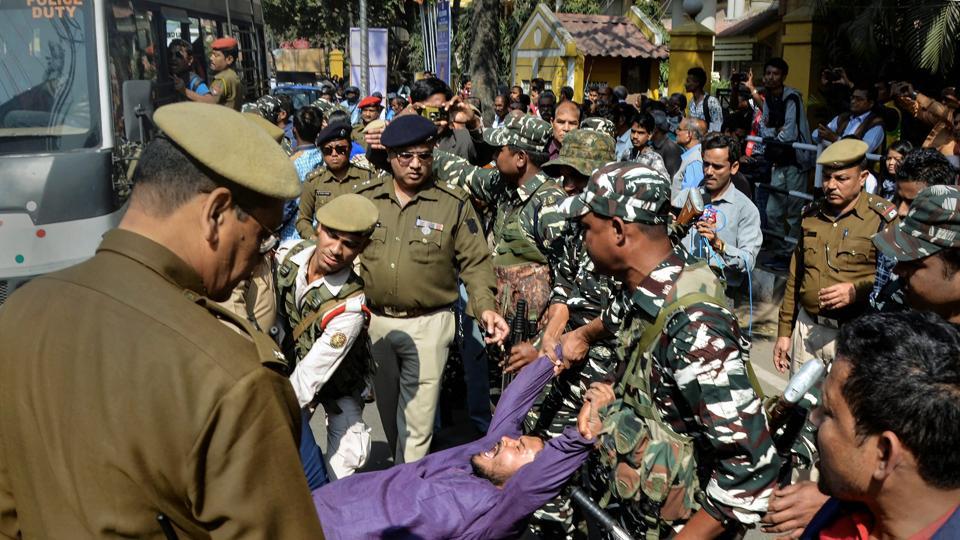
The protests forced the BJP-led National Democratic Alliance (NDA) not to table the legislation, which sought to give citizenship to religious minorities from Bangladesh, Pakistan and Afghanistan, in the Rajya Sabha.
But on Thursday, as trends from the 24 seats in the seven states in the region (except Sikkim) trickled in, it appeared that the apparent anger against CAB did not have any impact on the BJP’s political prospects in the region. By noon, four hours after counting started, the BJP and its allies were leading in 19 of the 24 seats.
If the trend continues, the north-east would play a crucial part in the NDA retaining power in New Delhi in 2019. In 2014, the BJP won eight seats (seven in Assam and one in Arunachal Pradesh) in the region, while its allies won two.
In Assam, the BJP was leading in nine of the 10 seats it had contested, while its coalition partner in the state Asom Gana Parishad (AGP) was leading in two of the three seats it contested. All India United Democratic Front (AIUDF) was leading in two seats, while the Congress was not leading in any of the 14 seats in the state..
“People in Assam have completely rejected the divisive politics of Congress. Like the rest of the country, they have reposed faith in Modi’s leadership. This is the bigger wave in favour of us than 2016 when we won the assembly polls,” said Assam BJP leader and party candidate from Mangaldoi seat Dilip Saikia, who was leading on his seat by more than 80,000 votes as of 1pm.
Follow Election Results 2019 Live Updates here
In neighbouring Arunachal Pradesh, the two BJP candidates — Union minister Kiren Rijiju in Arunachal West and BJP state chief Tapir Gao in Arunachal East — were leading from both the seats in the state.
In Tripura, where poll-related violence forced re-poll in 168 booths in the Tripura West seat, BJP candidates — Rebati Tripura in Tripura East and Pratima Bhowmik in Tripura West — were leading .
In Nagaland, BJP-ally Nationalist Democratic Progressive Party (NDPP) candidate and sitting MP Tokheho Yepthomi was leading from the state’s only Lok Sabha seat.
In Mizoram, ruling Mizo National Front (MNF) candidate C Lalrosanga was leading in the contest for the only seat in the state. The MNF is part of the NDA.
In Meghalaya, NDA-ally ruling National People’s Party (NPP) candidate Agatha Sangma was leading Congress candidate and former chief minister Mukul Sangma in the battle for Tura seat. In Shillong, sitting Congress MP Vincent Pala was leading.
The trend continues in Manipur where BJP candidate Rajkumar Ranjan Singh was leading from the Inner Manipur seat while Naga People’s Front (NPF) candidate LS Pfoze was ahead in the Outer Manipur seat.
While NPF is not in good terms with BJP in Nagaland, the regional party’s Manipur unit is a coalition partner of the BJP-led government in Manipur.
“There is no single factor for BJP’s stellar show in the north-east. Primarily, the most important factor was Prime Minister Narendra Modi himself as people saw him as a decisive and strong leader,” said Prog Nani Gopal Mahanta, political expert and registrar in-charge of Gauhati University.
“In Assam, the CAB did not matter at all and polarisation of voters due to BJP’s Hindutva in indigenous coating helped the saffron party. Development projects in the region and schemes which provided toilets and health benefits among other things also helped,” he added.
The Congress, which was the dominant national party in the region till BJP’s emergence few years ago, may win just the Shillong seat this time. The party won eight seats out of the region’s 24 in 2014.
“The counting process is still underway and we are confident of winning 4-5 seats in Assam,” said senior Assam Congress leader and leader of opposition in state assembly Debabrata Saikia.
In Tripura, Communist Party of India (Marxist), which lost the state to BJP in 2018, could see a wipeout. The party had been winning both the seats from the state since 1996, but as of 1pm was trailing the BJP on both seats by more than one lakh votes.
In Arunachal Pradesh, where elections to 60 assembly seats took place simultaneously, the BJP was leading in 13 of the 17 seats for which trends were available till 12.30pm.