
 E-Paper



BRICS and the question of ensuring energy security
If BRICS leadership wants energy at the right price, time, and location, they need to shift policy focus towards investment in energy value-chain integration.

 Prefer HTon Google


If a country has oil and gas reserves, must it drill for it? At a time when the conflict in West Asia has hotted up again, and crude oil prices are back on the boil, this may seem a strange question to ask.
But I do so nonetheless, to encourage BRICS leaders gathered in Delhi for the 18th summit of the grouping to contemplate the relevance of the orthodoxy “drill, baby, drill”, against the backdrop of the altered landscape of petroleum market fundamentals.
The fact is that the lead time between the drilling of the first well of a new hydrocarbon exploration venture, discovery, the appraisal of this discovery, the creation of the development infrastructure and then first production could be anywhere between 10 years and 15 years, and because it is timely.
Also Read | Melting glaciers, warming Himalayas: Why Chinese experts cite climate risks for Nepal flash floods
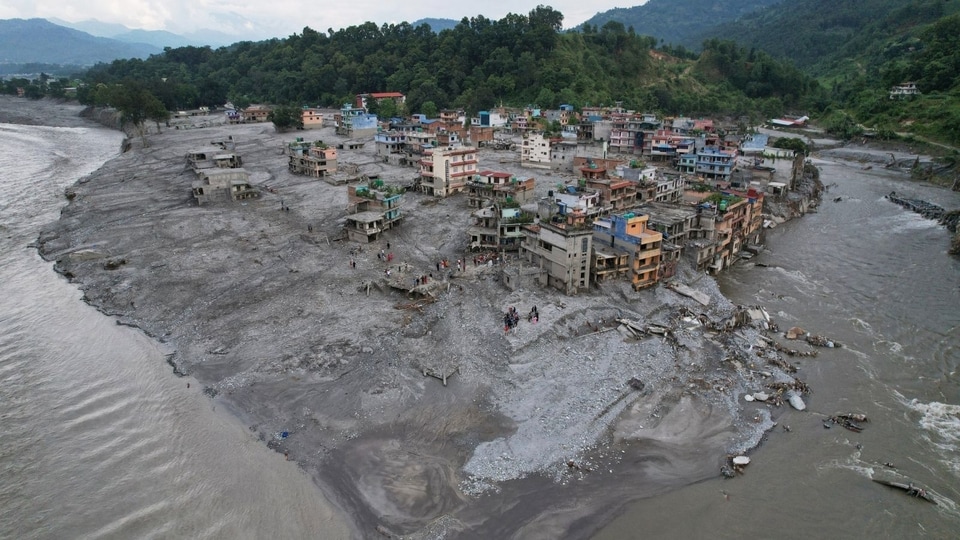
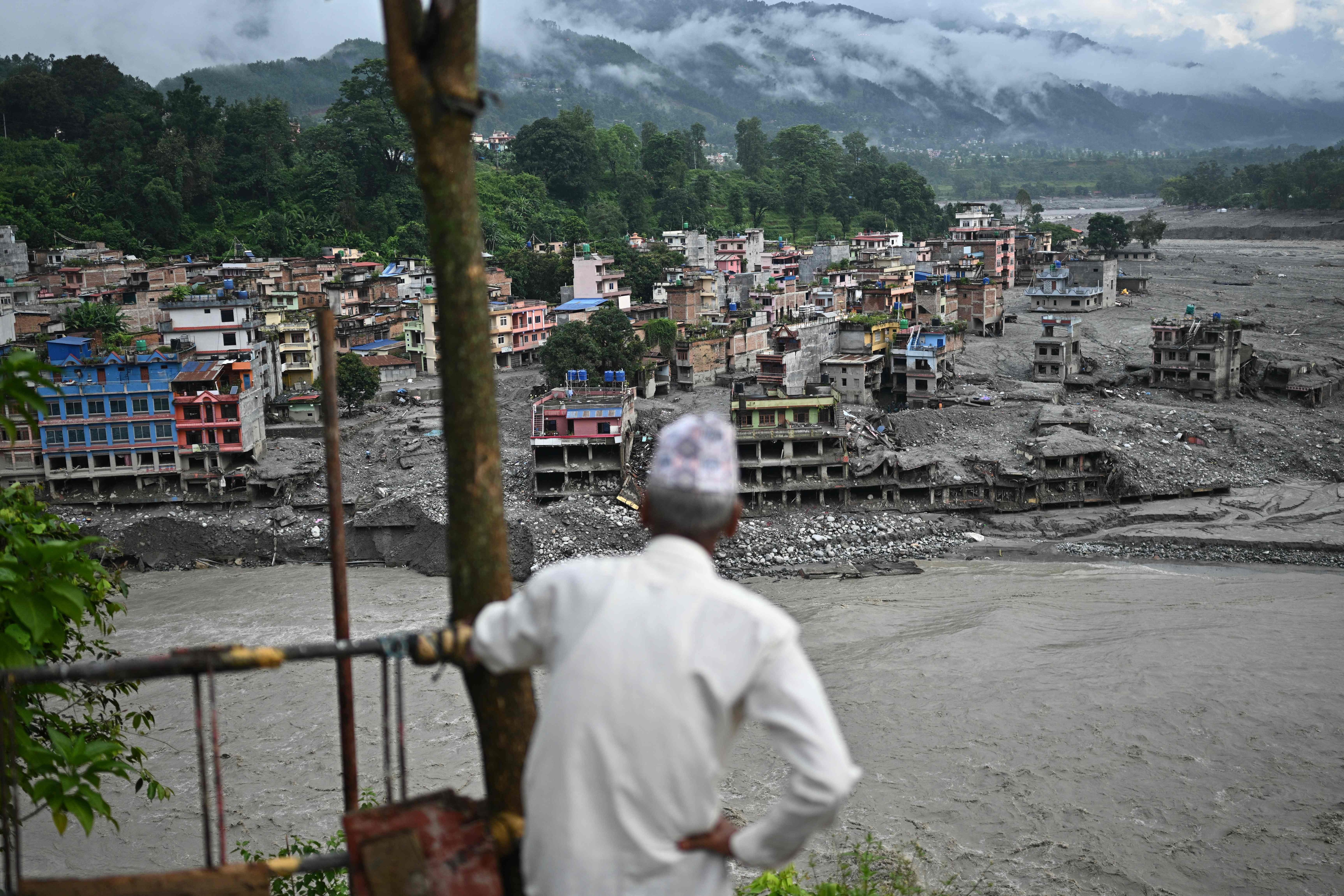
The Nepal tragedy has once again reminded the world of the catastrophic consequences of the unhealthy linkage between economic development, energy demand, and environmental degradation.
Readers must not presume that by posing the question, I am suggesting countries should not drill. There are, however, four petroleum specific reasons why the answer requires reflection.
First, the success of an exploration and production (EP) programme rests on a compound of three probabilities — a given geologic structure contains hydrocarbons; these hydrocarbons will be found, and once located, they can be produced on a commercially viable basis.
India, for instance, has 26 sedimentary basins and the probability of these containing hydrocarbons is high. ONGC has established a range of estimates of probable reserves, and there is prima facie logic, therefore, for India to make efforts to locate these molecules.
However, if one examined the track record of ONGC and the lukewarm response of international companies to government efforts to attract private capital, one has to conclude that the probability of locating these hydrocarbons is not comparably high. There have been no giant discoveries since the Mumbai High offshore discovery in the early 1970s.
And even though the fiscal and commercial terms have been progressively improved and are globally competitive, no integrated petroleum company, other than BP that bought into Reliance’s Krishna Godavari gas find, is currently engaged in EP in India. International companies clearly deem India’s geology to be complex and high risk.
Perhaps more relevant is the fact that, given such complexity, the cost of locating these hydrocarbons would most likely be very high. The question that arises then is whether the discovery can be developed and produced on a commercially sustainable basis.
That brings in the second reason. Currently, the price of crude oil is ranging in the high $90s/barrel. In fact, very recently, it crossed $100/barrel. But this price is not the relevant metric for determining the economics of EP.
We have to look longer-term. And when we do that, we see a glutted petroleum market. There have been major hydrocarbon discoveries in Latin America and Africa, and as the green energy transition gathers momentum, demand will plateau and decline.
The commercial viability of new discoveries has to be tested, therefore, against a “low for longer” future petroleum price scenario.
Third, petroleum is a tradable commodity. It can be shipped and piped transcontinentally. It can be stored. OPEC is, also, no longer the swing supplier. There are multiple other exporters. If — as is the case today — the supplies out of the Gulf get choked, import-dependent countries can source supplies from the spot market and/or non-Gulf exporters such as Russia, USA and Nigeria. This is what India and China have done.
Also Read | PM Modi, Putin and Xi hold hands at BRICS summit in a powerful show of unity
So, the question arises: Why spend money on high-risk, high-cost exploration when oil/gas will most likely be abundantly available and can be bought and stored?
Finally, the energy value chain. The price of crude oil has moved in the narrow band of $75/barrel to $100/bbl over the past six months. The price of refined products, diesel, aviation fuel, and gasoline have, on the other hand, more than doubled.
Also Read | BRICS nations condemn Pahalgam attack, seek action against terror safe havens
Last month, for instance, the spread between the price of crude oil and diesel crossed $100/barrel in the US. Before the West Asia conflict, the spread was between $10-15/barrel.
Consumers are interested in the price of the final product, not the price of the raw material. So, if the BRICS leadership wants to ensure their constituencies get energy (conventional and clean) at the right price, at the right time, and in the right location, they need to shift the policy focus towards investment in integrating the energy-value chain.
They need to ponder whether it might be better to deploy scarce public funds towards the creation of a holistic and integrated frame for transnational energy partnerships and energy atmanirbhartha than to direct it towards high-risk hydrocarbons exploration.


