
 E-Paper



New conflict in Ethiopia can become a global problem
Ethiopia needs a political settlement that addresses the federal question, disputed territories, regional security forces, displaced populations among others

 Prefer HTon Google


As conflict returns to Ethiopia after a fragile peace of four years — a devastating civil war started in 2020 and ended only in 2022 after the Pretoria Agreement was signed in November 2022 — and threatens to widen, it is important to remember what is at stake here. One, Ethiopia is part of the Horn of Africa; its proximity to the Red Sea — one of the most important corridors for global maritime trade — means a wider conflict here can potentially disrupt global commerce further even as the Strait of Hormuz stalemate continues. And two, given the nature of the conflicts in the broader region, including parts of West Asia, the threat of deepening radicalisation can’t be completely eliminated.
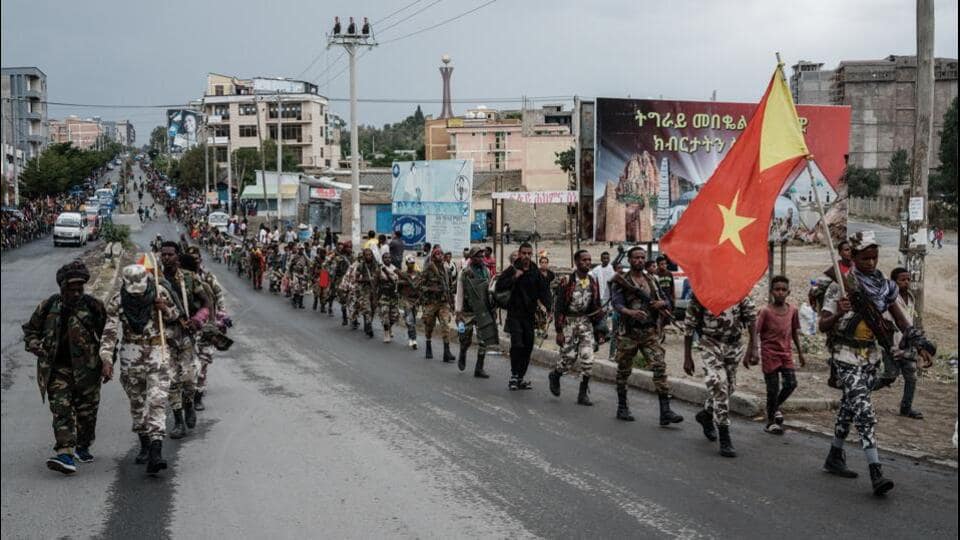
Ethiopia is currently witnessing fighting in its Tigray province that borders Eritrea, renewed tensions in Amhara, and the formation of an extraordinary alliance of armed groups opposed to Prime Minister Abiy Ahmed’s government. What makes the situation particularly dangerous is that the old battle lines have shifted, and regional alignments around Ethiopia have been redrawn.
The Pretoria Agreement, signed under the African Union (AU)’s auspices, provided a framework for ceasefire after the two-year civil war, but did not settle fundamental questions such as the status of Western Tigray, displacement rooted in the war, and the mistrust between the federal government and the Tigrayan leadership. In May 2026, the Tigray People’s Liberation Front (TPLF) reasserted political authority and control in the region, while Addis Ababa accused it of violating the peace agreement.
A striking feature of the current crisis is the shift in Ethiopia’s internal alliances. During the earlier war, the federal forces fought alongside Amhara militias against the TPLF. After the war, Abiy’s attempt to dismantle regional special forces and strengthen federal authority alienated sections of the Amharas, fanning a separate insurgency in the province. Meanwhile, the Oromo Liberation Army has continued its armed struggle in Oromia.
Now, seven armed groups, including the TPLF and the Amhara Fano National Movement, have announced the Ethiopian Peoples’ Forces Alliance for Survival, seeking to remove Abiy’s government. The coalition includes groups from Oromia, Afar and Benishangul-Gumuz. Forces that fought each other during the last civil war are now allied. At its heart is the unresolved tension between Ethiopia’s federal structure, based substantially on ethnic and regional identities, and Abiy’s effort to create a stronger, centralised national order.
The regional dimension further complicates the situation. Eritrea, which fought alongside Abiy against the TPLF in the earlier war, is now at odds with Addis Ababa. The relationship deteriorated after Eritrea was excluded from the Pretoria settlement and as Abiy increasingly asserted Ethiopia’s interest in obtaining access to the Red Sea. Asmara views Ethiopia’s sea-access ambitions with suspicion. Ethiopia, on the other hand, has accused Eritrea of supporting armed groups, including Fano. The accusations demonstrate how Ethiopia’s internal conflict is becoming entangled with the strategic contest over the Red Sea.
In the larger Red Sea region, Egypt has another set of calculations. Its principal strategic concern remains the Nile and the Grand Ethiopian Renaissance Dam. The dam’s inauguration has not resolved the dispute between Addis Ababa and Cairo over water management and downstream security. So, Egypt has cultivated closer relations with Ethiopia’s regional rivals. Now at the Alamein consultations, Egypt led Eritrea, Sudan and Somalia in aligning on curbing Ethiopian ambitions on several counts.
Sudan, similarly, adds another layer of instability. Its civil war has provided space for arms networks, refugees, and armed actors to move across the Ethiopia-Sudan border: the conflict in the two countries could increasingly interact rather than remain separate.
Gulf States’ rivalry may also play a role. The UAE rivalry with Saudi Arabia prompted Abu Dhabi to build a relationship with Addis Ababa. At the same time, it has strategic and commercial interests across the Red Sea and the Horn, as well as in Sudan and Somaliland. Gulf powers have their own interests, and their relationships often cut across African rivalries.
Where, then, do African institutions fit in? The AU has called for immediate restraint and direct talks. The Intergovernmental Authority on Development (IGAD) has called for immediate return to the Pretoria framework, while urging neighbouring States not to contribute to escalation. The problem is regional organisations can mediate only when their members have sufficient political convergence; the Horn today is characterised by precisely the opposite.
Ethiopia now needs a political settlement that addresses the federal question, disputed territories, regional security forces, displaced populations and the relationship between the centre and Ethiopia’s constituent regions. At the same time, the country’s neighbours must resist turning Ethiopian divisions into another arena for regional competition.
Gurjit Singh is an author and a former Indian ambassador to the African Union. The views expressed are personal


