E-Paper



Scientists turn penguin feather secrets into a smart building skin that switches between heating and cooling
A penguin-inspired film can switch between solar heating and radiative cooling, pointing to smarter building surfaces.

 Prefer HTon Google


Since buildings experience temperature changes during the day, maintaining a comfortable interior can consume significant amounts of energy. Scientists have now developed a penguin-inspired composite film designed to manage heat in two different ways. One side absorbs solar light and converts it into thermal energy, while the other reflects solar light and releases thermal energy through infrared radiation. The study, published in Advanced Functional Materials, describes the material as a vanadium dioxide, or VO₂, based Janus composite film.
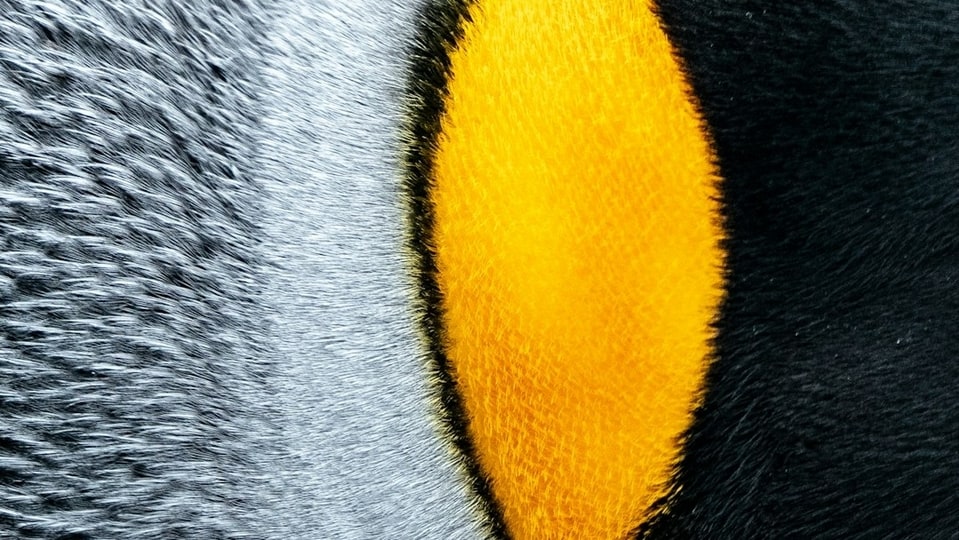
Penguin feathers inspire the design
While the new film itself is not made from penguin feathers, its design draws inspiration from research into how natural materials manage heat. In 2019, a detailed investigation of penguin feathers and polar bear hair was published in Acta Biomaterialia. Researchers used high-resolution scanning electron microscopy to examine the size, arrangement, and three-dimensional architecture of fibers and pores in the natural materials. Their analysis found complex, hierarchically organized porous structures in both.
The study focused on understanding microscopic structures found in natural insulating materials and using those observations to suggest designs for future thermal-insulation systems. Penguin feathers have branching and porous features that contribute to their insulating structure and water resistance. The 2026 research applied this broader biological inspiration to a synthetic material with two deliberately different thermal surfaces.
The VO₂-based photothermal layer has a reported solar absorptance of 94.5%, allowing it to absorb most incoming solar radiation. Meanwhile, the film's radiative-cooling layer has more than 90% solar reflectance and 97.1% mid-infrared emittance. Together, these properties give the two surfaces different roles in thermal management: one favors solar heat absorption, while the other reflects solar energy and promotes the release of thermal radiation.
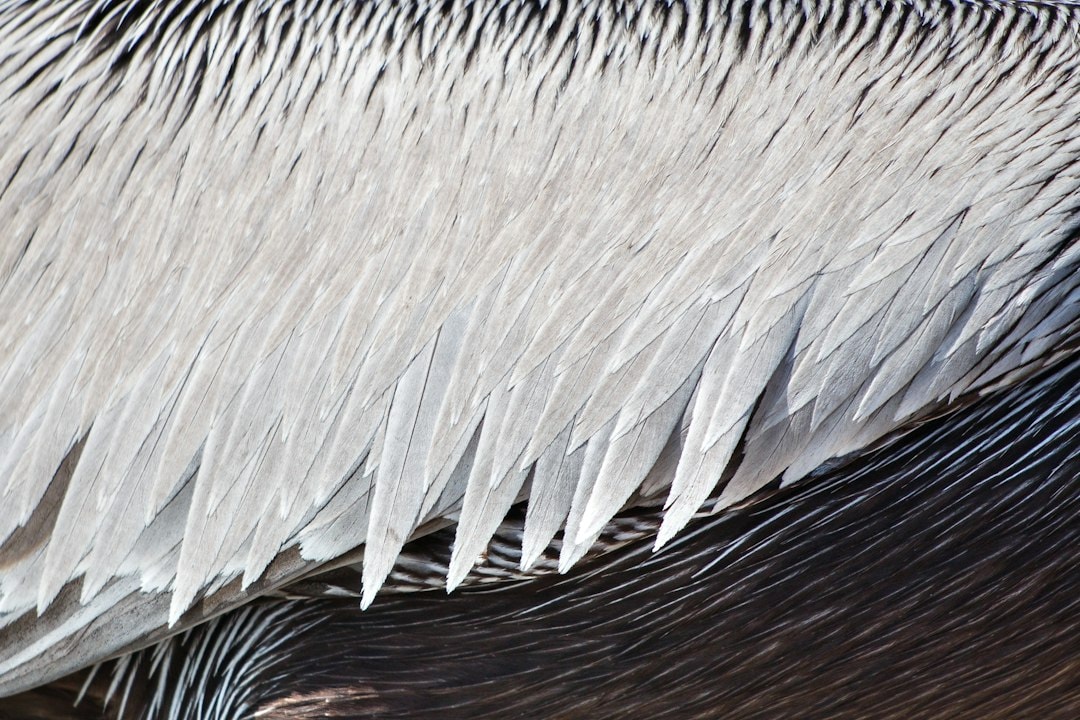
The film does more than manage heat
There is another reason the researchers used VO₂. The material undergoes a metal-insulator transition accompanied by a large change in electrical resistance. In this film, VO₂ shows a four-order-of-magnitude resistance change during that transition. That switching is associated with the material's microwave response. The study reports broadband microwave modulation across 8.2 to 40 gigahertz, with dynamic tunability of 0.78 to 32.1 decibels specifically in the X-band.
The film also exhibited superhydrophobic characteristics. The paper associates those properties with anti-icing, de-icing, and self-cleaning functions. These results describe properties demonstrated by the material itself, rather than long-term performance after installation on a building.
For building applications, the thermal properties are the easier part to picture. However, the study focuses on the design and performance of the composite film rather than testing it as a building-scale heating or cooling system. The paper reports the film's thermal, electromagnetic, and surface properties, but does not present measurements of heating or cooling energy savings in an occupied building.
Researchers would still need to establish how the film holds up to prolonged sunlight, rain, moisture and physical wear, as well as how it could be manufactured and installed at useful scales. Cost and performance under different climates would also need to be assessed before its suitability for building applications could be established.
The two studies show how the idea moved from studying natural insulation to designing an engineered material. The Acta Biomaterialia research examined the porous architecture of penguin feathers and polar bear hair, while the Advanced Functional Materials paper applied that inspiration to a VO₂-based Janus film that combines photothermal conversion, radiative cooling, and microwave modulation. The film remains a laboratory material, but the research demonstrates how features found in natural structures can inform the design of multifunctional surfaces.