E-Paper



Bastar Dussehra: Chhattisgarh's 75-day festival where Ravana's effigy is never burnt
Chhattisgarh's Bastar Dussehra lasts 75 days, celebrating tribal traditions without burning Ravana's effigy.

 Prefer HTon Google


As people across India mark Dussehra on Tuesday (October 20) with Ramlila performances and the burning of Ravana effigies, a very different celebration is unfolding in Chhattisgarh. In Bastar, Dussehra is not associated with Lord Rama’s victory over Ravana. Instead, the region honours Goddess Danteshwari through a series of elaborate rituals and processions stretching over approximately 75 days.
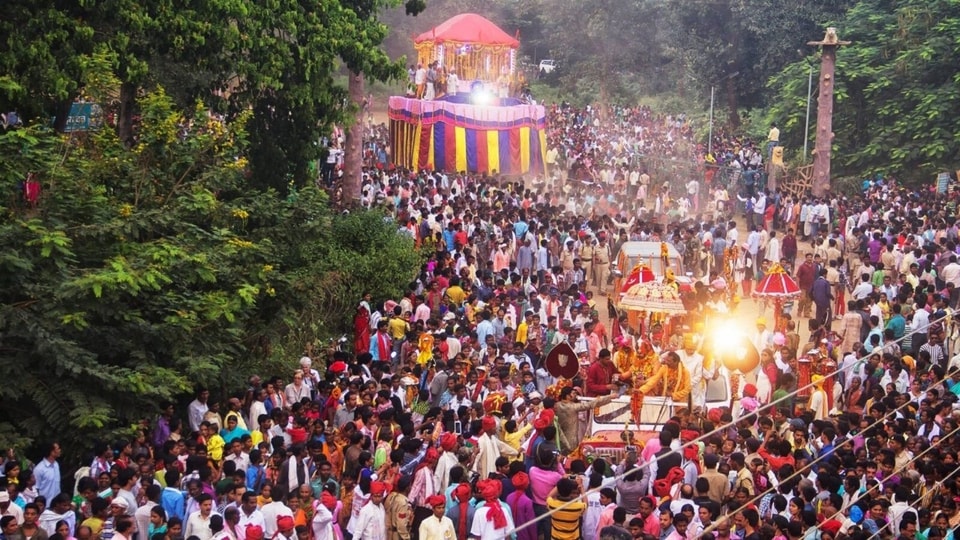
(Also read: Elon Musk features as one of Ravana’s 10 faces on Dussehra poster in Lucknow)
Centred in Jagdalpur, Bastar Dussehra brings together tribal communities, local deities and centuries-old traditions, making it one of the country’s most distinctive festivals.
Dussehra without burning Ravana
According to Incredible India, the Ministry of Tourism’s official travel portal, the defining feature of Bastar Dussehra is the absence of Ravana effigy burning. The celebration revolves around the worship of Goddess Danteshwari, revered across the region, along with other local deities.
Unlike conventional Dussehra celebrations, the festival features sacred chariot processions, folk music, traditional dances and the arrival of deities from surrounding villages. Different communities take responsibility for particular rituals, turning the occasion into a collective expression of Bastar’s cultural heritage.
The government's Utsav Portal describes Bastar Dussehra as “the longest festival in the world”, highlighting its unusual duration and deep connection with indigenous traditions.
How the 75-day celebration unfolds
The festival begins with Pat Jatra, a ritual in which wood brought from the forest is worshipped before being used to construct a ceremonial chariot. Incredible India lists August 12 as the beginning of the 2026 celebrations, with the main festive phase running from October 18 to 22.
Another important ritual, Kachhin Gadi, involves seeking the symbolic permission of Kachhin Devi. During Jogi Bithai, a participant traditionally remains in a meditative posture for nine days.
(Also read: Dussehra 2026 | It’s viral: Ravanas in Delhi-NCR bring the laughs)
One of the biggest attractions is a decorated wooden chariot drawn through Jagdalpur. The Utsav Portal says as many as 400 people may pull the chariot through the streets amid drumming and dancing.
In 2026, Bhitar Raini, one of the key chariot rituals, falls on October 20, coinciding with Vijayadashami celebrations elsewhere in India.
A tradition rooted in Bastar’s history
The festival has historical links to Bastar’s former royal dynasty and King Purushottam Dev, whose reign is associated with the development of its ceremonial traditions
Among the concluding traditions is Muria Darbar, historically a gathering where tribal representatives raised community concerns before the ruler.
For Bastar, Dussehra is therefore more than a single day of festivities. It is an extended celebration of faith, craftsmanship and the region’s living cultural traditions.