E-Paper



Know Your Neighbourhood: The history behind the 'Sarai' name in several Delhi localities
Delhi’s Sarai neighbourhoods carry names linked to centuries-old inns. Here’s how these roadside stops became part of the city’s history.

 Prefer HTon Google


From Sarai Kale Khan and Sheikh Sarai to Yusuf Sarai and Jia Sarai, the word 'Sarai' features in the names of several Delhi neighbourhoods. Today, these areas are known for their markets, residential colonies and busy roads. But the names have a much older connection to the city, dating back to a time when roadside inns offered travellers and traders a place to stop during long journeys.
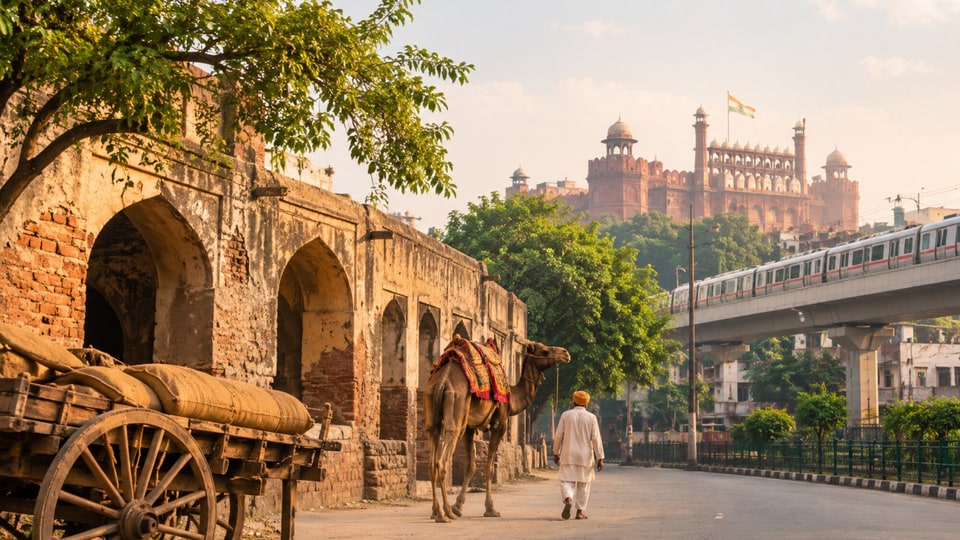
What does 'Sarai' mean?
The word 'Sarai' refers to an inn or resting place. Historically, sarais were built along important trade routes and near towns to accommodate travellers, merchants and their animals. Many were large enclosed structures, with rooms arranged around a central courtyard. Some also had wells, mosques, stables and spaces to store goods.
(Also Read: ‘Don't be in a hurry’: Goldman Sachs CEO David Solomon shares grandmother's career advice)
According to historian Shama Mitra Chenoy's research paper, Sanctity and Materiality: Sarais of Delhi 1739-1916, sarais once dotted the areas surrounding Delhi and played an important role in trade. Merchants brought goods from different parts of the country to these establishments before transporting them into the city. This helped prevent caravans and large quantities of goods from crowding the already busy markets of Shahjahanabad.
Sarais continued to be built under different rulers, including the Delhi Sultanate, Sher Shah Suri and the Mughals. Many eventually fell into disrepair, disappeared or were absorbed into settlements as the city expanded.
The stories behind Delhi's Sarai localities
Several neighbourhoods in Delhi still have 'Sarai' in their names. Sarai Kale Khan is one of the best-known examples. While the area has a long history, there are different accounts of how it got its name.
A 2024 report by The Indian Express explored these accounts, including the possibility that a sarai was built by a man named Kale Khan. The area was also historically home to Gujjar settlements.
Other localities include Sheikh Sarai, Yusuf Sarai, Jia Sarai, Lado Sarai, Katwaria Sarai, Ber Sarai and Neb Sarai. While they share the word 'Sarai', the origins of their names are not equally well documented. In some cases, the names are linked to older settlements or historical landmarks.
How old resting places became modern neighbourhoods
As Delhi grew, many of its older settlements became part of the expanding city. Places that once served as stopping points for travellers and traders gradually developed into residential neighbourhoods.
A Hindustan Times Delhiwale feature on Sarai Kale Khan also traces the area's history as an old transit point. Although much of the original sarai structure may no longer survive, its name continues to carry that association.
(Also Read: Goose found bleeding with rusty metal ring stuck around its beak in US, rescued)
Today, residents are more likely to associate these localities with familiar markets, metro stations and residential areas than with old roadside inns. Yet the word 'Sarai' in their names offers a reminder of the travellers and traders who once passed through these parts of Delhi.